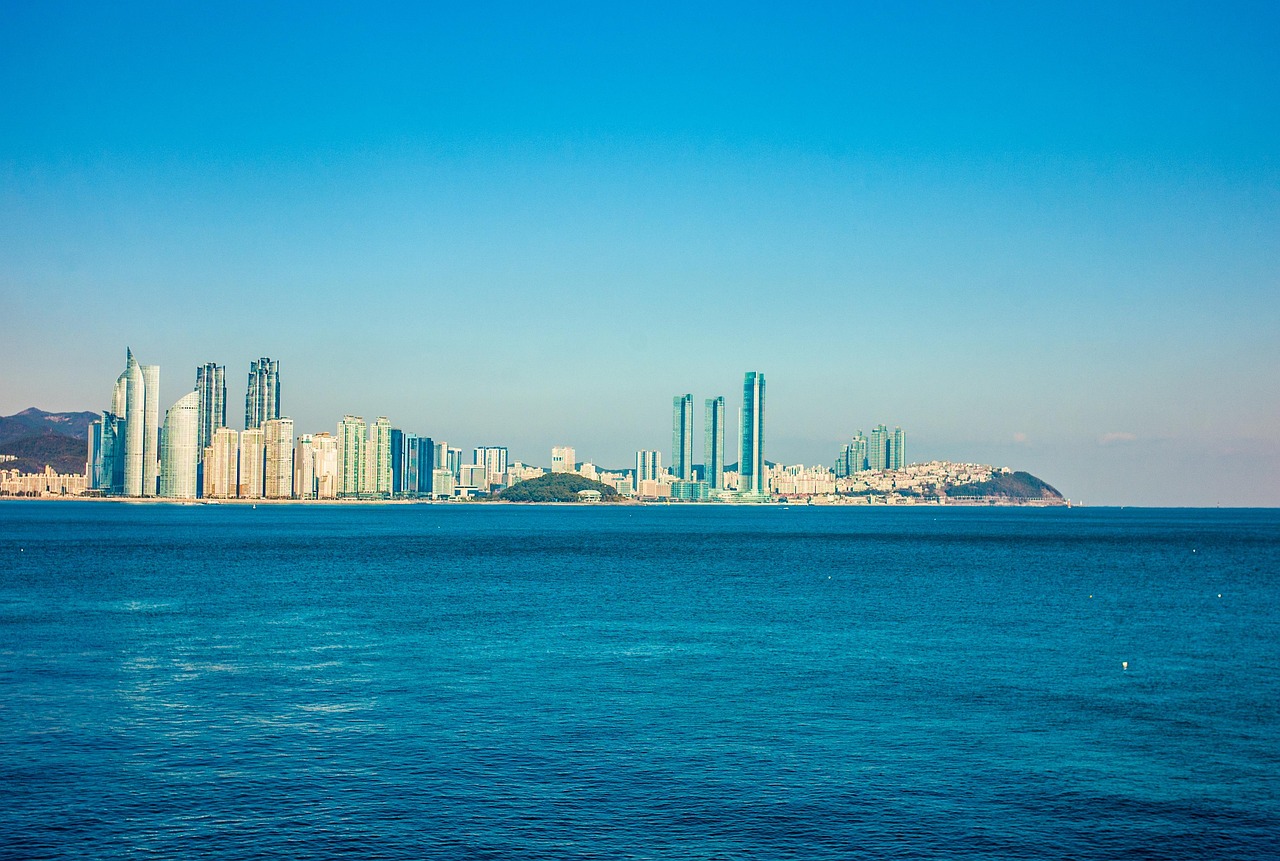
South Korea’s second-largest city punches well above its weight for first-time visitors. Busan (부산) has everything: broad sandy beaches, a working fishing port, colourful hillside villages, centuries-old temples, and some of the best seafood in Asia — all wrapped up in a city that is dramatically easier to navigate than Seoul. Whether you have one day or a week, this guide covers every decision you need to make, and links out to detailed pages for every topic.
Last updated: June 2026.
Getting to Busan
Most travellers arrive in Busan one of two ways: the KTX high-speed train from Seoul, or a direct international flight into Gimhae Airport.
KTX from Seoul (서울→부산): The fastest trains cover the 325 km journey in around 2 hours 15 minutes. Trains depart from Seoul Station and Suseo (SRT) and arrive at Busan Station in the centre of the city. Fares vary by class and how far in advance you book — check the Korail or SRT websites for current prices. This is by far the most popular route for visitors already in Seoul.
Flying into Gimhae (김해공항, PUS): Gimhae International Airport is about 20–25 km west of the city centre. The airport sits on the Busan–Gimhae Light Rail (BGL), which connects directly to the Busan metro system. Journey time to Seomyeon (the central hub) is around 30–40 minutes. Taxis and limousine buses are also available.
Full details: Seoul to Busan by KTX — Tickets, Tips & Seat Guide · Gimhae Airport: How to Get Into Busan
Where to Stay in Busan
Busan’s neighbourhoods each have a distinct personality. The three areas first-time visitors most commonly choose are:
- Haeundae (해운대): The tourist beach strip. High-rise hotels, busy in summer, easy beach access. Best if the beach is your priority.
- Seomyeon (서면): The commercial centre. Metro-connected to everywhere, excellent food scene, good mid-range hotel stock. Best all-round base.
- Nampo-dong / BIFF Square (남포동): Old downtown feel. Close to Jagalchi market, Gukje market, and Gamcheon. Best for culture and seafood.
Budget options exist in all three areas. Accommodation prices vary significantly by season — summer (especially August) and festival weekends see the highest rates. For a full neighbourhood breakdown and specific recommendations, see Where to Stay in Busan.
Getting Around Busan
Busan has a clean, well-signed metro system with four lines that reach most tourist attractions. Signage is in Korean and English. A single journey starts around ₩1,400–1,600 (prices subject to change); a T-money card or Busan Tourist Pass makes paying seamless.
The Busan City Tour Bus is a hop-on, hop-off option running two colour-coded loops covering coastal and cultural sites. Tickets are sold at Busan Station and major tourist stops. It is slower than the metro but puts you close to spots like Taejongdae (태종대) and Gamcheon that involve more walking otherwise.
Taxis are widely available and metered. Ride-hailing apps (Kakao T) work throughout the city. Renting a bike is popular along the Haeundae and Gwangalli seafronts.
Full guides: How to Use the Busan Subway · Busan City Tour Bus — Routes, Tickets & Tips
Top Things to Do in Busan
Busan’s biggest draw is its variety. In a single day you can swim in the sea, explore a centuries-old temple, eat at a working fish market, and watch the city light up from a hillside viewpoint. Here are the headline attractions:
- Haeundae Beach (해운대 해수욕장): Korea’s most famous urban beach. The strip is packed in summer, more peaceful in spring and autumn. Backed by international hotels and a great seafood restaurant scene. → Haeundae Beach Guide
- Gwangalli Beach & Gwangan Bridge (광안리 & 광안대교): The local favourite. A 1.4 km beach facing the illuminated Gwangan Bridge (광안대교). The free weekend drone light show is not to be missed. → Gwangalli Beach Guide
- Gamcheon Culture Village (감천문화마을): A steeply stacked hillside village of pastel houses and public art, often compared to Santorini. Arrive early to beat the crowd. → Gamcheon Culture Village Guide
- Haedong Yonggungsa Temple (해동 용궁사): One of very few seaside Buddhist temples in Korea, perched on sea cliffs in Gijang. Atmospheric at sunrise and at the new year. → Haedong Yonggungsa Temple Guide
For the full ranked list including Taejongdae, Jagalchi, Beomeosa Temple (범어사), the Blueline Park Sky Capsule, and more, read Top 10 Things to Do in Busan (2026 Guide).
What to Eat in Busan
Busan’s food culture is anchored by the sea. The city gave Korea milmyeon (밀면, wheat noodles in cold broth), refined the art of ssiat hotteok (씨앗 호떡, seed-filled sweet pancakes), and is the best city in the country for raw fish (hoe, 회).
Key food stops for first-timers:
- Jagalchi Market (자갈치시장): Korea’s largest seafood market. Buy live fish from the ground floor, have it cleaned, and take it up to a restaurant floor to eat as fresh sashimi. → Jagalchi Market Guide
- Must-try dishes: milmyeon, dwaeji gukbap (돼지국밥, pork rice soup), raw oysters from a street stall, grilled eel near Haeundae, and BIFF Square hotteok.
For a dish-by-dish breakdown and the best places to eat each one, see the Busan Food Guide: 8 Must-Try Dishes & Where to Eat Them.
Busan Itineraries
Not sure how to structure your days? These ready-made itineraries match common trip lengths:
- Busan 1-Day Itinerary — If you are on a day trip from Seoul or have a tight layover.
- Busan 2-Day Itinerary — The sweet spot for most first-time visitors.
- The Perfect 3-Day Busan Itinerary — Covers the main sights without feeling rushed.
If you only have a few hours, the Busan Layover Guide maps the most efficient route from the airport and back.
Day Trips from Busan
Busan’s location in the south-east corner of the Korean peninsula puts several excellent destinations within easy day-trip range:
- Gyeongju (경주): The ancient Silla capital, full of royal tombs, UNESCO heritage sites, and Bulguksa Temple. Around 50–60 minutes by KTX. → Gyeongju Day Trip from Busan
- Tongyeong (통영): A port city nicknamed the "Naples of Korea," known for oysters, cable cars, and island-hopping. Around 90 minutes by bus. → Tongyeong Day Trip from Busan
- Jinhae (진해): The best cherry blossom destination in Korea, with canal walks lined by hundreds of trees — primarily beautiful in late March to early April. → Jinhae Cherry Blossom Day Trip
For a full ranked overview with transport details for each option, see Best Day Trips from Busan.
Best Time to Visit Busan & Budget
Best time to visit: Spring (April–May) and autumn (September–October) offer the most comfortable temperatures, manageable crowds, and clear skies. Summer (June–August) is peak beach season — the city is lively but accommodation prices jump and beaches get busy. Winter is mild by Korean standards and often crowd-free, with great deals on hotels.
Budget: Busan is more affordable than Seoul for accommodation and equally cheap for street food and public transport. A comfortable daily budget for a solo traveller staying in a mid-range guesthouse, using the metro, and eating one restaurant meal and one street-food meal per day might start around ₩80,000–120,000 (figures are approximate and subject to change). For a full cost breakdown by travel style, see the Busan Trip Cost & Budget Guide.
Practical Travel Tips for Busan
A few essentials that will make your trip smoother:
- SIM / eSIM: Buy a Korean SIM or eSIM before or on arrival. Data is fast and cheap; international roaming is not. You can pick up a SIM at Gimhae Airport arrivals or order an eSIM in advance. → Korea SIM & eSIM Guide
- Paying in Korea: Cards are widely accepted at hotels, chain restaurants, and convenience stores. Street food stalls and traditional markets often prefer cash. A T-money card (티머니) tops up at any convenience store and works on the metro and most buses. → Paying in Korea: Cards, Cash & T-money
- Language: English is understood at major tourist sites and chain hotels. A handful of Korean words goes a long way at local restaurants and markets — locals are generally delighted when visitors try. → 10 Essential Korean Phrases to Know in Busan
How many days do you need in Busan?
Two to three days is the sweet spot for a first visit. Two full days lets you cover the main beaches (Haeundae and Gwangalli), Gamcheon Culture Village, Jagalchi Market, and a temple. A third day opens up Taejongdae, Haedong Yonggungsa Temple, or a day trip to Gyeongju.
Is Busan easy to visit without speaking Korean?
Yes. Metro signage is bilingual, major tourist sites have English information boards, and most hotel staff speak enough English to assist. Learning 5–10 basic Korean phrases helps at local restaurants and markets, but it is not essential.
What is the best way to get from Seoul to Busan?
The KTX high-speed train is the most popular option — roughly 2 hours 15 minutes from Seoul Station to Busan Station, with frequent departures throughout the day. Budget flights operate between Gimpo and Gimhae but door-to-door the time saving over KTX is minimal once you account for airport transfers.
When is the best time to visit Busan?
Spring (April–May) and autumn (September–October) offer the most pleasant weather, fewer crowds than summer, and lower hotel rates. Summer is ideal if the beach is your priority; winter is good for budget travellers who do not mind cooler temperatures.
Is Busan worth visiting as a day trip from Seoul?
It is possible — the KTX puts you in Busan in about 2 hours 15 minutes — but a day trip leaves very little time. You can cover one neighbourhood and one or two sights comfortably. Staying at least one night is strongly recommended to experience the city properly, including an evening at Gwangalli Beach.
Explore More Busan Guides
- Top 10 Things to Do in Busan (2026 Guide)
- The Perfect 3-Day Busan Itinerary
- Where to Stay in Busan
- Busan Food Guide: 8 Must-Try Dishes
- Jagalchi Market Guide
- Haeundae Beach Guide
- Gwangalli Beach & Gwangan Bridge Guide
- Gamcheon Culture Village Guide
- Haedong Yonggungsa Temple Guide
- Busan Trip Cost & Budget Guide
- Best Day Trips from Busan
- Gyeongju Day Trip from Busan
- Busan 1-Day Itinerary
- Busan 2-Day Itinerary
- Seoul to Busan by KTX
- How to Use the Busan Subway
- Korea SIM & eSIM Guide
- Paying in Korea: Cards, Cash & T-money
- 10 Essential Korean Phrases for Busan
Plan and book your Busan trip
Book the essentials on Trip.com: Busan hotels · flights to Busan · plan the rest. (affiliate link)