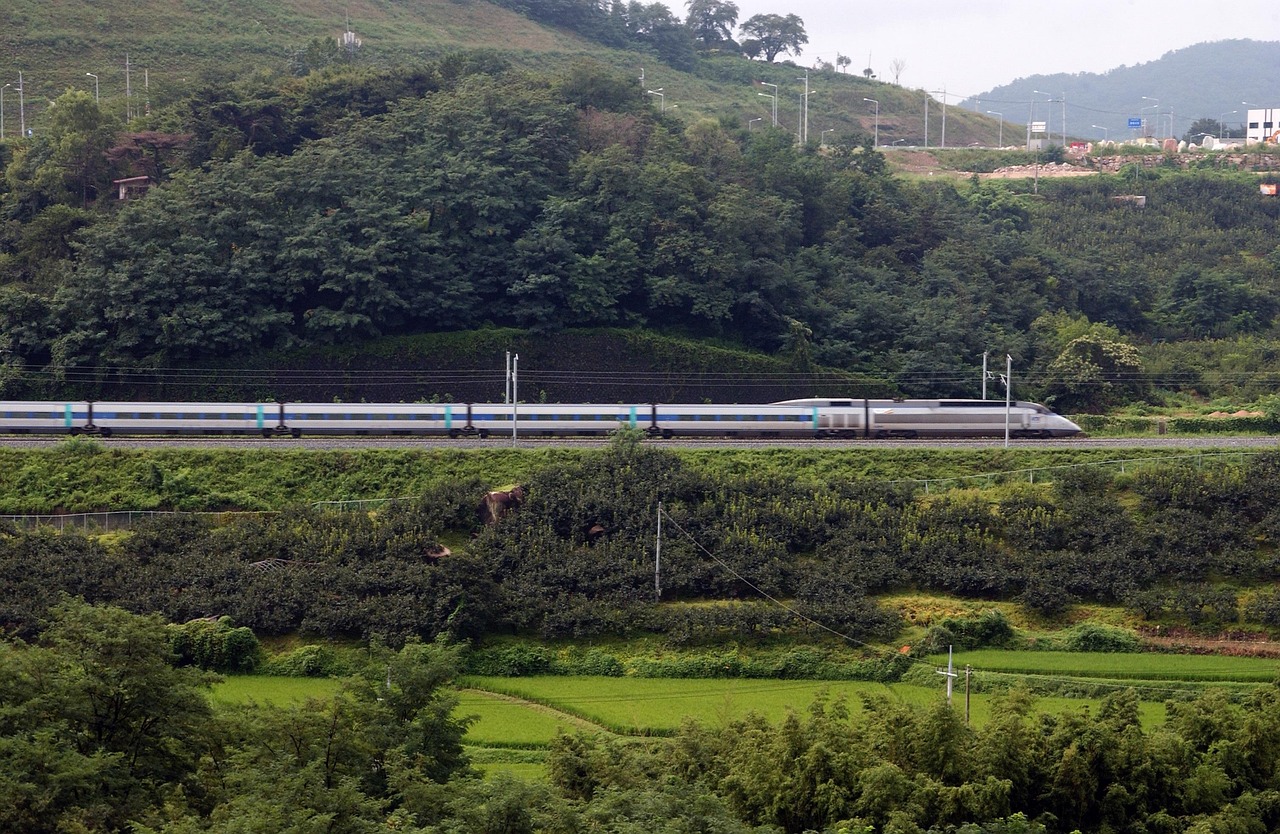
Travelling from Seoul to Busan by KTX (서울에서 부산까지 KTX) takes about 2 hours 30 minutes and costs roughly ₩59,800 for a standard economy seat. The train leaves from Seoul Station (서울역) and arrives at Busan Station (부산역), both in the city center, and you can book online, on the KorailTalk app, or at the station. The KTX (Korea Train Express) is the fastest and easiest way to cross the country, far quicker than the bus and simpler than flying. This guide covers KTX times, fares, and booking, plus how the KTX compares with the SRT, the express bus, and a flight, so you can pick the right option for your trip.
Last updated: June 2026. Fares and times are approximate and can change — always confirm on the official Korail site or app before you travel.
How long does the KTX take from Seoul to Busan?
The KTX from Seoul to Busan takes about 2 hours 30 minutes on a typical service, and as little as around 2 hours 15 minutes on the fastest direct trains. The exact time depends on how many stops your train makes along the way — some KTX services stop at more stations (such as Daejeon and Dongdaegu) and take a little longer, up to around 3 hours.
This is the headline reason most travelers choose the train: it is roughly half the time of the express bus and, once you count airport travel and check-in, often quicker door-to-door than flying. Tip: when you book, compare the listed arrival times — paying the same fare for a faster, fewer-stop train can save you 30–45 minutes.
How much is a KTX ticket from Seoul to Busan?
A one-way standard (economy) KTX ticket from Seoul to Busan costs roughly ₩59,800, with first class around ₩83,700. A standing/non-reserved ticket, sold mainly when seats are full, is cheaper at around ₩47,800. These prices are a guide only — the exact fare varies by train, class, season, and any discounts, so treat them as approximate.
- Standard / economy seat: about ₩59,800 one way — the usual choice for most travelers.
- First class (특실): about ₩83,700 — wider seats, more legroom, fewer passengers per car.
- Standing / non-reserved (입석): about ₩47,800 — you can board but are not given a seat (more on this below).
Tip: if you plan several long-distance trips in a short time, a Korea Rail Pass (KR Pass) for foreign visitors can work out cheaper than buying separate tickets — do the math for your route before you decide.
Where does the KTX to Busan leave from and arrive?
The KTX to Busan departs from Seoul Station (서울역) and arrives at Busan Station (부산역), and both are right in the city center. Seoul Station sits on Seoul Metro Lines 1 and 4, so it is easy to reach from most parts of the city. Some Busan-bound KTX trains also stop at Yongsan Station (용산역) in Seoul, so double-check which station your specific train leaves from.
At the Busan end, Busan Station is on Busan Metro Line 1, putting you a short ride from areas like Nampo, Seomyeon, and the ferry terminal. Because the train drops you in the middle of the city — not at an airport on the edge of town — you save time getting to your hotel. Tip: once you arrive, a T-money card makes the metro and buses simple; see our guide to using the Busan subway.
How do I book a KTX ticket to Busan?
You can book a KTX ticket from Seoul to Busan online at the official Korail site (letskorail.com), on the KorailTalk app, or in person at the station. All three sell the same trains; the app and website let you reserve ahead and choose your seat, while the station has both staffed counters and self-service machines with English menus.
- Korail website (letskorail.com): has an English option; reserve a seat and pay by card, then collect or show your ticket.
- KorailTalk app (Korail’s official mobile app): book on your phone and travel with a mobile ticket — handy once you are in Korea.
- At the station: use the staffed ticket office or the self-service kiosks at Seoul Station (English supported). Good as a backup, but seats can be sold out at busy times.
- Third-party sites (such as Klook or Trip.com): some travelers find these easier for foreign payment cards, though there may be a small markup.
Tickets usually open about one month in advance. Tip: download the KorailTalk app or set up the website before you travel, as foreign credit cards sometimes fail on Korean payment pages — having a backup booking method saves stress on a busy travel day.
Do I need to reserve a seat, or what is a standing ticket?
Yes — reserving a seat is recommended, especially at busy times, because KTX trains can sell out. A normal ticket gives you an assigned seat. A standing (non-reserved) ticket (입석) lets you board the train but does not give you a seat: you stand in the aisle or the area between carriages, where there are a few fold-down seats. Standing tickets are mainly sold once the reserved seats are gone.
For weekends, public holidays, and the cherry-blossom season, trains fill up fast, so book as early as you can — ideally when tickets open about a month ahead. On a quiet weekday you can often turn up and buy a seat shortly before departure, but it is still safer to book online. Tip: arrive at the station 20–30 minutes early so you have time to find your platform and car; the car and seat number are printed on your ticket.
KTX vs SRT vs bus vs flight: which is best?
For most travelers the KTX or SRT high-speed train is the best balance of speed, comfort, and cost, the express bus is the cheapest, and a flight only saves real time if you are headed near the airport. The SRT is a separate high-speed train that runs the same route slightly cheaper, but it leaves from Suseo Station (수서역) in southern Seoul rather than Seoul Station. The table below compares all four options.
| Option | Typical time (Seoul→Busan) | Approx. one-way cost | Notes |
|---|---|---|---|
| KTX (Korea Train Express) | ~2 hr 30 min (fastest ~2 hr 15 min) | ~₩59,800 standard; ~₩83,700 first class | Departs Seoul Station (서울역) / some from Yongsan; arrives Busan Station (부산역). Most frequent service. |
| SRT (Super Rapid Train) | ~2 hr 20–30 min | ~₩52,600 standard (about 10% cheaper than KTX) | Departs Suseo Station (수서역) in southern Seoul, not Seoul Station. Fewer stops; book on the separate SRT system. |
| Express bus | ~4 hr 15 min+ (traffic dependent) | ~₩23,000 standard; ~₩34,000 premium | Cheapest option; leaves from Seoul Express Bus Terminal. Slower and affected by road traffic. |
| Flight (Gimpo→Gimhae) | ~55 min in the air | ~₩35,000–90,000 depending on airline/timing | Add airport travel, check-in, and security — door-to-door it is often no faster than the train. Arrives at Gimhae Airport (PUS). |
If you are staying near Seoul Station, the KTX is the simplest choice. If you are in the Gangnam or Suseo area, the SRT can be cheaper and just as fast. Choose the bus only if budget is the priority and you do not mind the longer ride. A flight makes sense mainly if you are flying onward from Busan or staying near the airport. Tip: arriving by air instead? See our Gimhae Airport (PUS) guide to getting into Busan.
FAQ
How long is the KTX from Seoul to Busan?
The KTX from Seoul to Busan takes about 2 hours 30 minutes on a typical train, and around 2 hours 15 minutes on the fastest direct services. Trains that stop at more stations along the way can take up to roughly 3 hours, so check the arrival time when you book.
How much does a KTX ticket from Seoul to Busan cost?
A standard one-way KTX ticket costs roughly ₩59,800, with first class around ₩83,700 and a standing (non-reserved) ticket around ₩47,800. Prices are approximate and vary by train, class, season, and discounts, so confirm the current fare when booking.
How do I book a KTX ticket as a foreigner?
Book on the official Korail website (letskorail.com), on the KorailTalk app, or at the station using a counter or English-language self-service kiosk. Some travelers use third-party sites like Klook or Trip.com if their foreign card has trouble on Korean payment pages. Tickets usually open about a month ahead.
What is the difference between KTX and SRT?
The KTX and SRT are both high-speed trains on the Seoul–Busan line. The KTX leaves from Seoul Station (서울역), while the SRT leaves from Suseo Station (수서역) in southern Seoul and is usually about 10% cheaper. Journey times are similar, so the best choice often comes down to which station is closer to you.
Do I need to reserve a KTX seat in advance?
It is strongly recommended, especially on weekends, public holidays, and during cherry-blossom season, when trains sell out. On a quiet weekday you can often buy a seat shortly before departure, but booking online or on the app guarantees a seat. If seats are sold out, a standing ticket lets you board but not sit.
Frequently Asked Questions
How long does the KTX take to get from Seoul to Busan?
The KTX typically takes around 2 hours 30 minutes, though the fastest direct trains can be as quick as 2 hours 15 minutes. Some services stop at additional stations like Daejeon and Dongdaegu, which can extend the journey to around 3 hours—so it's worth comparing the exact arrival times when you book to find the quickest option.
How much should I expect to pay for a KTX ticket?
A standard economy seat costs around ₩59,800 one way, while first class is typically around ₩83,700. Standing tickets are cheaper at around ₩47,800, though they don't guarantee a seat. Check the official Korail site or app for current fares, as prices vary by train, season, and availability.
Is it better to take the KTX or fly from Seoul to Busan?
The KTX is usually faster and simpler than flying when you factor in airport travel, check-in, and security lines. It's roughly half the travel time of an express bus and drops you right in the city center rather than at an airport on the edge of town, making it the most convenient option for most travelers.
Where exactly do I catch the KTX, and where does it drop me off?
The train departs from Seoul Station (on Metro Lines 1 and 4) and arrives at Busan Station (on Metro Line 1), both located in the city center. Some trains also stop at Yongsan Station in Seoul, so confirm which station your specific train leaves from when you book.
What's the easiest way to book a KTX ticket to Busan?
You can book through the official Korail website (letskorail.com), the KorailTalk mobile app, or at ticket counters and self-service kiosks at Seoul Station. The website and app let you reserve ahead and choose your seat, while the station is a good backup option, though seats may sell out during busy periods.
Explore more Korea Go Now guides
- Arriving by air instead of rail? Read our Gimhae Airport (PUS) guide to getting into Busan.
- Get around the city once you arrive with our guide to using the Busan subway.
- Plan your days with the perfect 3-day Busan itinerary and our Top 10 things to do in Busan.
✈️ Flying to Busan? Compare flights to Busan (PUS) and beyond on Trip.com. (affiliate link)