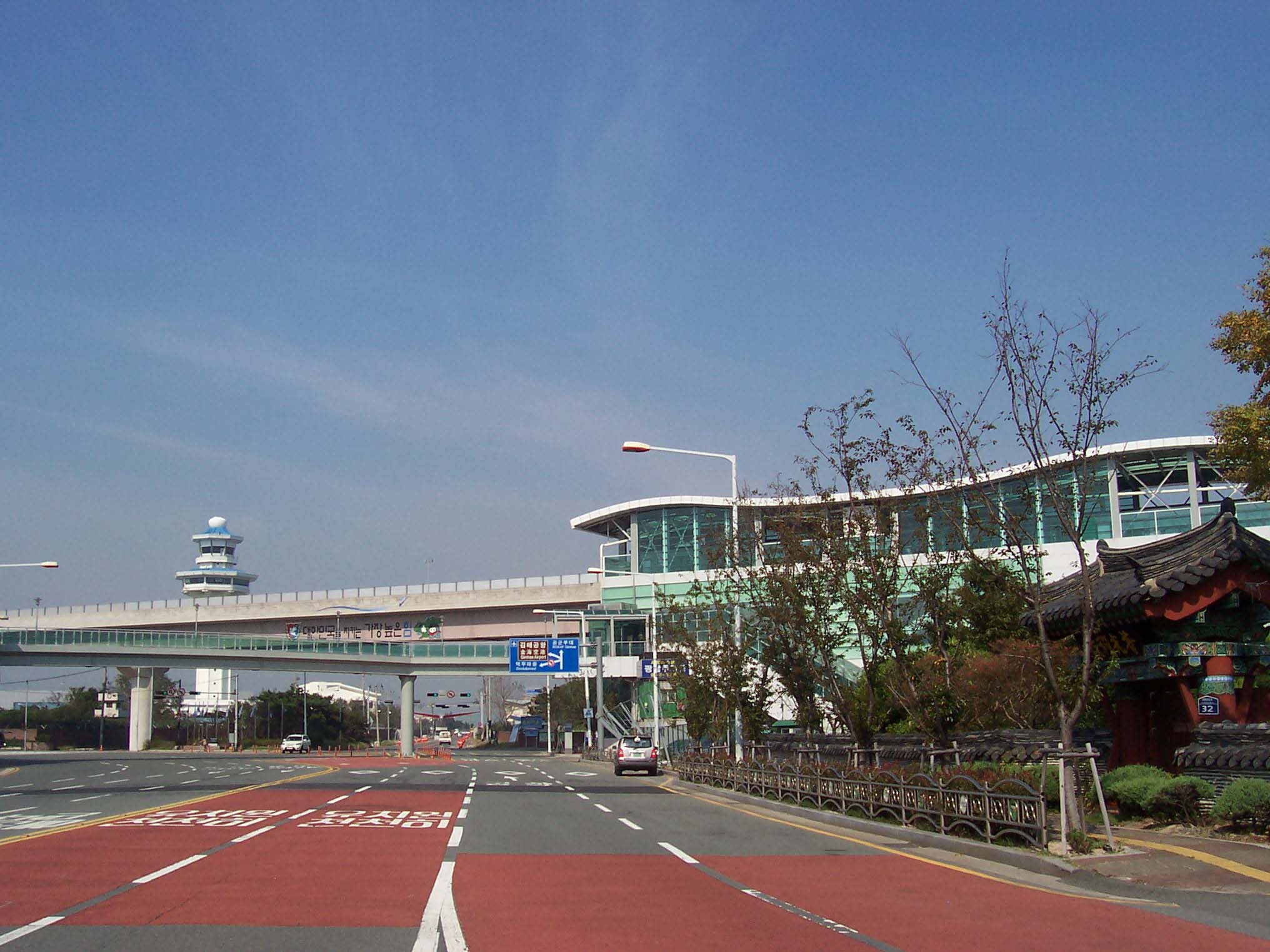
Gimhae International Airport (PUS) sits about 20 kilometres west of Busan city centre, making it one of the more conveniently located airports in South Korea. Whether you land at the domestic terminal or the international terminal, getting into Busan is straightforward, affordable, and well-signposted in English. This guide covers every transport option so you can pick the one that suits your schedule and budget.
Airport Layout: Domestic vs International Terminal
Gimhae Airport has two separate terminals connected by a free shuttle bus that runs every 7-10 minutes and takes about 5 minutes to cross between them. The International Terminal handles all overseas flights, including those from Japan, China, Southeast Asia, and beyond. The Domestic Terminal serves flights from Seoul (Gimpo and Incheon connecting passengers) and other Korean cities.
Both terminals share the same Gimhae Airport subway station, accessible via a short covered walkway from the international terminal or a slightly longer walk (or shuttle) from the domestic side. Arrivals from both terminals exit at ground level (Level 1), where you will find bus stops, taxi ranks, and subway entrance signs clearly marked.
Getting Into Busan: Your Four Main Options
There is no single best way to get from Gimhae Airport into Busan city. It depends on your destination in Busan, the time of day, and how much luggage you are carrying. Here is a breakdown of each option.
1. Busan-Gimhae Light Rail Transit (LRT)
The Busan-Gimhae Light Rail is the fastest public transport option and the one most travellers use. Trains run from Gimhae Airport Station directly to Sasang Station, where you transfer to Busan Metro Line 2. From Sasang you can reach Seomyeon in about 10 minutes, Centum City in 25 minutes, and Haeundae in roughly 40 minutes. For Nampo-dong and Jagalchi Market, transfer from Line 2 to Line 1 at Seomyeon.
- Fare: approximately 2,700-3,000 KRW to Sasang, paid with T-money card or cash
- Frequency: every 7-10 minutes, running 05:40-23:10 daily
- Journey to Sasang: about 15 minutes
- T-money cards can be purchased and topped up at the GS25 convenience store inside arrivals before boarding
2. Limousine Airport Bus
Several airport limousine bus routes depart from directly outside the international arrival hall. These coaches stop at major hotels and transport hubs without requiring a subway transfer, making them ideal if you have heavy luggage or are heading to Haeundae or the downtown hotel strip.
- Route 307 goes to Seomyeon, Centum City, and Haeundae Beach. Fare around 8,000 KRW, journey 50-70 minutes depending on traffic.
- Route 302 goes to Nampo-dong, Busan Station (KTX), and BIFF Square. Fare around 8,000 KRW, journey 40-55 minutes.
- Buses run approximately every 20-30 minutes from around 06:00 to 21:30.
- Pay the driver with cash or T-money; exact change is not required.
3. Taxi
Taxis queue at the designated rank outside both terminals. Regular (silver or white) taxis use the meter and typically cost 15,000-22,000 KRW to Seomyeon and 25,000-38,000 KRW to Haeundae, depending on traffic. Jumbo taxis (black, for larger groups or extra luggage) cost roughly 1.5 times the regular fare. Most drivers do not speak English, so having your destination written in Korean or saved in Naver Maps helps enormously. Night surcharges between 22:00 and 04:00 add about 20% to the meter fare.
4. KAL Limousine Bus to Busan Station
If you are continuing by KTX train to Seoul or another city, the KAL Limousine Bus stops directly at Busan Station, the main KTX terminal. The fare is around 8,000 KRW and the journey takes 35-50 minutes. Combined with a KTX ticket purchased at Busan Station, this is the smoothest onward connection for travellers not staying in Busan.
Practical Tips Before You Leave the Airport
- Pick up a T-money card immediately at the GS25 inside arrivals. It works on the LRT, all Busan subway lines, and most city buses. Cards cost 2,500 KRW and can be loaded with any amount.
- Download Naver Maps (or Kakao Maps) before you land. Google Maps has significant gaps in Korean public transport routing.
- Currency exchange is available at KEB Hana Bank ATMs and exchange counters in the international arrivals hall. Rates are reasonable and better than hotel desks — for tips on getting the best rate, see our airport money exchange strategy guide.
- SIM cards and pocket Wi-Fi rental desks are located just past customs in the international terminal, open from early morning until the last international flight of the day — see our guide to airport SIM, eSIM, and Wi-Fi options for a full comparison.
- If your flight arrives after 23:00, the LRT has stopped for the night. Budget for a taxi or check whether any late night bus routes are running on your arrival date.
Which Option Should You Choose?
Travelling light to Seomyeon or anywhere along Line 2? Take the LRT plus subway for the cheapest and fastest ride into the city. Staying near Haeundae Beach with a full suitcase? The limousine bus Route 307 drops you close to most Haeundae hotels without a transfer. Groups of three or more splitting a fare? A taxi becomes cost-competitive and far more comfortable than public transport with luggage. Connecting to a KTX train onward to Seoul? Head straight for the KAL Bus to Busan Station — and if you are instead flying into Incheon before heading south, check our guide on choosing between AREX, airport bus, or taxi from Incheon Airport.
Gimhae Airport is genuinely easy to leave. The signage is clear, transport runs reliably, and even first-time visitors to Korea typically reach their Busan hotel within an hour of clearing customs.
What If You Have a Long Layover or Early Flight?
Not every visitor heads straight into Busan on arrival. If you have a long gap between a domestic connection and an international flight, or you land late and need to catch an early departure the next morning, Gimhae Airport has a few practical options worth knowing before you plan your onward journey.
Luggage storage is available inside the domestic terminal, near the arrivals hall on the first floor, and typically charges by locker size and duration (roughly 3,000-6,000 KRW for a few hours, more for a full day – prices can change, so check the posted rate board before paying). This is useful if you want to drop your bags and explore nearby Gimhae city on foot rather than lugging a suitcase around, since the historic Gimhae Grand Tomb and Daeseong-dong Tumuli Museum are both within a short taxi ride of the airport.
For an early flight, staying near the airport can be more sensible than commuting back from central Busan. Several budget and mid-range hotels cluster along the road just outside the domestic terminal exit, within a five-to-ten-minute walk or a short free shuttle ride – a local tip most guidebooks skip, since these shuttles are only listed on Korean-language hotel booking pages, not the international versions. This is worth comparing directly: staying in Seomyeon or Nampo-dong gives you far better restaurants and nightlife for an evening, but adds 30-40 minutes of transport time and cost the next morning; an airport-area hotel costs a similar amount for the room but saves that return trip if your flight departs before 07:00, when the LRT has not yet started running for the day.
If you would rather not book a hotel for a short layover, the domestic terminal has a quiet seating area on the upper level past the security checkpoint that stays open overnight, though it is not a dedicated rest zone and can be busy during peak holiday travel weeks such as Chuseok or Lunar New Year. Bringing an eye mask and earplugs is sensible if you plan to nap there, and the 24-hour convenience store near arrivals sells basic toiletries if you land without checked luggage.