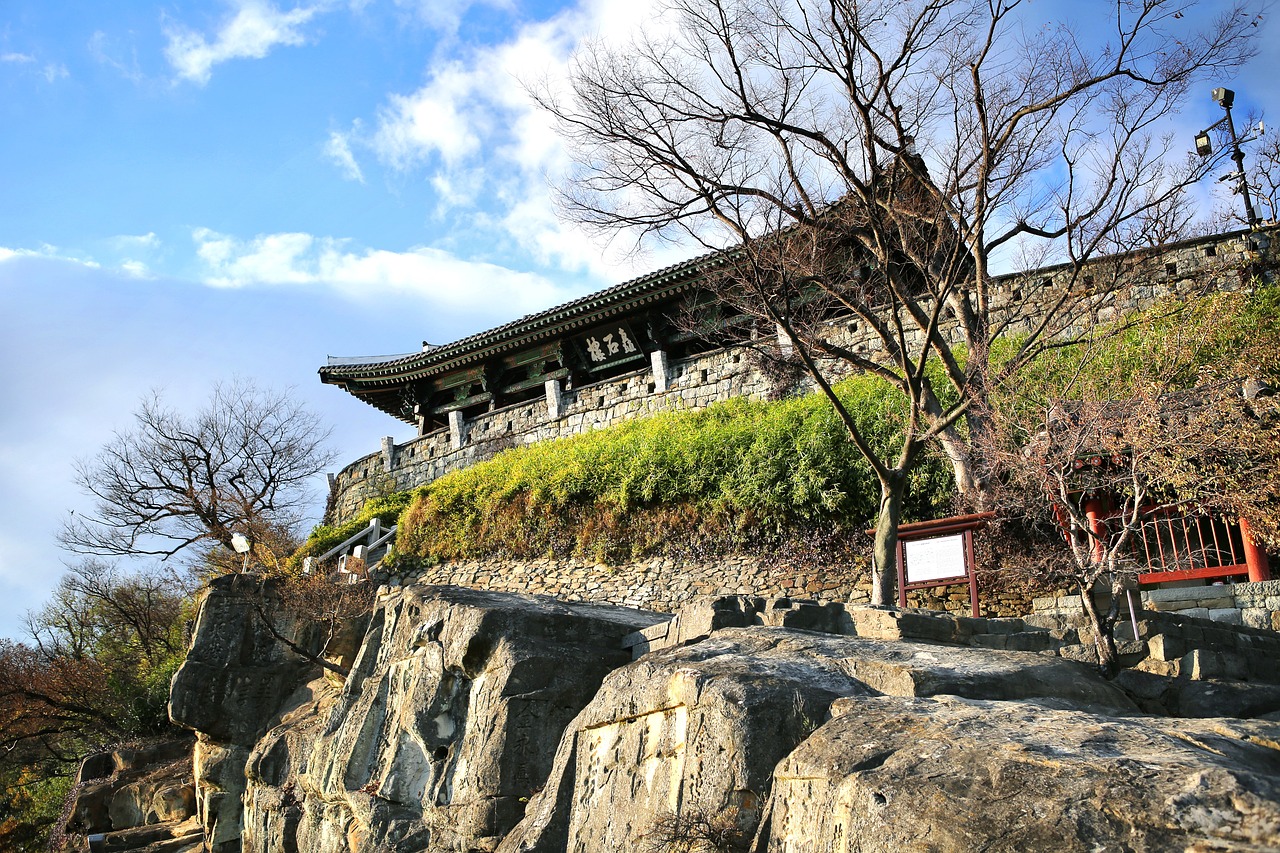
Busan is a great base for southern South Korea. Within one to two hours by train or bus you can reach ancient Silla capitals, cherry-blossom naval ports, island cable cars, and quiet fishing villages. Here are the seven best day trips from Busan, with transport notes, key sights, and the best season to go. See The Perfect 3-Day Busan Itinerary for city context, or Seoul to Busan KTX Guide for arrival tips.
Last updated: June 2026.
Quick Comparison
| Destination | Best transport | Journey time | Best season |
|---|---|---|---|
| Gyeongju (경주) | KTX or Mugunghwa train | Around 35–50 min (KTX) / ~1 hr (Mugunghwa) | Spring & autumn |
| Jinhae (진해) | Train to Changwon then bus | Around 1–1.5 hrs total | Late March – early April |
| Tongyeong (통영) | Express bus from Seobu Terminal | Around 1.5 hrs | Spring & summer |
| Daegu (대구) | KTX | Around 30 min | Year-round |
| Geoje (거제) | Bus from Seobu Terminal | Around 1.5–2 hrs | Spring & summer |
| Ulsan (울산) | KTX or express bus | Around 20–40 min | December (whale watching) |
| Namhae (남해) | Bus from Seobu Terminal | Around 2 hrs | Spring & summer |
1. Gyeongju (경주) — South Korea’s Open-Air Museum
No day trip from Busan is more rewarding than Gyeongju (경주). Once the Silla kingdom’s capital, the city is so saturated with ancient monuments that it is called the "museum without walls." The historic district is a UNESCO World Heritage Site, and even a single day reveals its magic.
Getting there
The fastest option is the KTX from Busan Station, arriving at Singyeongju Station in around 35–40 minutes. Check current fares and times at korail.com — the Mugunghwa (slower intercity) train takes around 50–60 minutes and is a cheaper alternative. From either station, take a taxi or local bus into the historic centre.
What to see
Bulguksa Temple (불국사) is the showpiece — a 8th-century masterpiece of Silla Buddhist architecture set on a hillside of flowering gardens. Allow 1.5–2 hours. From Bulguksa, a short bus ride takes you up to Seokguram Grotto (석굴암), an artificial granite cave containing a serene stone Buddha gazing out over the East Sea; arrive early to beat tour groups. Back in town, Daereungwon Tumuli Park (대릉원) holds enormous royal burial mounds — some the size of small hills — rising incongruously from the modern city. The park is beautiful at dusk. If time allows, round out the day at Donggung Palace and Wolji Pond (동궁과 월지), which is particularly atmospheric after dark when the ruins are reflected in the water.
Best time to visit: Spring (April–May) for cherry blossoms around the tumuli, and autumn (October–November) for golden foliage. Summer crowds can be heavy. See our full Gyeongju Day Trip from Busan guide for a detailed itinerary and transport tips.
2. Jinhae (진해) — Korea’s Cherry Blossom Capital
Each spring, the naval city of Jinhae (진해) — now part of Changwon — stages one of the most spectacular cherry-blossom displays in East Asia. The Yeojwacheon stream becomes a tunnel of pale-pink petals, Gyeonghwa Station platform disappears under blossoms, and the Jinhae Gunhangje (진해 군항제) festival draws millions of visitors. Outside blossom season, it is a quiet waterfront town.
Getting there
Take a train from Busan to Changwon or Masan (around 40–50 minutes; check current schedules), then a local bus or taxi to Jinhae. During festival season, special shuttle buses often run directly from Busan — check local tourism announcements in March. The total journey is around 1–1.5 hours depending on connections.
What to see
Walk the Yeojwacheon stream early in the morning before the crowds arrive. Climb to the Jinhae Tower for aerial blossom views over the bay. If you visit during the Gunhangje festival, the naval base opens to visitors on certain days — a rare chance to see Korean naval vessels up close.
Best time to visit: Late March to early April — the exact peak shifts by a week depending on the year. Outside blossom season the crowds vanish but the main draw disappears too. Read the full Jinhae Cherry Blossom Day Trip guide for timing, crowds, and what to do if you miss peak bloom.
3. Tongyeong (통영) — The Naples of Korea
Writers have long compared Tongyeong (통영) to Naples: coloured hillside houses tumble down to a busy inner harbour, and beyond it the southern sea is dotted with over 150 small islands. The seafood — especially raw oysters and gejang (간장게장, soy-marinated crab) — is outstanding.
Getting there
Express buses run regularly from Busan’s Seobu Intercity Bus Terminal (서부시외버스터미널), arriving in around 1.5 hours; check current departure times and fares at kobus.co.kr. The terminal is accessible from central Busan by subway and taxi.
What to see
Ride the Hanryeo Waterway Cable Car (한려수도 케이블카) up Mireuksan for panoramic views of the island-studded sea — one of the most photographed vistas in Korea. After descending, walk through the narrow lanes of Dongpirang Mural Village (동피랑), where local artists repaint the walls every year or two with fresh murals. Browse the Jungang Market for fresh seafood snacks and pick up a bag of daegwa (대과), the almond-flavoured biscuits that are Tongyeong’s most famous souvenir. For more detail, see the Tongyeong Day Trip from Busan guide.
Best time to visit: Spring and early summer for clear weather and calm seas. The city is pleasant year-round, though winter can be windy.
4. Daegu (대구) — Shoppers’ City with Street-Food Cred
Daegu (대구), South Korea’s fourth-largest city, is just 30 minutes by KTX — yet many travellers skip it. That is a mistake. The city is known for its fashion wholesale streets (Dongseongno), makchang (막창, grilled tripe) street food, and the Seomun Market (서문시장) night market. Temple lovers should attempt the hike to Gatbawi (갓바위), a flat-hat-wearing stone Buddha at the top of a steep rocky ridge. Getting there: KTX Busan → Dongdaegu, around 30 minutes (korail.com). Best season: Spring or autumn; summers are among Korea’s hottest.
5. Geoje (거제) — Island Beaches and War History
Geoje Island (거제도), South Korea’s second-largest island, is connected to the mainland by bridge. The east coast draws hikers and couples to beaches like Gujora (구조라) and Windy Hill (바람의 언덕); the west side has the Geoje POW Camp (거제도 포로수용소), a sobering Korean War open-air museum. Ferries to Oedo Island (외도) — a mid-sea botanical garden — are one of the most popular short cruises in Korea. Getting there: Buses from Seobu Terminal take around 1.5–2 hours (kobus.co.kr). Best season: April–June and September–October.
6. Ulsan (울산) — Whales, Waterfalls, and Industrial Edge
Ulsan (울산) sits between Busan and Gyeongju and is easy to tack onto either trip. The industrial city — home to Hyundai’s flagship shipyard — gives way quickly to natural beauty. Daewangam Park (대왕암공원) offers dramatic rocky coastline; Taehwagang Grand Park (태화강 국가정원) is beautiful in spring and winter, when migrating starlings fill the skies in sweeping murmurations. December to February is prime time for gray whale watching at Jangsaengpo (장생포).
Getting there: KTX from Busan to Ulsan Station takes around 20–25 minutes; an express bus from Nopo Terminal is also convenient, taking around 50–60 minutes. Always check current schedules. Best time to visit: December–February for whale watching and starling murmurations; spring for the Taehwagang park blooms.
7. Namhae (남해) — Germany Village and Slow Coastal Life
Namhae Island (남해도) is the hidden gem on this list — a rural island of terraced garlic fields, fishing harbours, and forested ridgelines that rewards unhurried visitors. The standout is Dogil Maeul (독일 마을), the Germany Village: Bavarian-style red-roofed cottages built by Korean nurses and miners who returned from West Germany in the 1960s. They sit above a blue Korean sea in a surreal and strangely moving scene. An Oktoberfest-style beer festival runs in autumn; otherwise the village is quiet and photogenic year-round.
Getting there: Buses from Seobu Terminal run to Namhae town in around 2 hours; check current schedules and note that services may be less frequent than to closer destinations. Having a rental car opens up more of the island. Best time to visit: April–May for yellow canola fields and mild weather; October for the village festival and autumn colour.
Quick Practical Tips
Book KTX in advance — especially on weekends and public holidays. Use korail.com or the Korail app for English-language booking. For buses, kobus.co.kr covers most intercity routes. Most bus services to Tongyeong, Geoje, and Namhae leave from Seobu Terminal (서부시외버스터미널) near Sasang Station (subway lines 2 and 3); Ulsan buses often run from Nopo Terminal (노포역) on line 1. Load a T-money card before leaving Busan — it works on buses and subways nationwide. See Top 10 Things to Do in Busan for more city orientation.
What is the easiest day trip from Busan for first-time visitors?
Gyeongju (경주) is the most rewarding and straightforward day trip. The KTX takes around 35–40 minutes, the main sights (Bulguksa Temple, Daereungwon tumuli, Donggung Palace) are well sign-posted in English, and the historic district is compact enough to cover in a single day on foot and by taxi. Check current KTX schedules and fares at korail.com before you go.
When is the best time to do the Jinhae cherry blossom day trip?
The Jinhae cherry blossoms (진해 군항제 festival) typically peak in late March to early April, though the exact timing shifts by a week or so each year depending on temperatures. Aim to go on a weekday if possible — weekend crowds can be very heavy. Check the Changwon city tourism website closer to spring for current year bloom forecasts.
Can I do two day trips in one day from Busan?
It is possible to combine Gyeongju and Ulsan in one long day — both are on the east coast KTX line and the journey between them takes around 10–15 minutes. However, trying to combine two full destinations often means rushing both. If you want to see Gyeongju properly, dedicate a full day to it. Tongyeong and Geoje can also be loosely combined if you have your own vehicle, but by bus the logistics become tight.
Do I need to speak Korean for these day trips?
For Gyeongju and Tongyeong, English signage at major sights is fairly good, and the KTX booking system has an English interface. For smaller destinations like Namhae or parts of Geoje, English is less common — having a translation app ready (Papago or Google Translate) is helpful for menus and bus timetables. A printed or screenshot map in Korean characters of your destination can help taxi drivers.