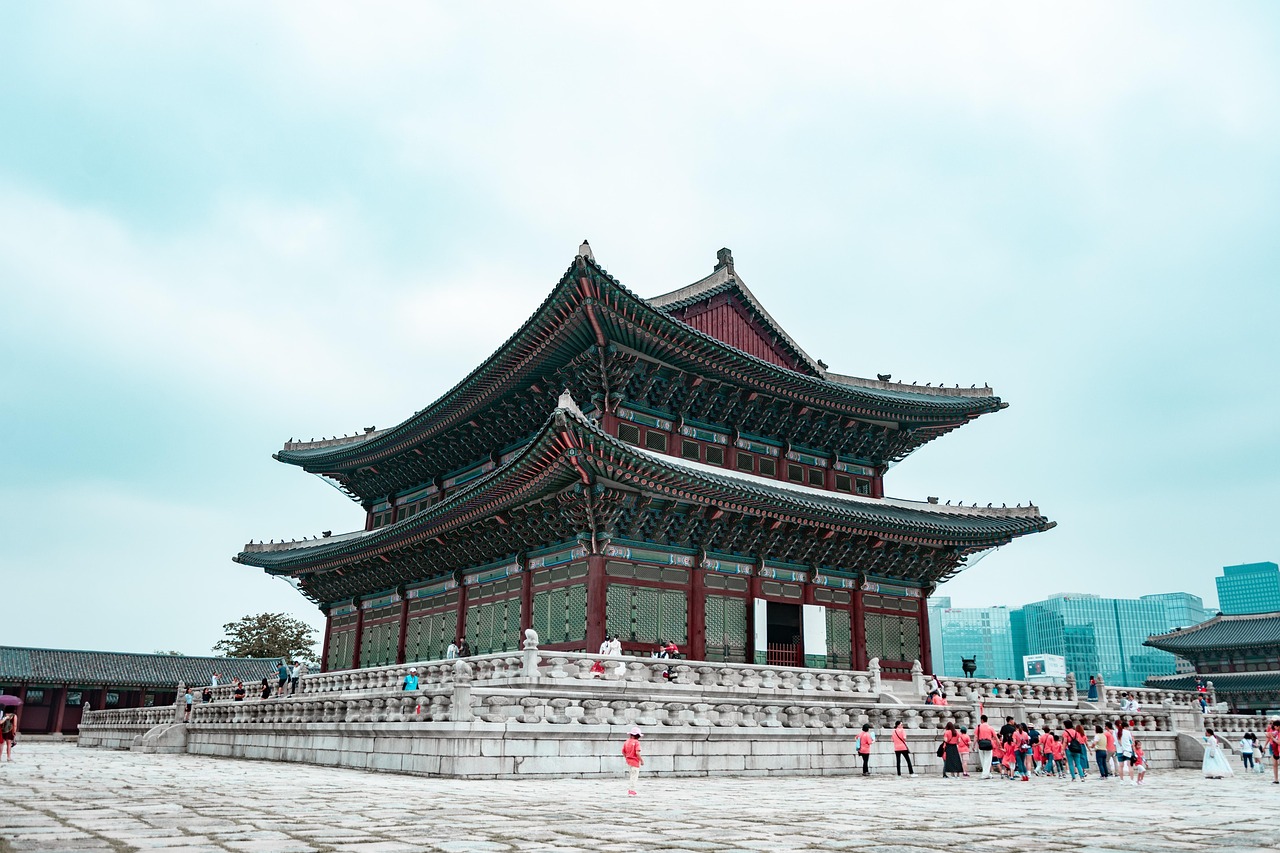
A full day moving through Seoul — palace courtyards at dawn, a mountain trail by mid-morning, a riverside picnic in the afternoon, and temple bells at dusk — can cost you nothing but a metro fare. While Seoul has a reputation as an expensive city, it runs one of the most generous public culture systems in East Asia: world-class national museums with no entry fee, free hiking on mountains that touch the city limits, free Buddhist temples in the middle of downtown, and a national palace program that opens every gate on Wednesdays. Here is exactly how to spend those days.
Seoul’s free culture landscape exists because South Korea funds its heritage institutions directly through the national budget. The National Museum of Korea — one of the largest museums in Asia — charges nothing, ever. The city’s Han River parks are public infrastructure on the scale of Central Park, maintained by Seoul Metropolitan Government. And the palace system, which charges modest entry fees on most days, opens completely on Culture Day and to anyone in hanbok regardless of day. Budget travelers who plan around these systems can spend a week in Seoul with almost no admission costs. See our first three days in Seoul guide and the five-day Seoul itinerary for how to structure those days.
Free Palace Days and How Culture Day Works (2026 Update)
As of April 2026, Culture Day expanded from the last Wednesday of each month to every Wednesday. On any Wednesday, all four major royal palaces — Gyeongbokgung, Changdeokgung, Deoksugung, and Changgyeonggung — offer free or heavily discounted entry, along with dozens of national galleries and museums. This is the single biggest structural change to Seoul’s free activities calendar in years, and it makes Wednesday the most efficient day to visit if you are on a tight budget.
The second permanent free pass is hanbok. Wear traditional Korean dress — rented from the many hanbok shops outside Gyeongbokgung’s Heungnyemun Gate for around ₩15,000–20,000 for two hours, as of early 2026 — and you enter all four palaces free, any day, any time the gates are open. The hanbok-free entry policy has no Culture Day restriction. Families with children find this particularly worthwhile: the rental often costs less than a single adult admission ticket, and children’s hanbok rentals run cheaper still. For background on the garment itself, see our hanbok guide.
Gyeongbokgung (Line 3, Gyeongbokgung Station, Exit 5) is the largest and most visited. Standard admission is ₩3,000 adults, but free on Wednesdays or in hanbok. Full details on what to see inside are in our Gyeongbokgung palace guide. Changgyeonggung is the quietest of the four and charges only ₩1,000 on non-free days — the lowest palace entry fee in Seoul.
Free Museums in Seoul
The National Museum of Korea (Line 4 or 9, Ichon Station, Exit 2) is permanently free. Its collection spans 300,000 artifacts from prehistoric Korea through the Joseon dynasty, including the Gilt-bronze Incense Burner of Baekje — one of Korea’s most important cultural objects. Plan two to three hours minimum. The building itself is worth the trip: the central hall frames Namsan through a massive rear window. No booking required, no Culture Day restriction. Typically open Tuesday–Sunday, 10:00–18:00, with extended Thursday and Saturday hours to 21:00; check current hours before visiting.
The National Folk Museum of Korea sits inside the Gyeongbokgung grounds and is free independently of your palace ticket. It covers daily life in Joseon-era Korea through reconstructed village scenes, traditional tools, and seasonal ceremony displays. Enter via the palace’s main gate or a separate side entrance on Wednesdays when the palace itself is free. The Seoul Museum of History (Line 5, Gwanghwamun Station) is also permanently free and covers the city’s urban development from the Joseon capital through the 20th-century transformation — useful context before walking any of the old city.
Free Outdoor Spaces
Han River Parks are free to enter. Twelve parks run along both banks; the most practical for first-time visitors are Yeouido (Line 5, Yeouinaru Station, one-minute walk) and Ttukseom (Line 2, Ttukseom Resort Station). Both have bike rental stations for the city’s Ttareungi share scheme — around ₩1,000 per hour as of early 2026 — running 24 hours. The Moonlight Rainbow Fountain at Yeouido runs evening shows in warmer months. Since September 2025, the Han River Bus connects seven stops from Magok to Jamsil, operating like a public ferry route — a new and inexpensive way to move between parks along the water.
Bukhansan National Park is free to hike and sits within the city limits, reachable by subway. The most popular trailhead for the Baegundae peak route starts near Ui Station (Line 4 extension). The full summit hike takes around four to five hours round trip. A shorter and less crowded alternative is Inwangsan (338m), where you walk sections of the old Seoul fortress wall with views back down over Gyeongbokgung. The trailhead is roughly 30 minutes on foot from Dongnimmun Station (Line 3). See our Bukhansan hiking guide for route details and what to bring.
Cheonggyecheon Stream is a 5.8km restored waterway cutting through central Seoul, accessible at street level at dozens of points along its length. Walking the full length from Cheonggye Plaza (near City Hall) east takes around 90 minutes at a relaxed pace, almost entirely flat. Oil Tank Culture Park (Line 9, Gayang Station) repurposed five decommissioned oil storage tanks into galleries and performance spaces with a park overlooking the Han River — free to enter, open daily.
Free Temples and Historic Neighbourhoods
Jogyesa Temple is the head temple of Korean Buddhism, located in the center of Seoul (Line 3, Anguk Station, Exit 6, 10-minute walk). Entry is free. The main hall — Daeungjeon — was built in 1938 and is decorated with murals of the Buddha’s life. The temple grounds include a 500-year-old white pine tree. Jogyesa is particularly striking during Lotus Lantern Festival in spring, when thousands of paper lanterns hang across the courtyard, but it is worth visiting any day.
Bukchon Hanok Village is free to explore, but since January 2026, chartered tour buses are banned in the area (fine: ₩300,000), and visiting hours in restricted residential zones are strictly 10:00–17:00, with a ₩100,000 fine for violations outside those hours. Arrive at Anguk Station (Line 3, Exit 2) right at 10:00 on a weekday morning. Walk uphill toward Bukchon 8 Gyung — eight numbered scenic viewpoints on signage throughout the village. Viewpoint 2 is the most photographed: a long alley of tile-roofed houses with Namsan Tower visible in the distance. Do not photograph through windows or doorways of residences, and keep groups to ten people or fewer.
Ikseon-dong, adjacent to Jongno-3ga Station (Lines 1, 3, 5), is a cluster of renovated hanok alleys now occupied by small cafes and independent shops. Free to walk through; most shops are low-pressure. Best visited on a weekday when the narrow lanes are quieter.
Free Performances and Market Browsing
The Deoksugung Palace Guard Changing Ceremony happens three times daily — at 11:00, 14:00, and 15:30 — outside the Daehanmun Gate. You do not need a palace ticket to watch; the ceremony takes place on the street in front of the gate (City Hall area, Line 1 or 2, City Hall Station). The ceremony runs approximately 20 minutes and includes the full costumed guard formation, drum corps, and procession. Check current schedule before visiting as occasional closures happen.
On weekend afternoons and evenings, Hongdae (Line 2, Hongik University Station, Exit 9) hosts street performances by musicians, dancers, and performance artists in the main plaza and pedestrian streets near Exit 5. No fixed schedule, no tickets — performances begin when performers gather audiences. See our Hongdae guide for what else is in the area.
Dongmyo Flea Market (Line 1, Dongmyo Station, Exit 1) is free to browse. It is one of the largest secondhand markets in Seoul, spread across several blocks with vintage clothing, tools, electronics, and antiques. Sunday is the largest market day. No pressure to buy; walking the stalls is a legitimate way to spend an hour.
Practical Tips for a Free Day in Seoul
- Plan around Wednesdays. Since April 2026, every Wednesday unlocks free entry across major palaces, national galleries, and museums. A Wednesday itinerary starting at Gyeongbokgung, continuing to the National Museum, and ending at Han River is entirely free of admission costs.
- Get a T-money card at any convenience store (around ₩2,500 plus whatever you load). It covers subway, bus, and the Ttareungi bike share, and gives a small discount versus single-use tickets. See our Seoul subway guide for how to use it.
- Wear hanbok to the palaces on non-Wednesday days. Rental shops line the street outside Gyeongbokgung’s main gate. Most rentals include accessories; some offer storage for your bag while you tour.
- Bukchon strictly 10:00–17:00. Do not wander in early or stay late — the residential fine is real.
- Combine efficiently. Gyeongbokgung + National Folk Museum + Bukchon + Jogyesa + Ikseon-dong is a walkable half-day cluster from Anguk Station. Han River parks pair naturally with the afternoon after the morning palace circuit.
Seoul rewards advance planning for budget travelers. Knowing which day is Culture Day, where the free museum clusters sit, and how to read the palace entry rules turns what looks like an expensive capital into one of the best-value cities for a tourist in Asia. For where to sleep while doing all of this, see our guide to where to stay in Seoul.
Are the palaces free in Seoul?
The four major royal palaces — Gyeongbokgung, Changdeokgung, Deoksugung, and Changgyeonggung — are free every Wednesday (Culture Day, expanded to every Wednesday as of April 2026). They are also free anytime for visitors wearing hanbok, regardless of day. On other days, standard adult admission runs ₩1,000–₩3,000 depending on the palace, as of early 2026 — verify current prices before visiting.
What day are things free in Seoul?
Wednesday is Seoul’s Culture Day. As of April 2026, this was expanded from the last Wednesday of each month to every Wednesday. On Wednesdays, major palaces, the National Museum of Korea, national galleries, and many public cultural spaces offer free or discounted entry. The National Museum of Korea is free every day regardless of day of the week.
Is Bukhansan free to hike?
Yes. Bukhansan National Park is free to enter and hike. It sits within Seoul’s city limits and is reachable by subway. The main trailhead for the Baegundae summit route is near Ui Station on Line 4. No permit or reservation is required for standard hiking routes, though the park may implement seasonal entry limits on peak-season weekends — check the Korea National Park Service website before visiting.
What are the best free museums in Seoul?
The National Museum of Korea (Ichon Station, Lines 4 and 9) is permanently free and is one of the largest museums in Asia. The National Folk Museum, located inside the Gyeongbokgung palace grounds, is also free. The Seoul Museum of History near Gwanghwamun is free and covers the city’s development from the Joseon period onward. All three can be visited on the same day when combined with a Wednesday palace visit.