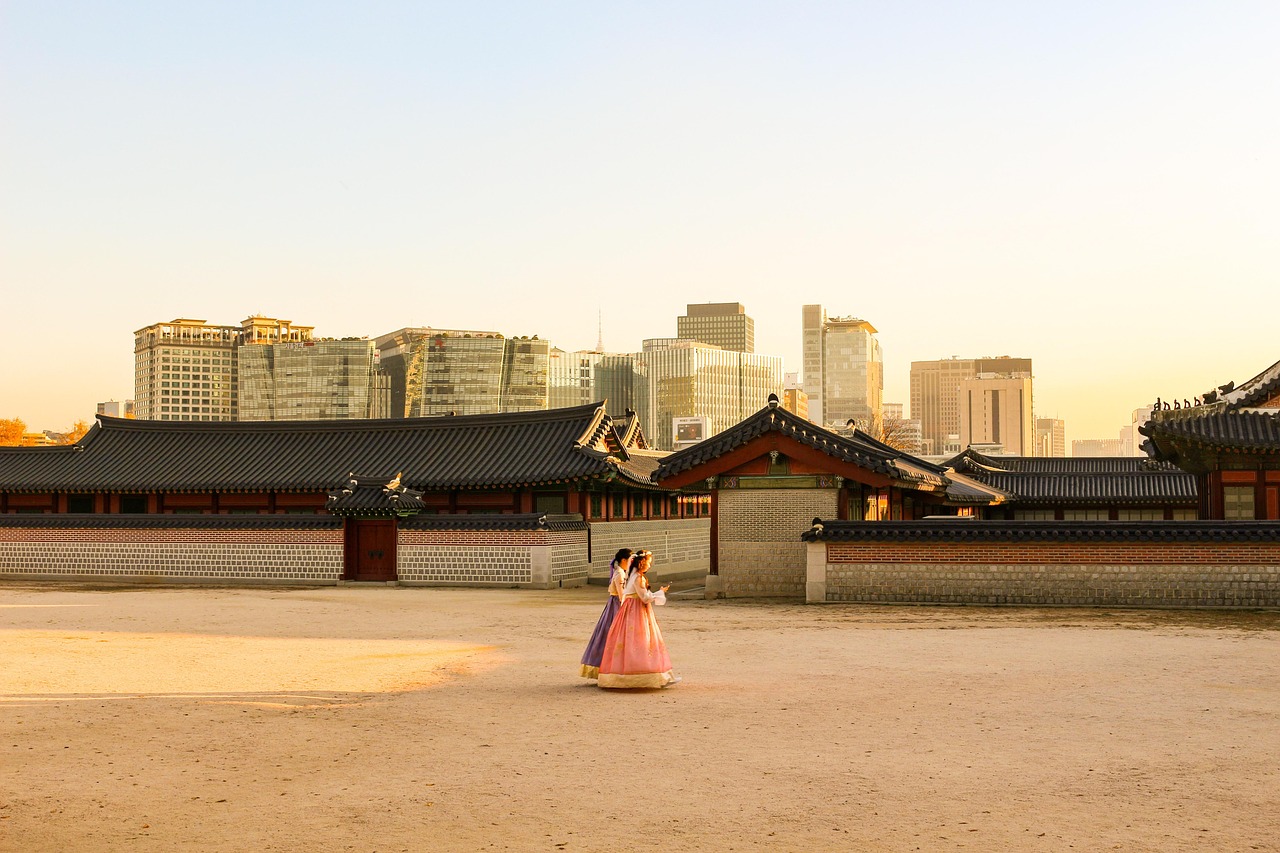
Seoul rewards first-time visitors who come prepared. Three days is enough to hit the city’s essential neighbourhoods, eat your way through street markets, and feel the rhythm of one of Asia’s most dynamic capitals. This itinerary is built around the subway (T-money card, top up at any convenience store), walkable clusters of sights, and honest KRW prices as of mid-2026.
Day 1 – Gyeongbokgung, Insadong, and Myeongdong
Start at Gyeongbokgung Palace (Line 3, Gyeongbokgung station, Exit 5). Gates open at 09:00. Admission is ₩3,000 for adults. Hire a hanbok from one of the rental shops on the north side of the palace wall — prices start at ₩15,000 for two hours — and entry is free while wearing one. Allow 90 minutes to walk the main halls and the lakeside Gyeonghoeru Pavilion.
Walk ten minutes south to Insadong. The main pedestrian street is lined with tea houses, hanji paper shops, and small galleries. Stop at Ssamziegil, a courtyard mall built around a spiral walkway, for handmade crafts and lunch. A bowl of doenjang jjigae (soybean paste stew) with rice and side dishes at a sit-down restaurant here runs ₩9,000–₩13,000.
Take the subway to Myeongdong (Line 4) for the evening. The outdoor shopping street turns into a food market after 18:00. Budget ₩5,000–₩10,000 for street snacks: grilled corn, hotteok (sweet pancakes), tornado potatoes, and skewered tteokbokki. K-beauty flagship stores — Innisfree, Etude House, Nature Republic — stay open until 22:00.
Day 2 – Bukchon Hanok Village, Hongdae, and Han River
Head to Bukchon Hanok Village, part of the wider Bukchon, Ikseon, and Jongno area (Anguk station, Line 3), by 09:00 before the tour groups arrive. The hillside alleys between Gyeongbokgung and Changdeokgung are filled with restored hanok tile-roofed houses, many still privately occupied. The city posts quiet-zone signs — keep voices low and avoid pointing cameras through gates. The viewpoint on Bukchon-ro 11-gil gives the classic shot of rooftops stacked down toward the city.
Cross to the north of the city for a coffee and afternoon at Seochon Village, a quieter alternative with indie bookshops and art cafes tucked into narrow lanes. Then take Line 2 west to Hongdae — see our guide to Hongdae for first-timers for more. This university district is at its best from late afternoon: independent clothing shops, vinyl record stores, and cheap kimbap joints (around ₩3,500 a roll). Street performers set up near the main park entrance from around 20:00.
Finish at the Han River. Take a short cab or Line 2 to Yeouido Hangang Park. Convenience stores inside the park (GS25, CU) rent basic picnic mats for ₩1,000 and sell chicken, beer, and instant noodles. Sitting by the river after dark with the Mapo Bridge lit up is one of Seoul’s most low-key pleasures.
Day 3 – Dongdaemun, Namsan Tower, and a Final Dinner in Itaewon
Take the subway to Dongdaemun History and Culture Park (Lines 2, 4, 5). The Zaha Hadid-designed DDP building hosts rotating design exhibitions — check the schedule at ddp.or.kr, tickets are usually ₩5,000–₩12,000 depending on the show. The surrounding fabric and fashion wholesale market opens at dawn and doesn’t really get going until mid-morning.
After lunch, walk or take a short bus to the base of Namsan Mountain. The cable car (₩16,000 round trip) runs every few minutes, or you can hike the forested path in about 25 minutes. N Seoul Tower observation deck admission is ₩21,000; the city view from the outdoor terrace is free. On a clear winter or autumn day you can see as far as the mountains ringing the city.
End your three days in Itaewon (Line 6, Itaewon station) — read more in our Itaewon and Haebangchon guide. The neighbourhood has rebuilt its dining scene and is home to a dense stretch of international restaurants alongside excellent Korean barbecue. For a proper send-off, book ahead at one of the galbi (beef short rib) restaurants on the hill above the main street — expect to spend ₩30,000–₩50,000 per person including a round of soju.
Practical Notes Before You Go
- Getting from the airport: AREX express train from Incheon to Seoul Station costs ₩11,000 and takes 43 minutes. All-stop service (₩4,950) takes about 66 minutes but stops at Hongik University station, which is convenient for many guesthouses.
- T-money card: Buy at any convenience store for ₩2,500 plus your top-up. Subway fares start at ₩1,400. Tap the card on buses and taxis too.
- Data SIM or pocket Wi-Fi: Buy a prepaid SIM at Incheon Airport arrivals (KT, SKT, LG U+). A 5-day unlimited data SIM runs around ₩25,000–₩35,000.
- Naver Maps over Google Maps: Google Maps navigation is unreliable in Seoul. Download Naver Maps — it has real-time subway routes, bus numbers, and walking directions that actually work.
- Tipping: Not customary in Korea. No need to tip at restaurants, taxis, or hotels.
Should You Buy a Discount Pass or Pay As You Go?
Several combo passes bundle Gyeongbokgung, N Seoul Tower, and a handful of museums into one ticket. The Discover Seoul Pass costs roughly ₩59,000–₩109,000 depending on validity (24, 48, or 72 hours) — prices can change, so check the official site before buying. It only pays off if you’re hitting four or more paid attractions in the covered window and actually queue-jump at busy sites like the tower. For the three-day itinerary above, most travellers are better off paying as you go: total entry fees for the palace, DDP exhibition, and N Seoul Tower rarely exceed ₩40,000 per person, and you keep the freedom to skip a site if the weather turns or you’re running behind schedule. Choose the pass if you’re also adding extras such as a folk village or cable car ride outside this route; skip it if you’re sticking closely to the plan here.
One thing rarely mentioned in official guides: many palace ticket booths and the DDP box office only accept Korean cards or cash for small transactions under ₩10,000, even though card payment is standard almost everywhere else in the city. Keep a small amount of cash — ₩20,000–₩30,000 — on hand for these edge cases, ticket machines at smaller subway stations that reject foreign cards, and the odd street stall that doesn’t take T-money or card at all.
If you’re travelling with a rail pass or plan onward trips to Busan or Jeju, buy KTX tickets a few days ahead through the Korail app rather than at the station on the day — weekend departures from Seoul Station sell out well before the morning of travel, especially around Korean holidays. Foreign-issued cards work in the app for most routes, but if a payment fails, a same-day ticket counter at Seoul Station will usually still have seats on less popular departure times.