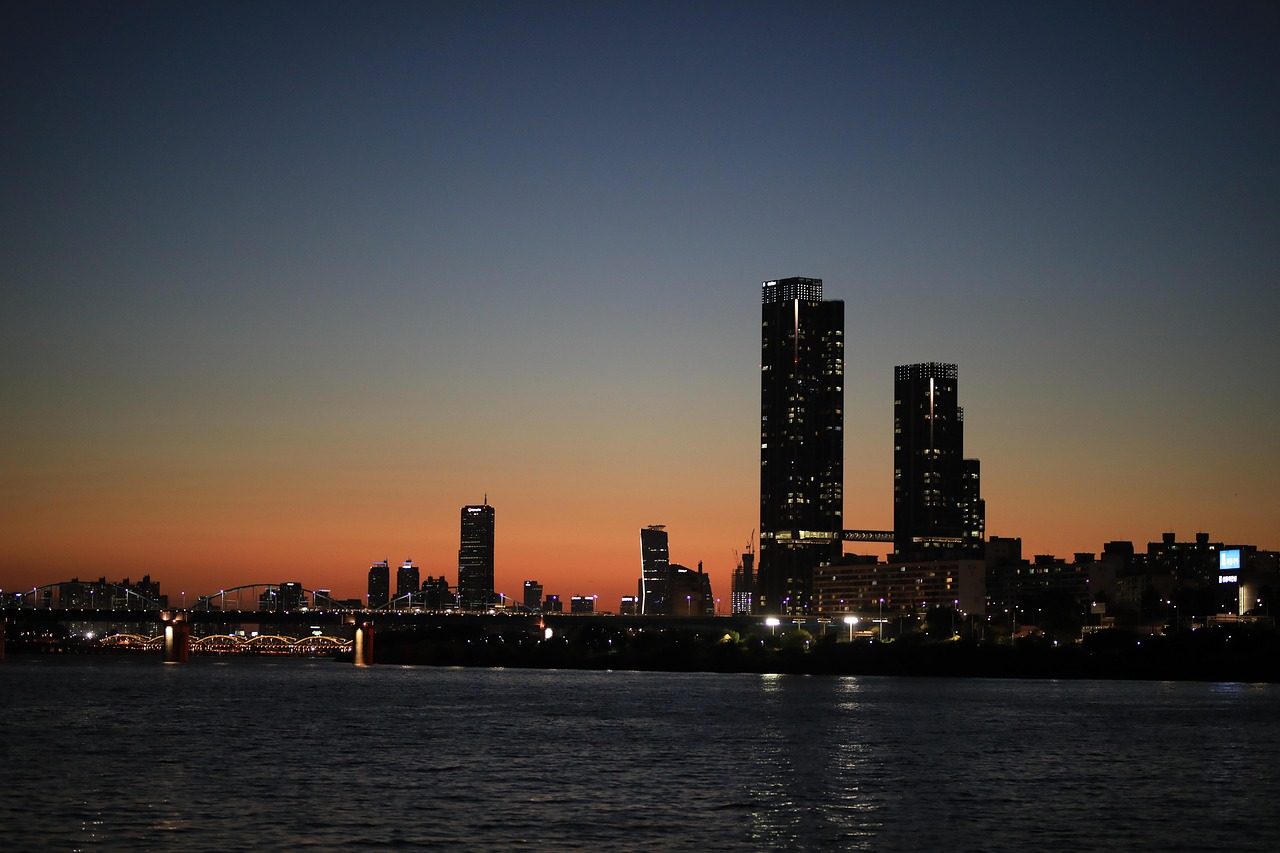
Gangnam is Seoul’s most polished district — a place where designer boutiques sit beside street food stalls, and futuristic skyscrapers overlook hidden spa alleys. Made globally famous by a 2012 pop song, the real Gangnam offers visitors a dense mix of luxury shopping, Korean beauty culture, great food, and efficient transport. Here is what you need to know to make the most of a day or two south of the Han River — and if Gangnam is just one stop on a longer trip, it fits neatly into a broader 3-day Seoul itinerary.
Getting to Gangnam and Getting Around
Gangnam is straightforward to reach on Seoul Metro Line 2 (green). The central hub is Gangnam Station (강남역), one of the busiest in the city. From central Seoul landmarks like Myeongdong or City Hall, the ride takes about 20 minutes and costs 1,500 KRW with a T-money card. From Incheon International Airport, take Airport Rail Express (AREX) to Seoul Station, then transfer to Line 2 — total journey around 70 minutes and roughly 4,950 KRW.
Within Gangnam itself, walking is often the best option between Gangnam Station, Sinnonhyeon Station, and the Apgujeong–Cheongdam area. Taxis are plentiful and affordable: a short 2 km hop inside the district typically runs 4,000–6,000 KRW with Kakao Taxi (the standard app for hailing rides in Korea). Avoid driving — parking is expensive and traffic on weekends can be brutal.
What to Do: Shopping, Beauty, and Culture
Gangnam’s main draw for most visitors is shopping and K-beauty. COEX Mall (코엑스몰) in Samseong-dong is the place to start — it is one of the largest underground malls in Asia, with over 260 stores, a massive bookstore (Starfield Library, free entry), an aquarium (adult ticket 35,000 KRW), and direct access to the SM Town museum for K-pop fans. Allow two to three hours minimum.
For street-level retail, the Garosu-gil (가로수길) area in Sinsa-dong is Gangnam’s answer to a tree-lined boutique strip. Independent fashion labels, Korean skincare shops, and specialty coffee roasters line a 600-metre stretch. It is most lively on weekend afternoons. Nearby Cheongdam-dong (청담동) is where you find the true luxury tier — Dior, Chanel, Louis Vuitton flagship stores — as well as some of Seoul’s most expensive Korean dining.
Culture seekers should visit the Bongeunsa Temple (봉은사), a working Buddhist temple founded in 794 CE that sits directly across from the COEX complex. Entry is free. The contrast of ancient wooden halls against glass towers is one of Gangnam’s most photogenic sights. Arrive early morning (before 8 am) for quiet and to see monks at prayer — for a deeper dose of traditional architecture, pair this with an afternoon in Bukchon, Ikseon, and Jongno.
Where to Eat: Budget to Splurge
Gangnam has a wide food range despite its upscale reputation. For quick and cheap eating, the underground food court beneath Gangnam Station has set lunch menus (정식) for 8,000–12,000 KRW covering bibimbap, sundubu jjigae, and grilled fish. Takeaway kimbap rolls from convenience stores like GS25 or CU run 1,500–2,500 KRW each.
For a mid-range sit-down meal, head to the streets behind Gangnam Station (Exit 6 or 7) where samgyeopsal (pork belly BBQ) restaurants charge 13,000–18,000 KRW per person including side dishes and rice. Many are open until 2 am, making this the area’s go-to late-night option.
Splurge option: Gangnam has a dense cluster of omakase restaurants, especially in Cheongdam and Apgujeong. Korean beef (한우 hanwoo) tasting menus start around 120,000 KRW per person. Book at least a week ahead through the Catch Table app (available in English).
Practical Tips Before You Go
- Best time to visit: Weekday mornings are quietest. Saturday afternoons around Gangnam Station can feel overwhelmingly crowded.
- T-money card: Load cash at any convenience store. A card costs 2,500 KRW and works on all Seoul buses, metro lines, and some taxis.
- ATMs: Global ATMs (accepting foreign cards) are found inside every GS25 and 7-Eleven, and in the COEX lobby. Withdrawal fee is typically 2,000 KRW.
- Language: English signage is good around major stations and COEX. In smaller restaurants away from the main strips, pointing at menu photos works fine. Naver Maps has an English interface and is more accurate than Google Maps in Seoul.
- Dress code: Gangnam skews fashionable. Cheongdam and Apgujeong upscale restaurants may turn away guests in beachwear or very casual attire.
What to Budget for a Day in Gangnam
Gangnam has a reputation for being expensive, but a well-planned visit can suit a range of budgets. A sit-down lunch at a mid-range Korean restaurant near Gangnam Station runs around ₩12,000–₩18,000 per person (as of 2026 — verify before visiting), while a quick kimbap or bibimbap at a local snack shop costs under ₩8,000. Compare this with Myeongdong, where tourist-facing restaurants often charge ₩15,000–₩25,000 for the same dishes — Gangnam’s locals-first eateries generally offer better value for the quality, similar to the budget-friendly cafes found around Hongdae.
For shopping, COEX Mall and the surrounding Starfield complex are free to enter and great for window shopping. A Korean BBQ dinner for two with drinks at a well-regarded Apgujeong spot will typically run ₩60,000–₩100,000 (as of 2026 — verify before visiting). If you plan to visit a jjimjilbang (Korean sauna) in the area, entry is usually ₩12,000–₩15,000, which is on par with bathhouses elsewhere in Seoul.
Practical Tips for First-Time Visitors
A few things make a Gangnam visit run much smoother — especially if this is your first time in Seoul:
- Get a T-money card at the airport or any convenience store. Tapping in and out of Line 2 is seamless, and the card also works at CVS chains like CU and GS25 throughout Gangnam.
- Gangnam Station Exit 6 or 7 is your orientation anchor. Most streets worth exploring — Garosu-gil, the beauty clinics strip, and the main shopping boulevard — radiate from these exits.
- Avoid peak commute hours on Line 2 (8–9 am and 6–8 pm). The platforms at Gangnam Station are among the most crowded in the city during rush hour.
- Garosu-gil is best on weekday afternoons. Weekends bring large crowds to this tree-lined café street; arriving on a Tuesday or Wednesday gives you room to browse boutiques at your own pace.
- Many beauty clinics offer walk-in consultations in English. If a skincare treatment or facial is on your list, prices are typically 20–40% lower than equivalent treatments in Tokyo or Hong Kong.