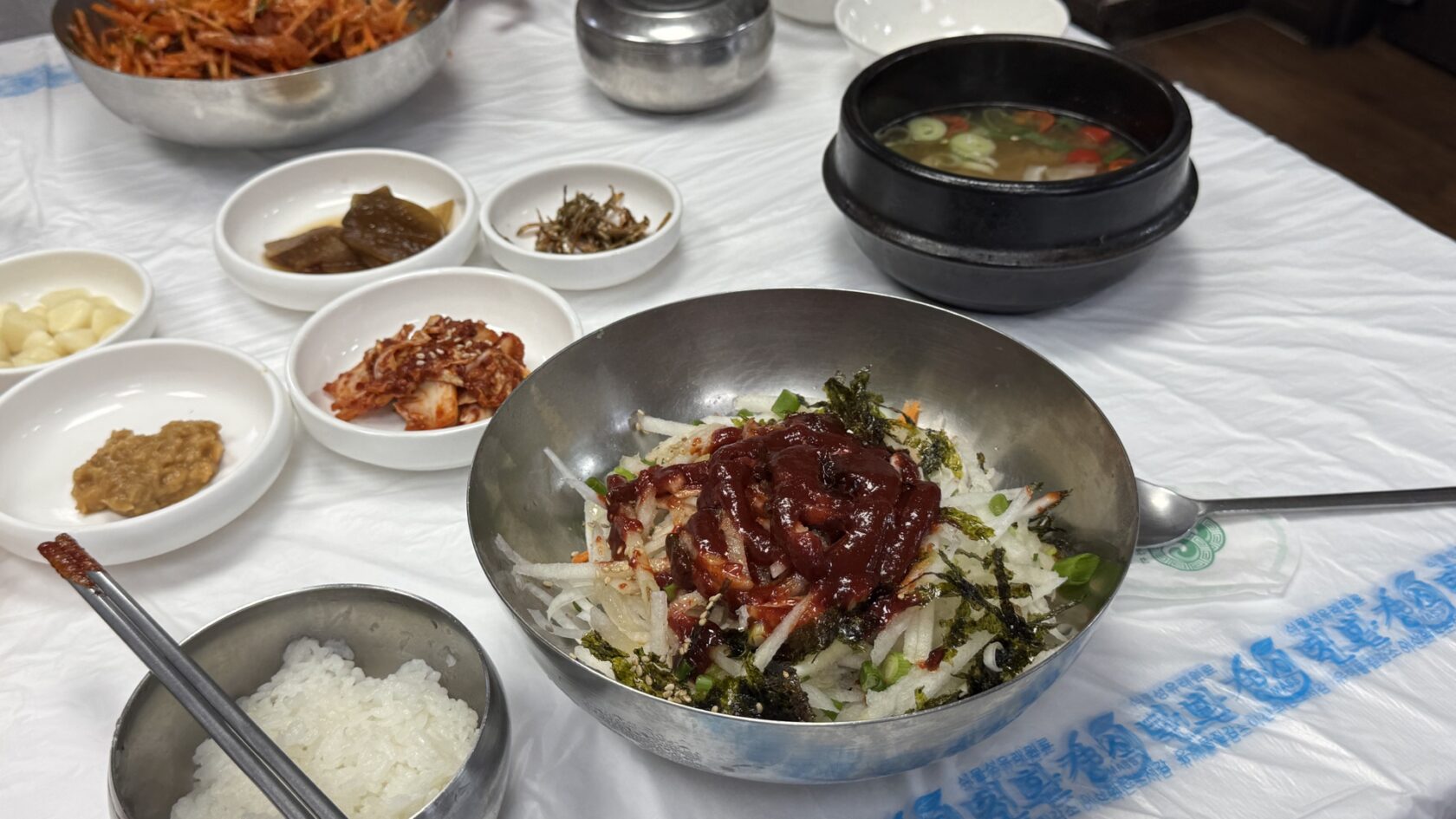
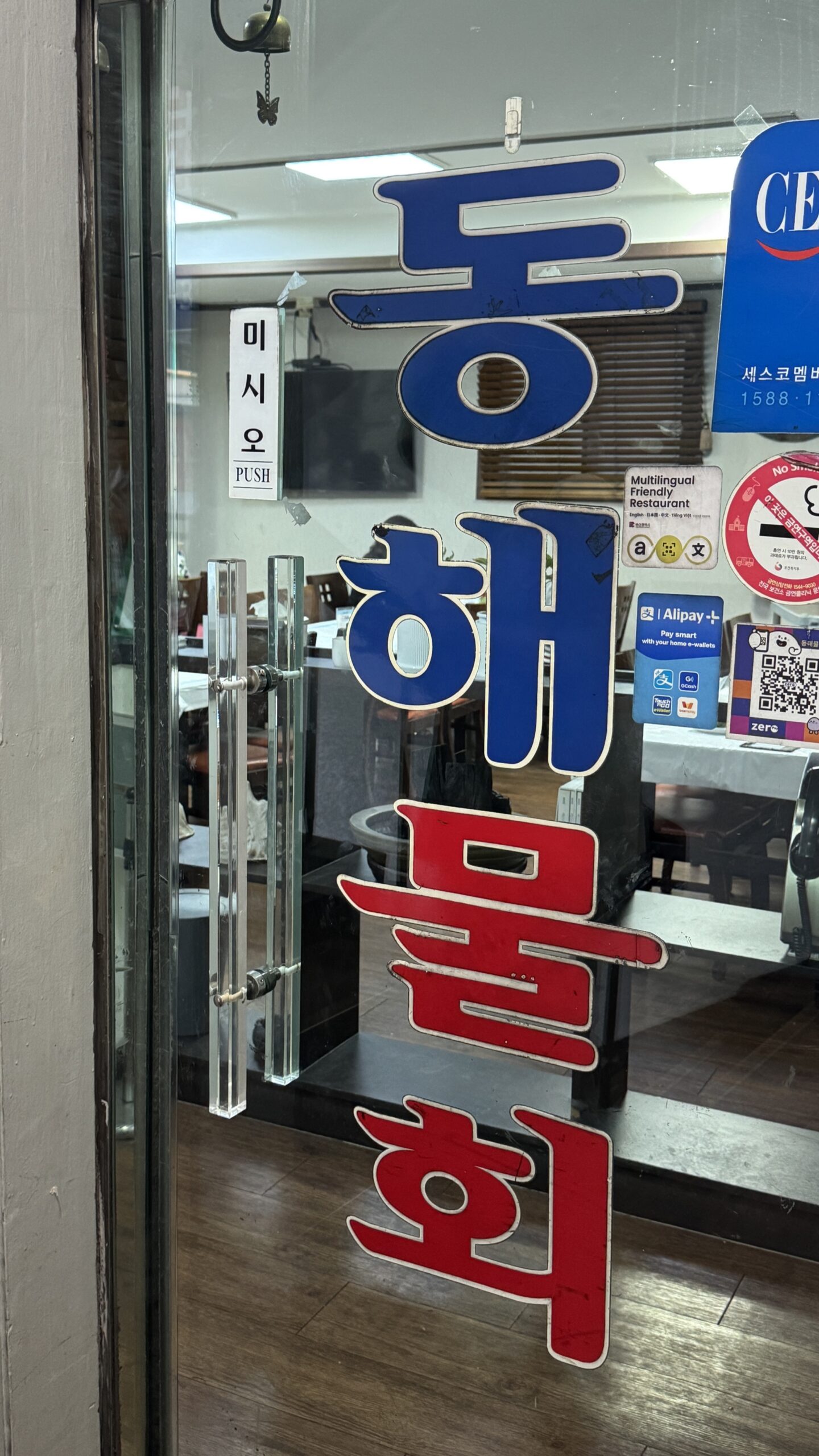
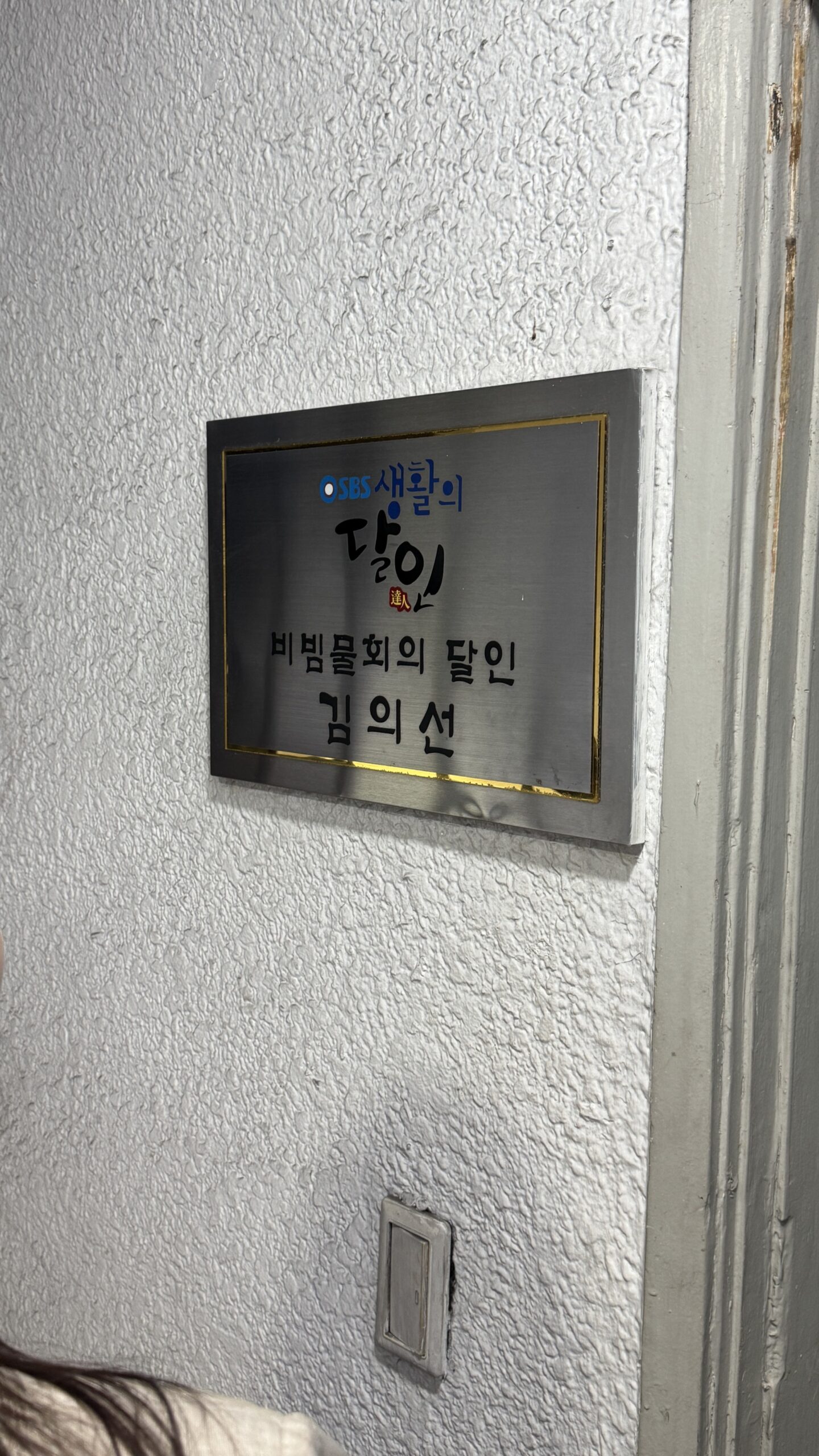
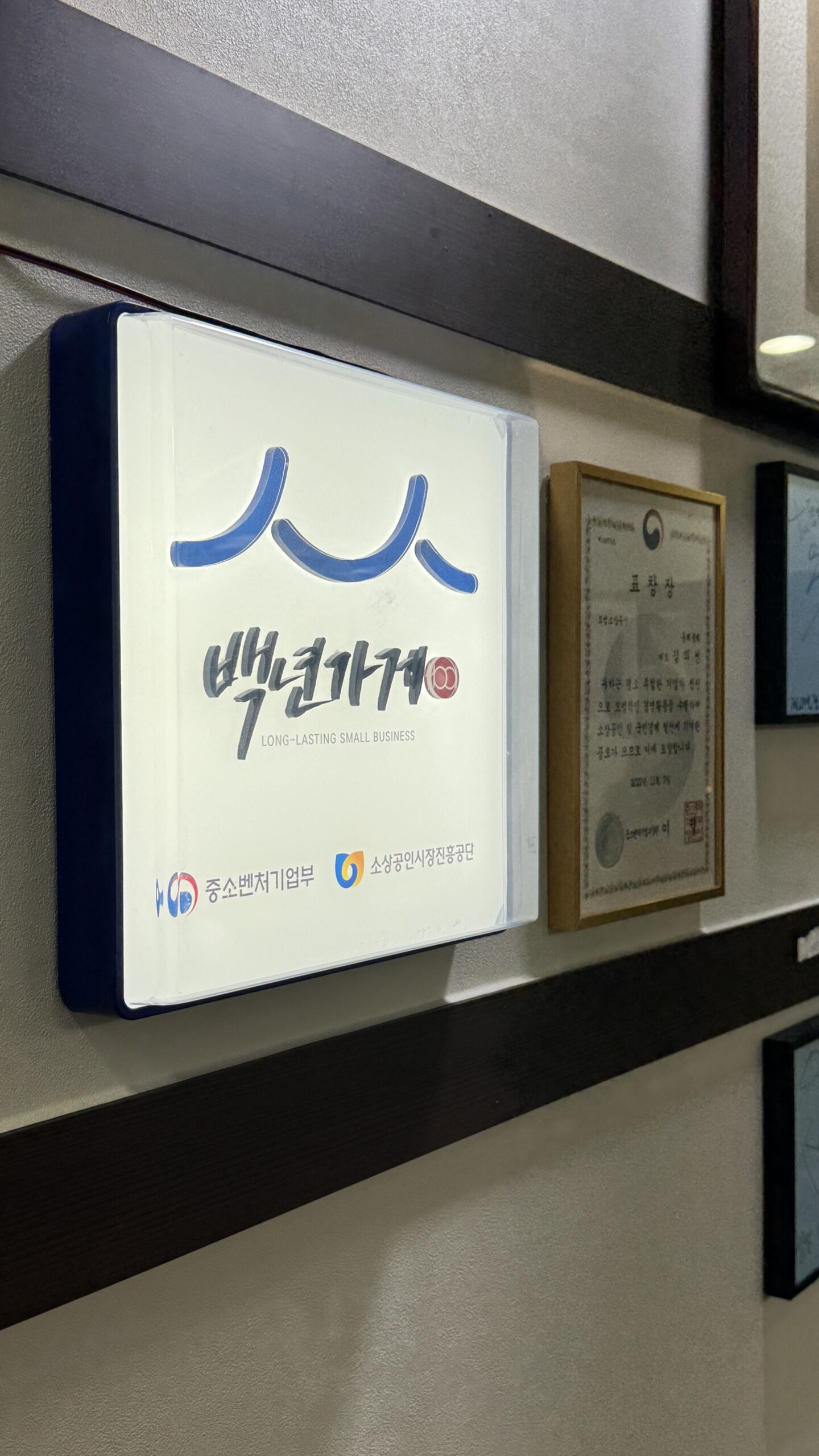
Donghae Mulhoe (동해물회) has been in the same second-floor space on Seonjeon-ro in Seomyeon for over 40 years. It holds a Baengnyeon Gage (백년가게) certification — a government designation for small businesses with exceptional longevity and quality — and was featured on SBS’s nationally-broadcast Saenghwal-ui Dallin (생활의 달인, “Master of Living”), where owner Kim Ui-seon was recognised as a master of bibim mulhoe (비빔물회). This is where Seomyeon locals eat mulhoe, and one of the more honest food experiences available in central Busan — alongside spots like Gilchon’s pork galbi, it’s part of what makes Seomyeon worth a dedicated meal, not just a subway transfer.
Visited June 2026. Prices and hours can change; confirm before visiting.
What Is Bibim Mulhoe — And Why Is It Different from Regular Mulhoe?
Mulhoe (물회) literally means “water raw fish.” The classic version — common on Korea’s east coast — is fresh raw fish and vegetables served in an icy, spicy-sweet broth made with gochujang and vinegar, using the same style of raw seafood you’ll find at Busan’s Jagalchi Market, Korea’s largest seafood market. You eat it cold, almost like a seafood gazpacho, then finish the remaining broth with thin wheat noodles (소면, somyeon).
Bibim mulhoe (비빔물회) is a drier variation. The broth is largely absent. Instead, the raw fish is tossed directly in a thick, intensely seasoned gochujang paste with shredded vegetables, sesame oil and garlic. The result is closer to a spicy raw-fish bibimbap than a soup: you mix everything in the bowl before eating. The flavour is bolder and more concentrated than the broth-based version.
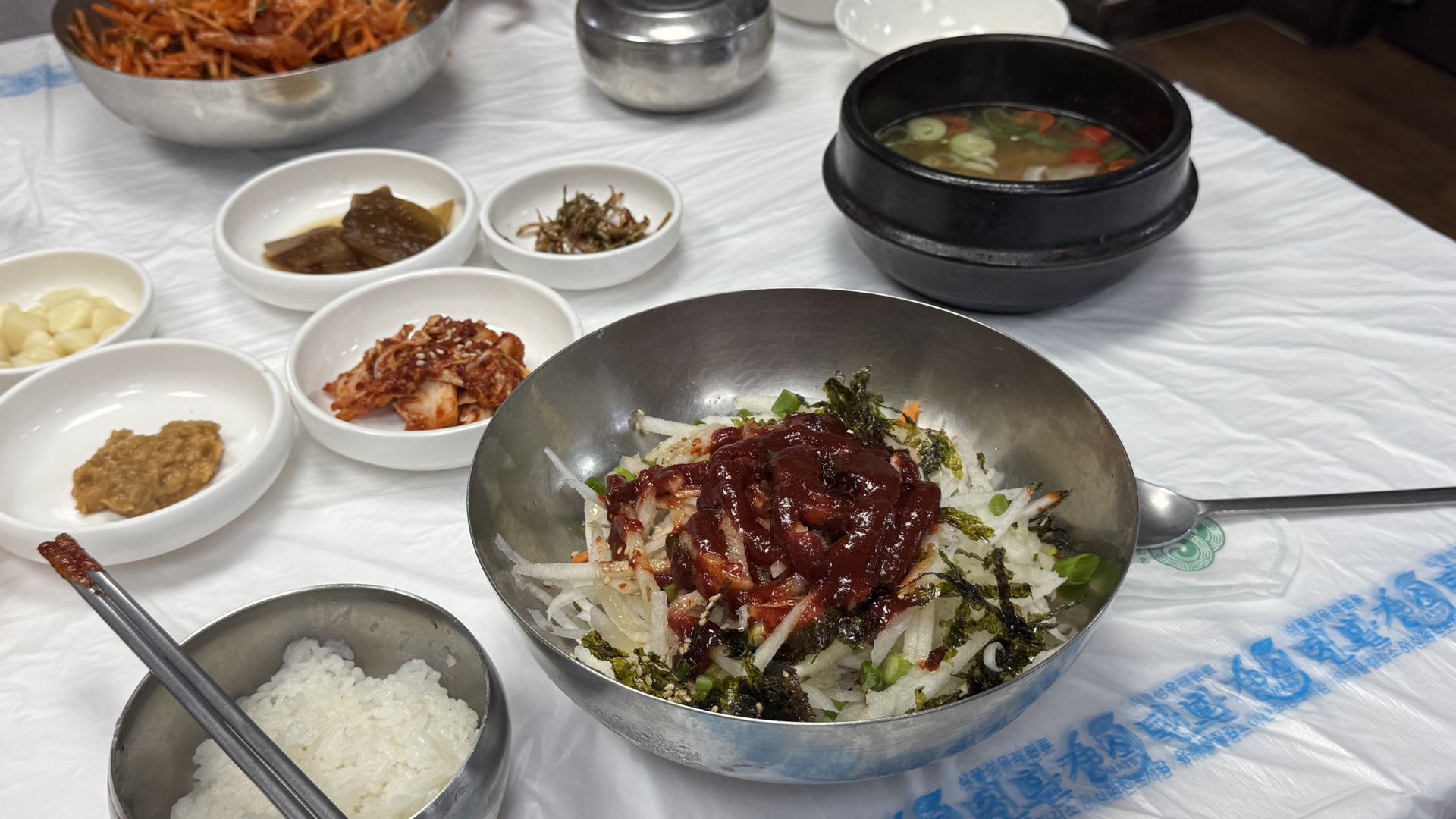
Donghae Mulhoe’s version — as seen on the SBS programme — is notably dense. It is served in a large stainless-steel mixing bowl alongside rice, doenjang jjigae, pajeon (savoury pancake) and multiple side dishes.
Why This Restaurant Has Government Certificates on the Wall
The Baengnyeon Gage (백년가게) designation — “Century Store” — is issued by Korea’s Ministry of SMEs and Startups to small businesses that demonstrate exceptional quality, customer loyalty and longevity. Selection involves on-site evaluation and assessment of the business’s cultural role. Fewer than a few hundred restaurants in all of Korea hold this designation at any given time.
Donghae Mulhoe also earned the SBS Master of Living appearance separately: the programme covers craftspeople who have achieved mastery in a specific skill over decades. Owner Kim Ui-seon’s selection as a “bibim mulhoe master” (비빔물회의 달인) reflects long-practised technique rather than celebrity trendiness. The restaurant also appeared on KBS 6시 내고향.
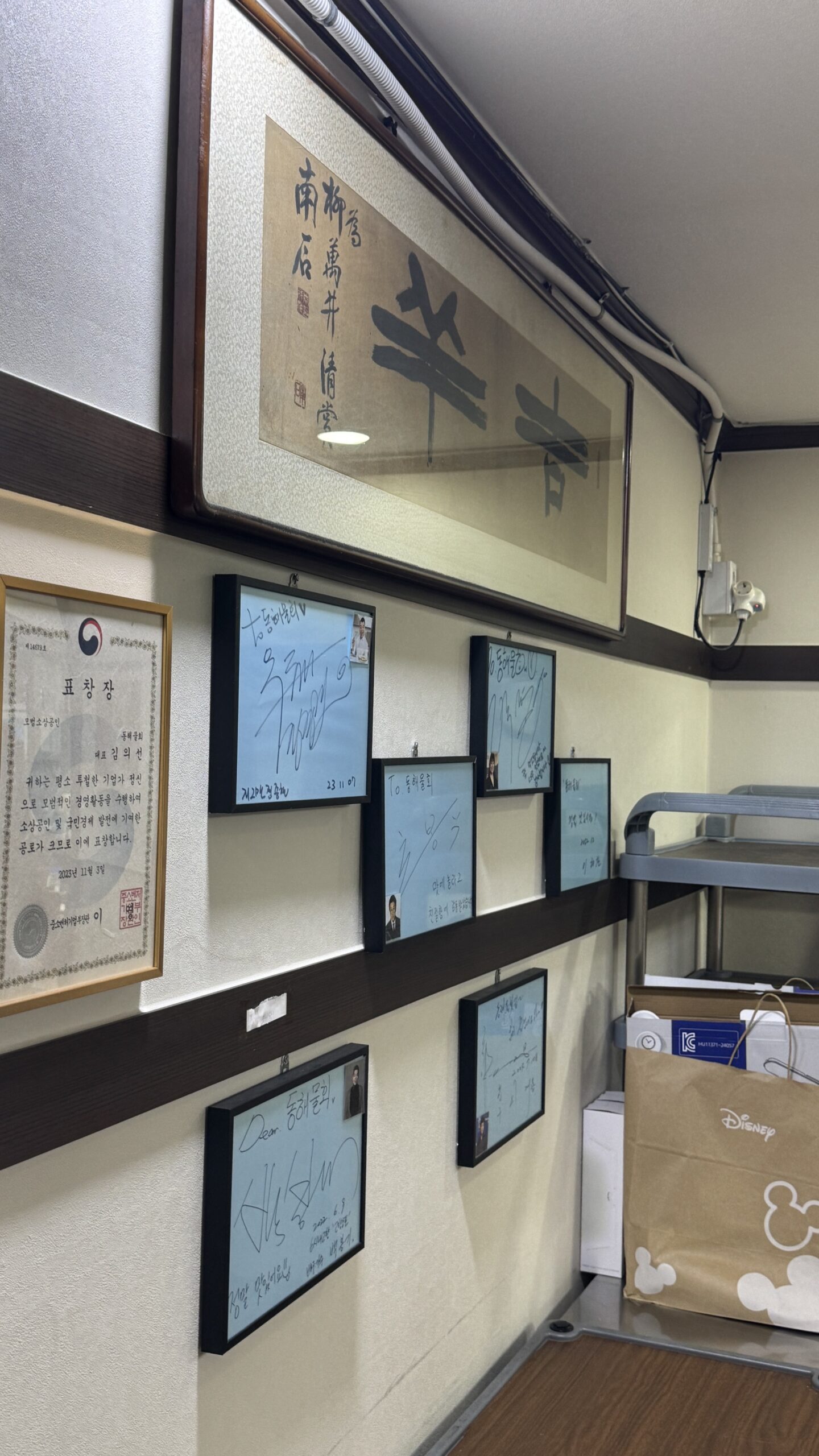
The celebrity autograph boards accumulated over four decades alongside the government certifications. Both categories tell the same story: this place has been worth visiting for a long time.
What You Get: The Full Meal
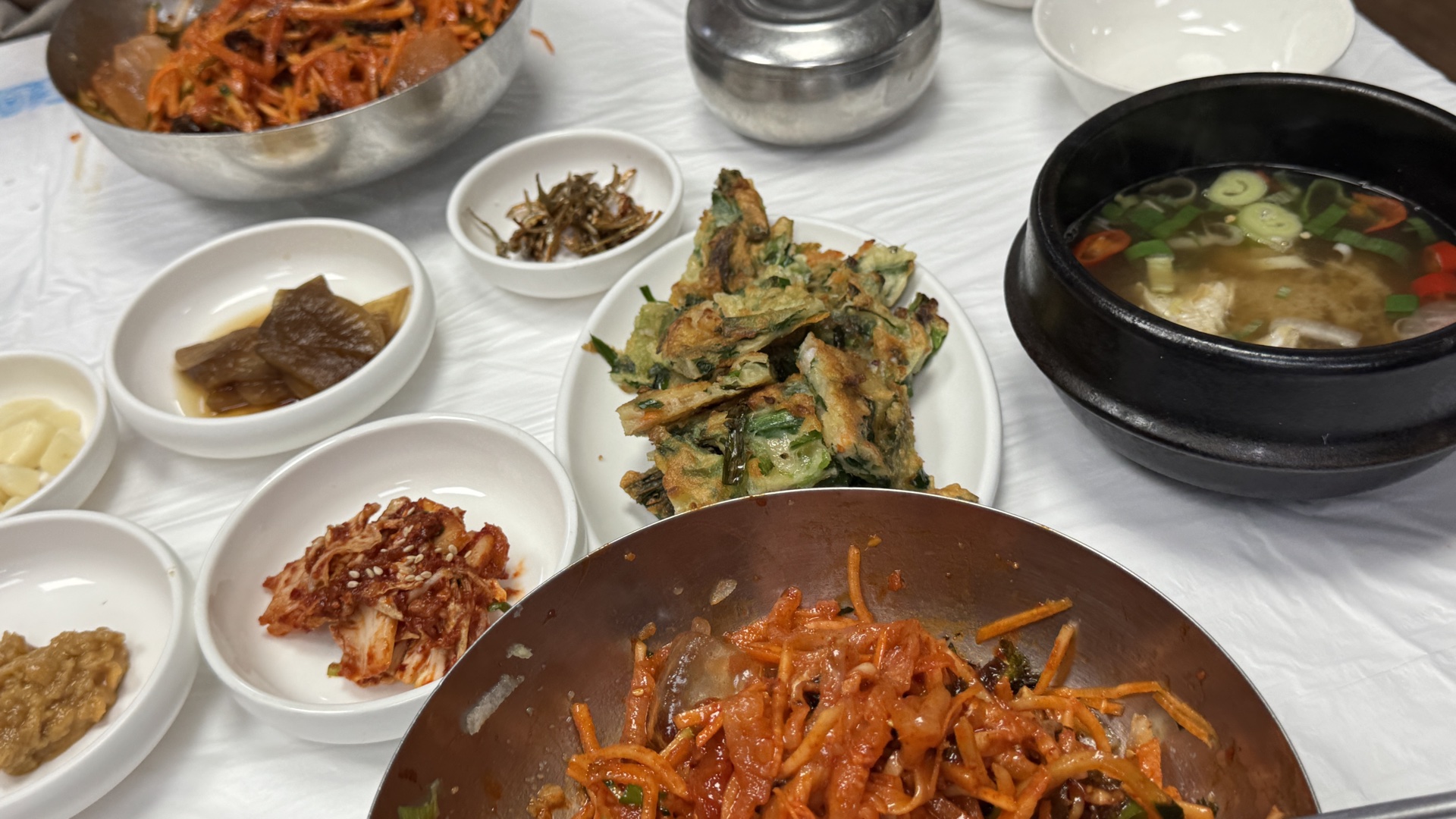
- Bibim mulhoe (비빔물회): A large stainless-steel bowl of fresh raw fish mixed with shredded vegetables, gochujang sauce, sesame oil and garnishes. One bowl is a complete meal for one adult.
- Steamed white rice: Served separately. Many customers mix rice directly into the bibim bowl toward the end.
- Doenjang jjigae (된장찌개): A hot fermented soybean soup that balances the cold, spicy main dish.
- Pajeon (파전): A savoury green-onion pancake — crisp-edged and substantial.
- Multiple banchan (side dishes): Typically kimchi, pickled vegetables, seaweed and dried fish.
- Perilla leaves (깻잎): Used for wrapping — the traditional way to eat the dish.
How to Eat Bibim Mulhoe Step by Step

- Mix the bowl first. Fold the gochujang paste from the bottom through the fish and vegetables until evenly distributed.
- Taste a plain spoonful. The baseline is spicy-sour-sweet; the raw fish should be clean and fresh, not fishy.
- Make a perilla wrap. Lay one large perilla leaf flat, add a small spoonful of bibim mulhoe, and fold closed. Eat whole. This softens the intensity with the herb’s slightly bitter, anise-like flavour.
- Eat the pajeon with dipping paste. The textural contrast — crisp pancake alongside cold raw fish — is intentional.
- Finish with rice mixed in. When the bibim portion is half-eaten, add a scoop of rice directly to the bowl and eat as a spicy mixed-rice dish.
- Close with doenjang jjigae. The warm, umami-forward soup provides a natural end and settles the stomach after cold, spicy food.
Practical Information
| Detail | Info |
|---|---|
| Restaurant name | 동해물회 (Donghae Mulhoe) |
| Address (Korean) | 부산 부산진구 서전로 13 2층 (부전동 142-5) |
| Floor | 2nd floor — look for staircase entrance |
| Nearest subway | Seomyeon Station (서면역), Line 1 or 2 — 5–8 min walk |
| Hours | 09:00 – 21:00 (weekdays); verify for weekends |
| TV appearance | SBS 생활의 달인 — 비빔물회의 달인 김의선 / KBS 6시 내고향 |
| Certification | 백년가게 (Baengnyeon Gage) — Ministry of SMEs and Startups |
| Payment | Alipay accepted; cash and Korean cards standard |
The restaurant is on the second floor of a building on Seonjeon-ro — look for the staircase entrance. Search 동해물회 서면 on Naver Map or Google Maps for a walking route from Seomyeon Station.
Tips for First-Timers
- Go at lunch, not dinner. Mulhoe is a daytime dish in Korea — the restaurant opens at 09:00 and many regulars eat it as a late breakfast or lunch.
- This is a raw-fish dish. The restaurant’s 40-year reputation depends on quality sourcing. Not suitable for those who need fully cooked fish.
- It will be spicy. Mix a larger proportion of rice into the bowl early to dilute the heat if needed.
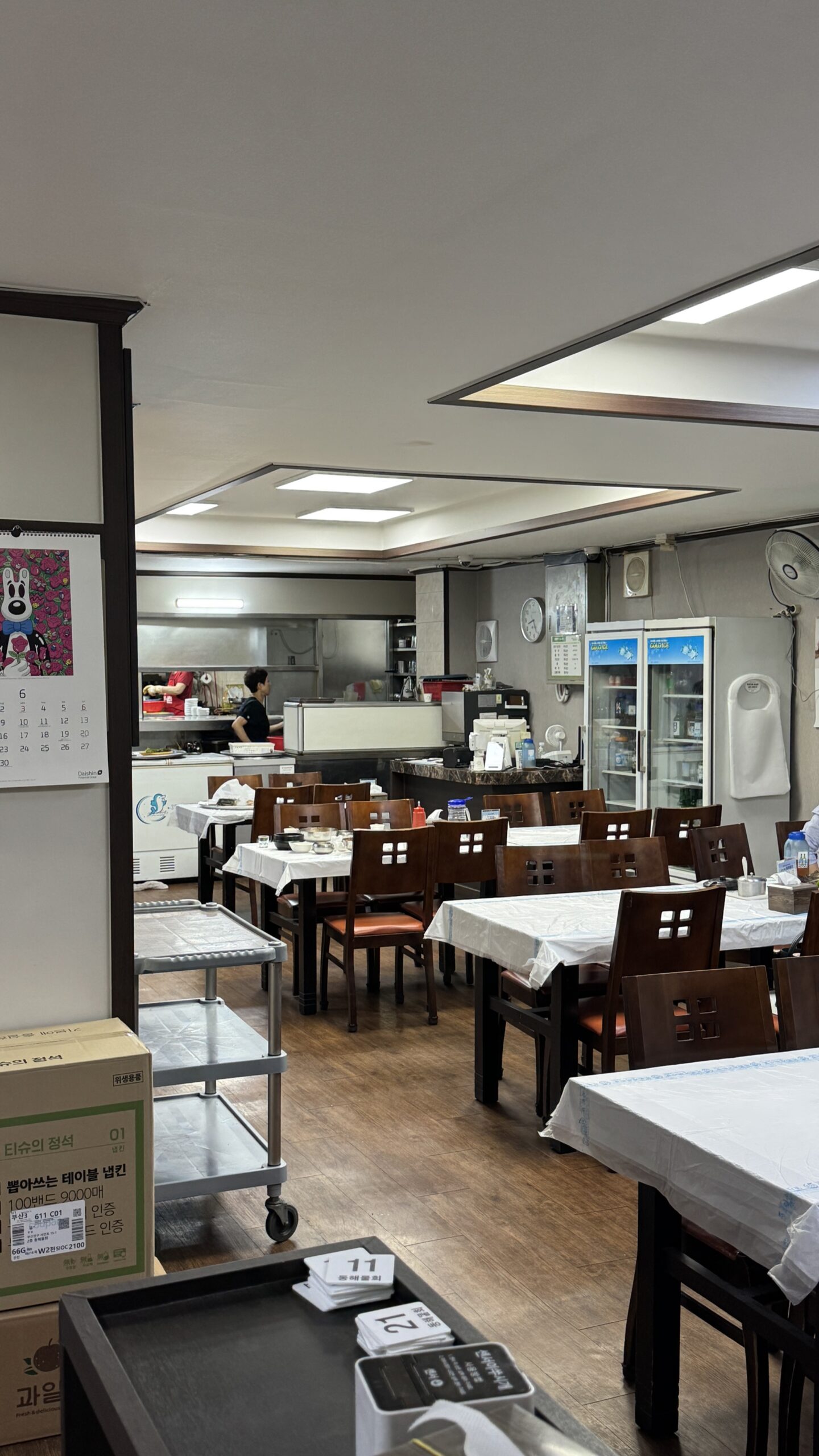
- The interior is traditional and simple. White tablecloths, dark wood chairs, certificates and autographs on the wall. Bring a translation app — no English signage.
- Alipay is accepted. Stickers on the door indicate Alipay support. Standard Korean payment options also fine.
Frequently Asked Questions
How Much Does It Cost, and Is It Worth It Compared to Other Seomyeon Lunches?
A single bowl of bibim mulhoe at Donghae Mulhoe runs roughly ₩18,000–22,000 per person as of 2026 — prices can change, so confirm the current menu board or ask staff before ordering. That price includes the raw fish bowl itself; rice, doenjang jjigae, pajeon and the banchan side dishes are part of the set, not separate add-ons, which is unusual for a raw-fish restaurant in central Busan. Some seafood-focused places in Seomyeon charge a similar amount for the fish alone and then bill extra for the stew, pancake and rice refills.
Who this suits versus who should look elsewhere: if you want a single, filling meal that covers a cold raw-fish course, a hot soup, a pancake and rice in one sitting without ordering multiple dishes, Donghae Mulhoe’s set-style pricing is good value — you are effectively getting three or four separate restaurant orders bundled into one ticket. Compare that to a typical raw-fish (hoe) restaurant near Seomyeon, where a comparable amount of fresh fish alone can cost ₩30,000 or more per person before you add rice, soup or side dishes separately. If you are simply hungry and want the cheapest lunch in the area, a gimbap or noodle shop nearby will be less expensive; Donghae Mulhoe is better suited to travellers who want one memorable, full sit-down meal rather than a quick bite. For a broader sense of what else is worth ordering around the city, our Busan street food guide covers the other dishes locals actually eat.
One local tip that doesn’t show up on aggregator listings: the restaurant tends to have a short queue around 12:00–13:00 on weekdays because office workers from the Seomyeon business district eat here on their lunch break. Arriving closer to 11:30 or after 13:30 usually means walking straight in without waiting, and the kitchen is already fully warmed up by then so the food comes out just as quickly. Solo diners are also seated faster than groups, since a single bowl fits easily at the smaller tables near the entrance.