Updated October 2026 — rebuilt as a where-to-eat guide.
Short answer: eat ssiat hotteok at BIFF Square, grazing stir-fries at Bupyeong Kkangtong Night Market, fish cakes and fried seafood around Jagalchi, and tteokbokki plus pojangmacha snacks in Seomyeon’s food alley. A tasty, filling street-food crawl in Busan typically costs about ₩10,000–25,000 per person, depending on how much you order. Everything below is organised as dish → where exactly → rough price → how to order, so you can plan a route in a couple of minutes.
What to eat in Busan, and where exactly: the quick plan
If you only have one evening, this is the order we would follow. Prices are rough ranges that change often, so treat them as a guide and check the board at each stall.
| Dish | Best place | Rough price (hedged) | How to order |
|---|---|---|---|
| Ssiat hotteok (씨앗호떡) — pancake stuffed with seeds and nuts | BIFF Square lanes, Nampo-dong | Roughly ₩2,000–3,000 each | Queue, hold up fingers, say “hana juseyo” (하나 주세요) |
| Eomuk (어묵) — fish cake skewer with broth | Jagalchi area, Nampo, Gukje Market | Roughly ₩1,000–2,000 per skewer | Grab a skewer, sip the free broth, tell the vendor how many you ate |
| Tteokbokki (떡볶이) — spicy rice cakes | Seomyeon food alley, Bupyeong | Roughly ₩3,000–5,000 a cup or plate | “Deol maepge” (덜 맵게) means less spicy |
| Sundae (순대) — steamed sausage | Bupyeong Market, Seomyeon | Roughly ₩4,000–6,000 small plate | Ask for “sundae soseong” and point at the salt or sauce |
| Bibim dangmyeon (비빔당면) — spicy glass noodles | Gukje Market | Roughly ₩3,000–4,000 | Point and say “igeo juseyo” |
| Pajeon (파전) — green-onion pancake | Pojangmacha near Jagalchi and Seomyeon | Roughly ₩8,000–12,000 for a plate | Order with a drink; sharing is normal |
| Hoe (회) — raw fish | Jagalchi Market, ground floor then upstairs | Roughly ₩30,000+ for a shared platter, plus a seating or prep fee | Pick the fish, agree the price before it is cut |
| Bungeo-ppang (붕어빵) — fish-shaped waffle | Street carts, autumn to spring | Roughly ₩1,000–2,000 for a few | Cash, point, done |
Market by market: where to eat and what to order
BIFF Square and Gukje Market (Nampo-dong): ssiat hotteok first
BIFF Square (BIFF광장) is the single best first stop. The lanes around it are lined with hotteok stalls that fry a sweet dough pancake and stuff it with sunflower seeds, pumpkin seeds, peanuts and brown sugar. A stall with a short, fast-moving queue is usually a good sign. Expect to pay in the low thousands of won, and eat it while it is hot because the sugar filling is molten. Next door, Gukje Market (국제시장) has a tangle of alleys with bibim dangmyeon, fish cakes and kimbap stalls, so you can graze between the two without crossing a main road. For the full market layout, see our Gukje Market and Nampo guide.
Getting there: Metro Line 1 → Nampo Station (남포역), Exit 5 or 6. BIFF Square is roughly a 3-minute walk. Stalls here are generally busiest from late morning to evening, though individual opening hours vary, so go in the afternoon to be safe.
Bupyeong Kkangtong Night Market: the evening stop
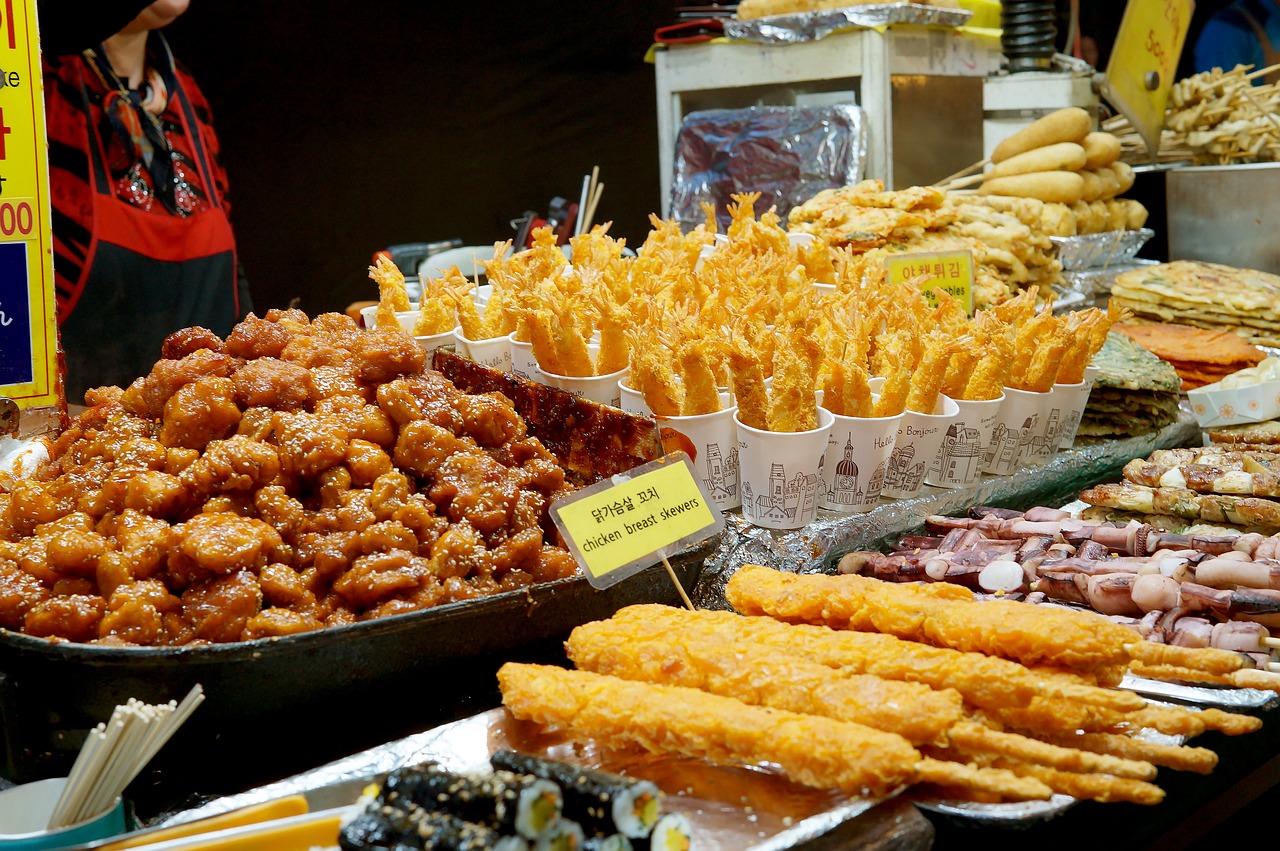
Bupyeong Kkangtong Night Market (부평깡통야시장) is the best place for an evening snack crawl. It sets up inside and around Bupyeong Market, usually starting around 19:00–19:30 and running until about midnight, with longer hours on weekends and some closures in bad weather or off-season. Typical stalls sell stir-fried squid, skewers, tteokbokki, pancakes and sweet tanghulu fruit. Many vendors now take cards or mobile payments, but a few notes of cash still make ordering faster. Arrive before 20:00 on weekends for the best selection before queues build. Our Bupyeong Kkangtong Market guide covers the layout and stall types in detail.
Getting there: Metro Line 1 → Jagalchi Station (자갈치역) or Nampo Station. Bupyeong is a short walk of roughly 5–8 minutes from either, in between the two.
Jagalchi Market: seafood, cooked or grilled
Jagalchi is Korea’s largest seafood market and the place to try raw fish if you are curious. The ground floor sells live catch priced by weight; you then carry your pick upstairs, where a chojip restaurant slices it as hoe or grills it. Budget more here than at the snack stalls: a shared platter typically starts around ₩30,000, and restaurants may add a table or side-dish charge, so agree the total before cutting. If raw fish is not your thing, the outdoor stalls sell fish cakes, fried seafood and hot oden broth for a few thousand won. Morning is when the market is most active; many restaurant floors open around 9:00 and close in the evening, but hours differ by stall. More detail is in our Jagalchi Market guide.
Getting there: Metro Line 1 → Jagalchi Station (자갈치역), Exit 10. The market is right outside.
Seomyeon food alley: where locals eat
Seomyeon (서면) is Busan’s big inland commercial hub, and its food alley (서면 먹자골목) is packed with pojangmacha (포장마차), the orange tent restaurants that serve pajeon, tteokbokki, sundae, fried snacks and soju. The mood is more local and less touristy than Nampo. Many places warm up after about 18:00 and keep going late, though closing times vary. Order a few shared plates and a drink and expect a total of roughly ₩15,000–30,000 per person. Check our Seomyeon guide for other things to do nearby.
Getting there: Metro Line 1 or Line 2 → Seomyeon Station (서면역). The alley is a short walk from the central exits.
Haeundae Market: a daytime add-on
Haeundae Market (해운대전통시장) is a good beach-day stop with fresh produce, fried snacks and local lunch counters. It is calmer than Nampo and a handy place to refuel before or after the sand.
Opening hours and night-market timing
Street food in Busan follows a rough daily rhythm. Hours are approximate and can shift by season, weather and holidays, so treat this as a planning frame rather than a schedule.
- Morning to early afternoon: Jagalchi is at its liveliest and the freshest fish is available. Some hotteok and fish-cake stalls open by late morning.
- Afternoon: BIFF Square and Gukje Market are in full swing; a good window for ssiat hotteok with short queues.
- Early evening (about 17:00–19:00): Pojangmacha in Seomyeon start setting up, and Nampo is relaxed before the crowds.
- Night (about 19:30–midnight): Bupyeong Kkangtong Night Market is at its peak, usually around 20:30–22:00 on weekends. Some stalls close earlier on weekdays or when it rains.
- Late night: Seomyeon tents and convenience stores keep going. See our late-night food guide for options after the markets close.
Budget tiers: how much to bring
| Tier | Typical spend (per person, hedged) | What you get |
|---|---|---|
| Snack crawl | Roughly ₩10,000–15,000 | Hotteok, a fish-cake skewer or two, a cup of tteokbokki |
| Full street-food dinner | Roughly ₩20,000–30,000 | Several night-market stalls, a plate of sundae, a sweet finish |
| Seafood splurge | Roughly ₩30,000–50,000+ | Shared raw-fish platter or grilled seafood upstairs at Jagalchi, plus snacks |
Bring a mix of cash and a card. Many stalls are cash-first, though card and mobile payments are increasingly common at night-market vendors. Our street food guide for first-timers explains how paying and queuing work if you have never done it before.
Ordering phrases that actually help
- 이거 주세요 (igeo juseyo): “This one, please.” Point at what you want.
- 하나 / 두 개 (hana / du gae): one / two pieces.
- 덜 맵게 (deol maepge): less spicy.
- 포장해 주세요 (pojang-hae juseyo): takeaway, please.
- 얼마예요? (eolma-yeyo?): How much is it?
- 잘 먹겠습니다 (jal meokgetseumnida): a polite “thanks for the meal” before you eat.
Most stalls display prices on a board or handwritten sign, so pointing and holding up fingers works everywhere. For wider table manners, see our dining etiquette guide.
Dietary notes: spice, seafood, vegetarians
Spice: tteokbokki and chilli-sauce sundae are the spiciest items; hotteok, bungeo-ppang, plain eomuk and hoe are mild. If you are unsure, read our guide to handling spicy food before you start.
Vegetarians and vegans: this is a seafood and pork-broth city. Fish-cake broth, sundae and many pancakes contain fish, meat or animal stock, and some hotteok use animal fat. Plain sweet hotteok and fruit stalls are the easiest options, but ask the vendor and treat any answer as a best effort.
Allergies: shellfish, peanuts and sesame are common in street snacks. Show a translated allergy note to the vendor and, if in doubt, skip the item.
How to plan a one-evening Busan street food route
A route that works well on one evening: start in the afternoon at BIFF Square for ssiat hotteok, wander through Gukje Market for bibim dangmyeon, walk toward Jagalchi for fish-cake skewers, then take Line 1 for a short hop to Bupyeong Kkangtong Night Market as the lights come on. If you still have energy, finish with a pojangmacha in Seomyeon. Our 8 must-try Busan dishes guide fills in the sit-down meals that pair well with this route.
Busan street food FAQ
Do I need to speak Korean to order street food?
No — pointing works perfectly. Most stalls display prices. A quick phrase: “igeo juseyo” (이거 주세요) — “this one please” — handles most orders. See our dining etiquette guide for more ordering tips.
Should I bring cash for street food?
Yes. Most street stalls and pojangmacha are cash-only or prefer it. ₩20,000–30,000 in cash is enough for a heavy street food crawl. Withdraw won at any convenience store ATM.
What is the best time of day for street food in Busan?
BIFF Square is good any time from morning to late night. Bupyeong Night Market starts at 19:30 and peaks around 20:30–22:00. Jagalchi’s stall restaurants open from around 9:00 and the fresh seafood floors get their best stock in the morning. Seomyeon’s pojangmacha come alive after 18:00.
Is Busan street food spicy?
Some items are (tteokbokki and sundae with chilli sauce), but plenty aren’t — hotteok, bungeo-ppang, eomuk and hoe are all mild. If you’re buying from a stall with multiple spice-level options, pointing at the less-red sauce usually gets a milder serving.
Frequently Asked Questions
What's the cheapest street food to try in Busan, and where should I go?
Fish cake skewers and ssiat hotteok (seed-filled pancakes) are your most budget-friendly options at around 1,000–2,500 won each. Head to BIFF Square in Nampo-dong (Metro Line 1, Exit 5/6) where most stalls are cash-only and typically serve items under 5,000 won per bite.
Is Bupyeong Night Market worth visiting, and when should I go?
Absolutely — it's considered Busan's best evening street-food destination with everything from stir-fried squid to sweet tanghulu. It typically opens around 19:30 and runs until midnight; try arriving before 20:00 on weekends to avoid the heaviest crowds and see the full stall selection.
How does the Jagalchi Market street food experience work?
The ground floor has live seafood stalls where you point to fish and pay by weight; take it upstairs to a restaurant (chojip) to have it prepared as sashimi or grilled. Outside stalls sell ready-to-eat fried seafood and fish cakes if you prefer not to cook. It's a 3-minute walk from Jagalchi Metro Station (Line 1, Exit 10).
What's the best neighborhood for late-night street food besides Nampo-dong?
Seomyeon has a dense food alley packed with tent restaurants (pojangmacha), tteokbokki spots and stalls serving everything from sundae to green-onion pancakes. It's a great inland alternative and typically operates late into the evening for casual dining.
Should I bring cash or can I use my card at Busan street food stalls?
Bring cash — most stalls at BIFF Square and Bupyeong Night Market are cash-only, and it's the safest payment method across street vendors. While some places may accept cards, having won in hand ensures you won't miss out on stalls you want to try.