Cherry blossom season in Busan is brief, beautiful, and — because the city sits further south than Seoul — arrives a few days earlier than the capital. Peak bloom in Busan typically falls in the last week of March to the first week of April, and the best spots combine sea views with pink canopies that no inland city can match. Here is where to go, when to time it, and how to build a full day around it.
Last updated: June 2026. Bloom dates shift by 5–10 days year to year depending on winter temperatures — check a real-time blossom forecast in mid-March before booking travel.
When do cherry blossoms bloom in Busan?
Busan’s cherry blossoms typically peak between late March and early April — a few days ahead of Seoul, since the southern coast warms first. The full bloom window (from first open flowers to petal fall) lasts about 7–10 days. A warm February speeds the bloom; a cold one delays it. Plan flexibility into your schedule if you’re targeting peak timing.
| Phase | Typical timing | What you see |
|---|---|---|
| First bloom (개화) | Mid–late March | A few flowers open; mostly buds |
| Full bloom (만개) | Late March – early April | Peak — trees fully white-pink |
| Petal fall (낙화) | Early–mid April | Pink snow on the ground; still beautiful |
| Green leaves | Mid April | Season over for blossoms |
Where are the best cherry blossom spots in Busan?
Busan’s best blossom spots combine the flowers with sea views, hillside cafes, or temple settings — a combination unique to this coastal city.
- Dalmaji Hill (달맞이고개) — the moon-viewing ridge between Haeundae and Songjeong is Busan’s most celebrated blossom location. A long avenue of cherry trees lines the winding road, with sea views between the branches. Best on foot or by slow drive; cafe-hopping along the ridge is the tradition.
- Busan Citizens Park (부산시민공원) — the city’s largest park (formerly a US military base) has long blossom-lined paths, a lake, and open lawns perfect for a picnic. Central location, Metro-accessible, family-friendly and free.
- Hwangnyeongsan (황령산) — the mountain above Gwangalli is lined with cherry trees on its hiking trails, and the summit gives a panoramic view over the blooming city. Best at golden hour.
- Dongbaekseom Island (동백섬) — the coastal headland next to Haeundae Beach has cherry trees along its walking path with the sea visible through the petals.
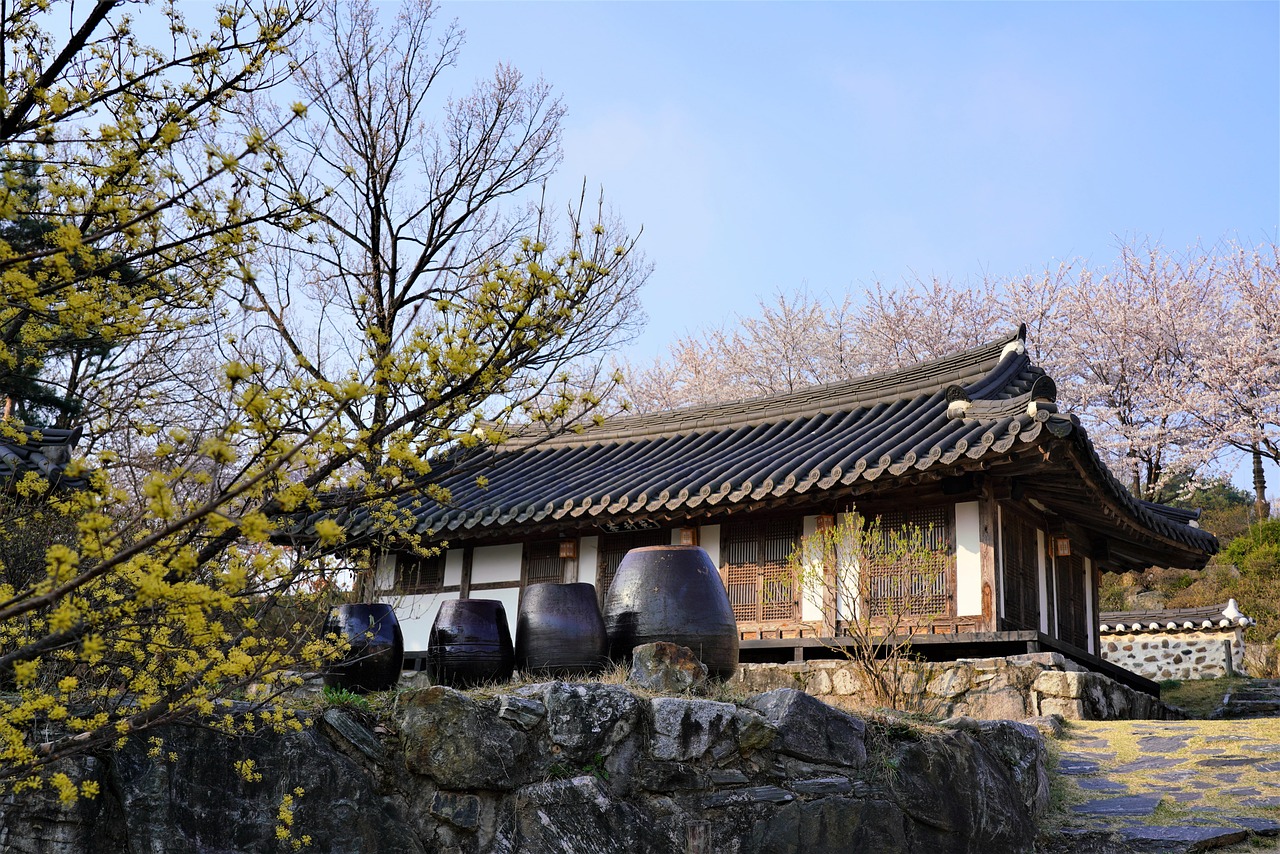
- Beomeosa Temple (범어사) — the mountain monastery has cherry trees in its forecourt; blossom against the traditional wooden halls is one of Busan’s most photographed spring scenes. Metro Line 1 → Beomeosa Station, then Bus 90.
- Nakdong River (낙동강) banks — the riverside cycling and walking paths in western Busan are lined with cherry trees and colza flowers in early spring, less touristed than central spots.
Should I do a Jinhae day trip for cherry blossoms?
Jinhae (진해) — about 40 km west of Busan — is home to the Gunhangje festival, one of Korea’s largest cherry blossom events, with over 360,000 cherry trees lining its streets and canals. It is genuinely spectacular, but extremely crowded during peak bloom. The trade-off compared to staying in Busan: smaller town, no sea views, and peak-weekend crowds that can make navigation very slow. If you want the most dramatic blossom density, Jinhae is worth the day trip; if you want a more relaxed experience, Busan’s own spots are excellent.
Getting to Jinhae: Bus or train from Busan about 40–60 min. Confirm festival dates (typically early April) on the official Changwon Tourism website before going — they shift slightly year to year.
Tips for seeing cherry blossoms in Busan
- Go early or late. The most popular spots (Dalmaji, Citizens Park) are busiest 10:00–15:00 on weekends. Arrive before 09:00 or go at dusk for softer light and smaller crowds.
- Weekday vs weekend. Weekdays are dramatically quieter. If you have flexibility, a Tuesday or Wednesday in late March is ideal.
- It rains in spring. Carry an umbrella — rain on blossoms is beautiful but you’ll want to stay dry. Petals also fall faster after rain, so a dry window matters for peak.
- Layer up. Late March in Busan averages 10–15 °C by day and drops to 5–8 °C at night. Bring a light jacket even on warm-looking days.
- Book accommodation early. Blossom weekend room rates in Haeundae spike — book 4–6 weeks ahead or stay during the week.
FAQ
How long do cherry blossoms last in Busan?
Peak full bloom lasts about 7–10 days. You have roughly a week to see the best of it — a narrow window, so checking a real-time forecast is important. Even after peak, falling petals (낙화) are beautiful for another 3–5 days.
Is Busan or Seoul better for cherry blossoms?
Both are excellent but different. Busan offers sea views combined with blossoms — a combination Seoul can’t match. Busan also blooms a few days earlier, so you can do both cities in sequence. Seoul has Yeouido’s famous blossom festival and greater overall scale. For coastal scenery, Busan wins.
Is there a cherry blossom festival in Busan?
Busan doesn’t have a single large festival equivalent to Jinhae’s Gunhangje, but Citizens Park and Dalmaji Hill have local events and pop-up markets during blossom season. The bigger festival option from Busan is the Jinhae day trip (40 min away).
What else is good to see in Busan in spring?
Spring (April–May) is one of the best times overall to visit — mild temperatures, low humidity, and no monsoon. After cherry blossoms fade, azaleas and wisteria take over. See the best time to visit Korea for the full seasonal picture.
Frequently Asked Questions
When is the best time to visit Busan for cherry blossoms?
Peak bloom in Busan typically falls between late March and early April, a few days earlier than Seoul since the southern coast warms first. The full bloom window lasts around 7–10 days total. However, bloom dates shift by 5–10 days year to year depending on winter temperatures, so check a real-time forecast from the Korea Meteorological Administration in mid-March before booking travel.
What are the top cherry blossom spots in Busan?
The best spots include Dalmaji Hill (a scenic coastal ridge with sea views), Busan Citizens Park (the largest park with free entry and metro access), Hwangnyeongsan mountain (great at golden hour), Dongbaekseom Island (coastal walk with sea views), and Beomeosa Temple (traditional architecture with blossoms). Each offers a different experience—choose based on whether you prefer mountain hikes, seaside views, or temple settings.
Is Jinhae worth a day trip, or should I stay in Busan for blossoms?
Jinhae, about 40 km away, hosts one of Korea's largest festivals with over 360,000 cherry trees and is genuinely spectacular—but extremely crowded during peak bloom. Busan's own spots offer excellent blossoms with more relaxed experiences and unique sea views that Jinhae cannot match. Choose Jinhae if you want maximum blossom density; choose Busan if you prefer a calmer visit with coastal scenery.
How do I avoid the biggest crowds at cherry blossom sites?
The most popular spots are busiest between 10:00–15:00 on weekends. Arrive before 09:00 or go at dusk for softer light and far fewer crowds. If you have schedule flexibility, visiting on a weekday (Tuesday or Wednesday in late March) is dramatically quieter than weekends.
What should I bring or know before going to see cherry blossoms in Busan?
Carry an umbrella or rain gear—spring in Busan brings rain. Plan to either walk or drive slowly (especially at Dalmaji Hill, where café-hopping is the tradition), and wear comfortable shoes since many top spots involve hiking trails or long walks. Consider bringing a picnic for Busan Citizens Park or other open areas.
Explore more Korea Go Now guides
- Blossom walk combined with a temple visit: Beomeosa Temple guide.
- Sea-view blossom ridge: Dalmaji Hill guide.
- Plan your spring trip: best time to visit Korea.
- Build the whole day: 3-day Busan itinerary.