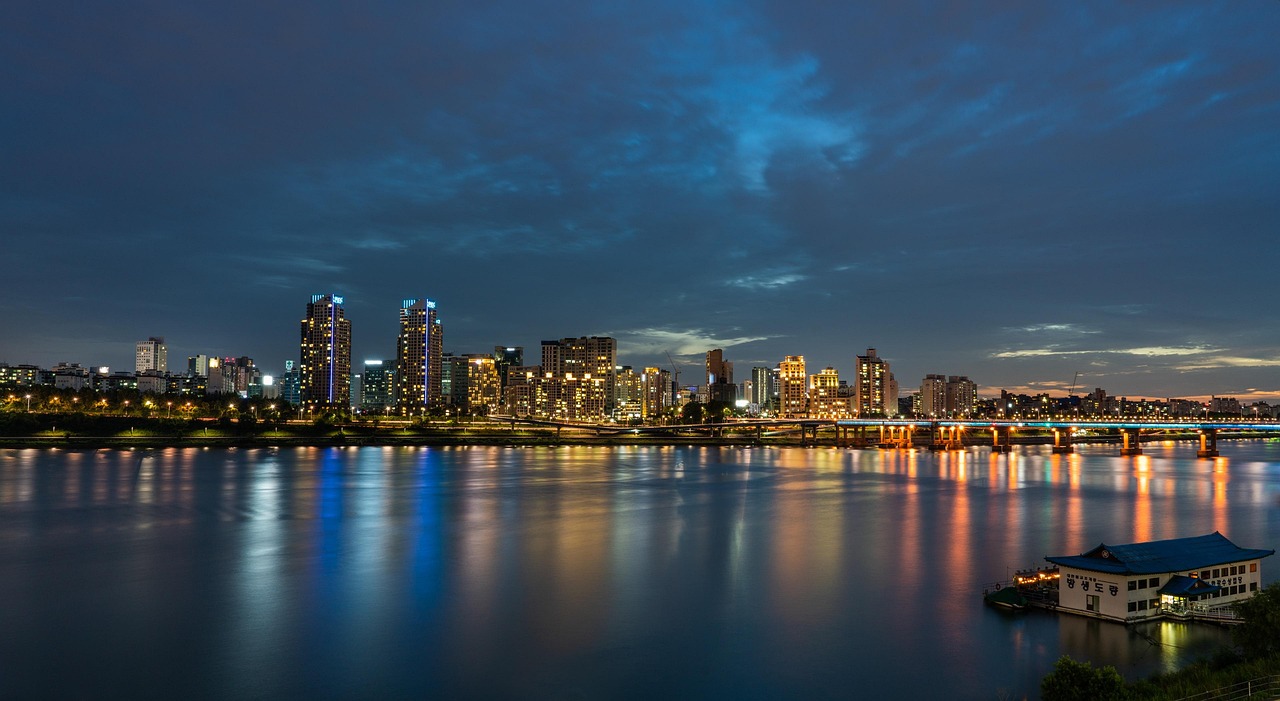
Seoul has over 600 years of history layered beneath a city that also gave the world K-pop, kimchi-loaded convenience stores, and cafe culture so serious that baristas sometimes hold auditions. You have three days. The good news: that is genuinely enough time to understand what Seoul is, provided you stop trying to see all of it.
Most first-timer guides pack 12 stops into a single day and leave travelers exhausted by Tuesday afternoon. This itinerary makes different trade-offs. You will skip a few Instagram staples — the Eunpyeong Hanok Village, for instance, sits far enough from the center to cost you half a day without adding proportional value — and instead move at a pace that lets places actually land. Before you arrive, read up on getting from Incheon Airport to Seoul and budget your transfer time accordingly.
Neighborhoods are Seoul’s organizing principle. Each one has a distinct personality: Bukchon feels like a preserved Joseon-era village; Seongsu-dong reads like Brooklyn transplanted to the Han River; Hongdae operates on a university-town energy that does not quiet down until 4 AM. Base yourself in the Myeongdong or Jongno area to keep transit times short for this route, then use the subway for everything. Learn how to navigate Seoul’s subway before your trip — the network is genuinely excellent, and a T-money card (around ₩2,500 base fare as of 2026 — verify before visiting) covers buses too.
Day 1 — Palaces, Bukchon, and the Soul of Old Seoul
Morning: Gyeongbokgung Palace
Arrive at Gyeongbokgung Station (Line 3, Exit 5) by 9:00 AM to beat the tour groups. The palace grounds cover 40 acres and contain dozens of reconstructed halls — most visitors need two to three hours to walk them comfortably. Admission is ₩3,000 for adults, ₩1,500 for youth aged 7–18, and free for children under 6 and adults over 65. There is one reliable shortcut: rent a hanbok from one of the shops near the main gate (around ₩20,000–30,000 per hour) and entry becomes free. Hours run 09:00–18:30 in summer (June–August), shorter in winter — check the current schedule before you go, and note the palace is closed every Tuesday.
Time your arrival to catch the Changing of the Guard ceremony at 10:00 AM, which runs for roughly 20 minutes in front of Gwanghwamun Gate. A second performance happens at 14:00 if you miss the first. English-guided tours depart at 11:00, 13:30, and 15:30 daily (except Tuesday). If you want to go deeper on what you are looking at, the tour is worth the time.
Afternoon: Bukchon Hanok Village and Insadong
Walk or take Line 3 one stop to Anguk Station (Exit 2) for Bukchon Hanok Village, about a 10-minute walk from the station to the main alleys. Since 2026 Bukchon has operated as a Special Management Area with enforced visiting hours of 10:00–17:00 only and a noise limit of 65 decibels — plan accordingly. Real families still live in these hanoks, so the experience is less “open-air museum” and more “accidentally beautiful residential neighborhood.” Entry is free. Cha-Teul tea house, a renovated hanok with mountain views, is worth a stop if you need to sit down.
From Bukchon, walk south toward Insadong — a 15-minute walk or one subway stop — for late afternoon. The street fills with small galleries, traditional paper shops, and tea houses that have been operating for decades. Pick up a few gifts and have an early dinner before the evening plan. Our Insadong guide covers the best stalls and what to skip.
Evening: Myeongdong Night Market
The Myeongdong night market (Line 4, Exit 6, stalls within 300 meters) starts setting up around 4:00 PM with full operation from 5:00 PM through 1:00 AM. Arrive between 5:00–6:00 PM for the freshest food and the smallest crowds. Budget ₩15,000–25,000 for a full walk-through: tteokbokki runs ₩3,000–5,000, fish cake skewers ₩1,000–2,000, and tornado potato around ₩4,000. Prices here run 30–50% higher than other Seoul markets, so avoid the most-hyped stalls clustered near Exit 6 if value matters to you. Most vendors are cash-only.
Day 2 — Neighborhoods and River Culture
Morning: Seongsu-dong
Take Line 2 to Seongsu Station and spend the morning in what is currently Seoul’s most interesting neighborhood for cafe culture. Former industrial spaces — tanneries, factories, printshops — have been converted into third-wave coffee spots and design studios without losing the raw concrete bones of the originals. Our Seongsu-dong guide maps the best stops. Plan two to three hours here; the neighborhood rewards slow walking more than efficient point-to-point navigation. Coffee runs ₩4,000–7,000 per cup.
Afternoon: Han River Park
The Han River has 12 parks along its banks. For this itinerary, choose between Yeouido (Line 5, Yeouinaru Station) on the western side or Ttukseom (Line 2, Ttukseom Resort Station) on the east — Ttukseom is closer to Seongsu-dong and requires no transfer. Both are free to enter. Rent a bike, kayak, or simply buy a beer from the convenience store and practice the Seoul tradition of chimaek: fried chicken plus beer, consumed riverside. This is not a tourist activity — it is how Seoulites actually spend warm afternoons.
Evening: Hongdae or Euljiro
For your evening, choose based on what you want from a night out. Hongdae (Line 2, Hongik University Station, Exits 8 or 9) peaks after 5:00 PM, with street performances near Exit 9 running 19:00–22:00 and the bar district staying active well past midnight. Thursdays draw a strong local crowd. Adjacent Yeonnam-dong, connected by the Gyeongui Line Forest Park — a 6km former railway turned green walkway — has some of the best independent cafes in the city. For clubs: Club Victim (punk/rock), Club FF (rock through EDM), Club Evans (jazz). Budget ₩40,000–80,000 for food and free attractions; add ₩50,000–100,000 if you are clubbing. The full breakdown of venues and what they actually play is in our Seoul nightlife guide.
If you prefer a quieter and more local scene, Euljiro has emerged in recent years as Seoul’s bar district of choice for residents who find Hongdae too loud. Our Euljiro bar district guide covers the best spots and how to navigate the side streets.
Day 3 — Views, Culture, and a Day Trip Option
Morning: N Seoul Tower
N Seoul Tower sits on Namsan Mountain and gives you the clearest aerial read of how Seoul is actually laid out — the Han River cutting through the south, the palace district to the north, the mountains ringing the whole city. Take the cable car from the Myeongdong area: around ₩15,500 return for adults, ₩11,500 for children as of early 2026 — verify current prices before visiting. Alternatively, Bus 03 from Chungmuro Station runs to the base. The Namsan park itself is free to access. The observation deck costs around ₩21,000 for adults (₩15,000 for youth aged 3–12) and typically opens at 10:00 AM. Our N Seoul Tower guide has current ticketing details and what to do if you hit a queue.
Afternoon: Gangnam/COEX or K-pop Tour
After the tower, choose your afternoon based on interest. Gangnam and the COEX underground mall represent Seoul’s wealthy southern district — less charming than the center, but genuinely part of the city’s identity and useful if you want high-end shopping or the Starfield Library (which is inside a shopping mall, not a standalone attraction — fine for 20 minutes, not worth building a day around). For a more structured alternative, a K-pop tour in Seoul takes you through the entertainment company buildings, broadcast studios, and fan culture landmarks that do not obviously announce themselves to casual visitors.
Optional: Continue to Busan
If Seoul is the first stop on a longer Korea trip, Day 3 afternoon works cleanly as a transit day. The KTX from Seoul Station reaches Busan in approximately two hours and twenty minutes. Our Seoul to Busan by KTX guide covers booking, seat classes, and what to do in Busan on arrival. A morning at N Seoul Tower followed by an afternoon KTX departure is a realistic schedule.
Getting Around Seoul
The T-money card is the baseline tool. Buy one at any convenience store or station, load it with cash, and it covers subway, bus, and some taxis with a transfer discount. The Climate Card offers unlimited rides for 1, 7, or 30 days — check current prices at stations, as they change periodically. For navigation, use Naver Map or Kakao Map. Google Maps shows Seoul subway routes but its real-time transit data for Korea is unreliable — locals do not use it for getting around.
Avoid the subway during rush hours: 7:30–9:00 AM and 5:30–7:30 PM. Trains run frequently but the platforms and cars fill to standing-room-only. If your schedule forces travel during those windows, budget an extra 15–20 minutes and accept that it will be crowded. For cash, GS25 convenience stores consistently have the best foreign card rates on ATMs.
Where to Stay for This Itinerary
The Myeongdong and Jongno area is the clearest fit for this three-day route. Gyeongbokgung, Bukchon, Insadong, and the Myeongdong night market are all within walking distance or a single subway stop of each other. N Seoul Tower is walkable from Myeongdong on a good day. Hotels here range from budget guesthouses to international chains, with the widest selection on the peninsula in the ₩80,000–200,000 per night range. If your priority is the nightlife on Day 2, Hongdae (Line 2) is the better base — you lose a few minutes of transit convenience on Day 1 but gain the ability to walk home after the bars close. Our guide to where to stay in Seoul breaks down every major neighborhood with price ranges and subway access.
Three days in Seoul works best when you treat the itinerary as a framework rather than a checklist. The city rewards time spent sitting in a cafe or wandering a side street more than it rewards aggressive sightseeing. If this trip leaves you wanting more — and it will — our five-day Seoul itinerary picks up where this one leaves off, adding Bukhansan, the outer neighborhoods, and a deeper cut through the food scene.
Is 3 days enough for Seoul?
Three days is enough to get a genuine feel for Seoul — the historical center, one or two neighborhoods with distinct characters, and the Han River. It is not enough to cover everything, and you should not try. Most visitors who attempt to see every major district in three days end up spending more time in transit than anywhere else. This itinerary is designed around that trade-off: depth over breadth.
How much does a 3-day Seoul trip cost?
Budget travelers can manage on ₩80,000–120,000 per day (excluding accommodation) if they use the subway, eat at local restaurants and convenience stores, and stick to free attractions like Han River Park and Bukchon. Mid-range spending — nicer restaurants, the N Seoul Tower observation deck, occasional taxis — typically runs ₩150,000–250,000 per day. Add accommodation on top: budget guesthouses in Myeongdong start around ₩50,000–80,000 per night; mid-range hotels run ₩120,000–250,000.
Do I need to book Gyeongbokgung in advance?
No advance booking is required for general admission. You pay at the gate (₩3,000 for adults). The English guided tours (11:00, 13:30, and 15:30 daily except Tuesday) are also walk-up. The palace is closed every Tuesday, so do not plan your visit for that day. If you visit on the last Wednesday of the month, entry is free as part of Culture Day. Hanbok rentals from nearby shops (around ₩20,000–30,000 per hour) also get you free entry on any open day.
What is the best area to stay for a first visit to Seoul?
Myeongdong and Jongno give you the best access to the Day 1 sights in this itinerary — the palace, Bukchon, and Insadong are all close, and the night market is steps from your hotel. Hongdae is the better base if you are prioritizing nightlife over day-trip logistics. Both areas have excellent subway connections to every part of the city. Avoid staying in Gangnam for a first visit unless you have a specific reason — the transit to the historical center adds time every day.