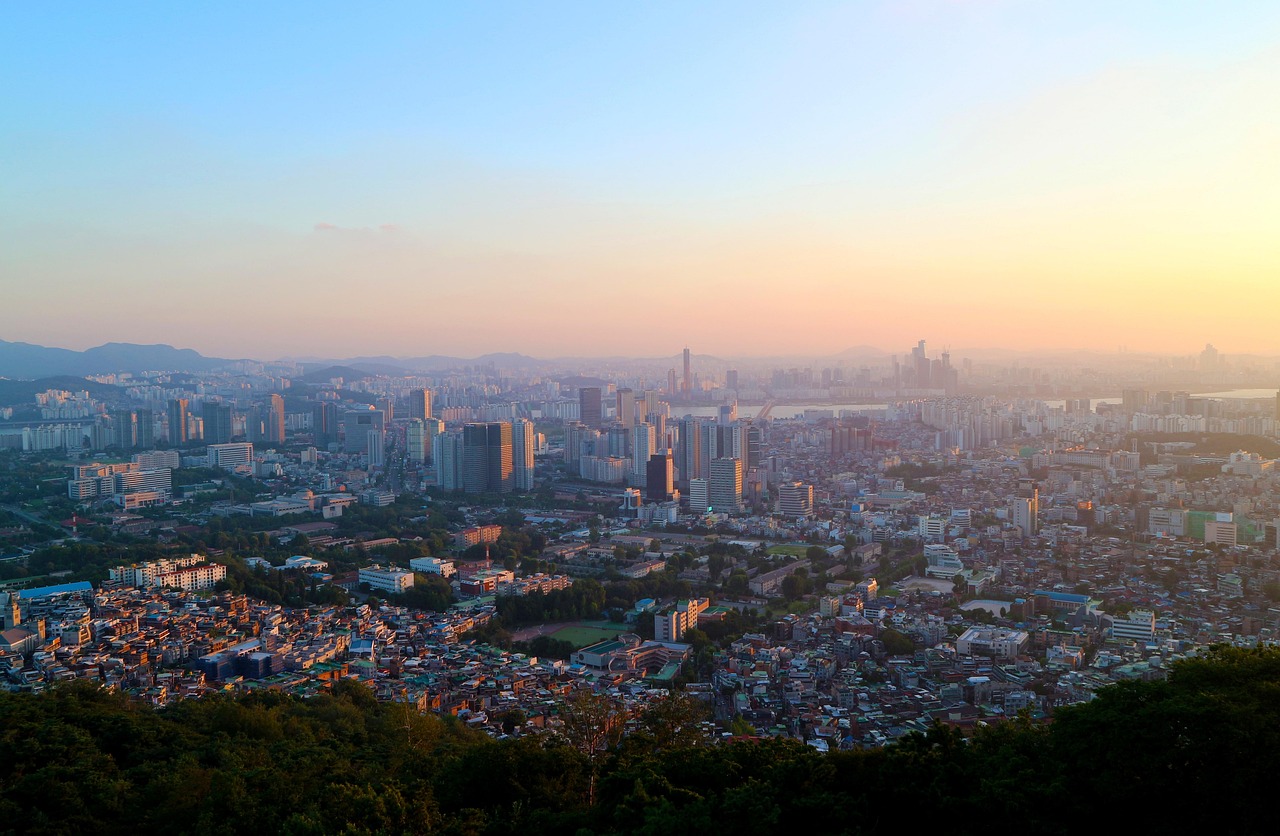
South Korea consistently ranks among Asia’s safest travel destinations, but that doesn’t mean you should skip the prep work. Natural disasters, air quality spikes, and the occasional political tension mean that knowing which apps to download and which alert systems to monitor can make a real difference. Here’s a practical, step-by-step guide to staying informed and safe throughout your trip.
Official Government Alert Apps Every Visitor Should Install
The Korean government runs a well-funded emergency notification infrastructure, and much of it is accessible to foreign visitors with a smartphone and a local SIM card.
- 안전디딤돌 (Safe Step) — The Ministry of the Interior’s official disaster safety app. Available free on both iOS and Android in English, Chinese, Japanese, and Vietnamese. It pushes real-time alerts for earthquakes, typhoons, heavy rain warnings, and fine dust advisories. Set your location to Seoul, Busan, or wherever you’re based and you’ll receive localized push notifications automatically.
- Korea 1330 Tourism Helpline — Not strictly an app, but dial 1330 from any phone in Korea (including a foreign roaming SIM) 24 hours a day, 365 days a year for English, Chinese, Japanese, and Thai support. Operators can help with medical emergencies, lost passports, and transport disruptions.
- Emergency alert SMS (CBS) — If you have a Korean SIM card from providers like KT, SKT, or LG U+ (SIM-only plans start around ₩15,000–₩33,000/month), your phone will automatically receive Cell Broadcast Service messages in Korean during national emergencies. Buy a SIM at Incheon Airport arrivals hall from any of the three major carrier booths.
Air Quality and Weather Apps: The Day-to-Day Essentials
Fine dust (미세먼지) is arguably the most common safety concern for visitors, but it is far from the only one — from typhoons to earthquakes, brushing up on broader natural disaster awareness in Korea is worth doing before you land. In spring especially — roughly March through May — dust blowing in from China can push PM2.5 levels into “very bad” territory across Seoul, Incheon, and the western coast.
- IQAir — The most internationally trusted real-time air quality tracker. Shows AQI for every major Korean city, including hyper-local readings from stations near Hongdae, Gangnam, and Haeundae Beach in Busan. Free; available on iOS and Android.
- KMA Weather (기상청 날씨) — The Korea Meteorological Administration’s official app. More accurate for Korean typhoon tracks than international weather apps. Typhoon season runs July–September; alerts are issued 72 hours in advance and are serious — if a Level 3 typhoon warning hits Jeju Island, ferries and domestic flights will be grounded immediately.
- Naver Weather — Most Koreans use this daily. The “fine dust” tab shows hourly forecasts and a simple color-coded scale (blue = good, green = moderate, yellow = bad, red = very bad). On red days, pick up a KF94 mask at any convenience store like GS25 or CU for ₩1,000–₩2,500 per mask.
Navigation and Personal Safety Apps in Korean Cities
Beyond natural hazards, practical urban safety — knowing where you are, how to get help, and how to avoid scams — matters just as much for a smooth trip. If your itinerary includes late nights in Itaewon or Hongdae, it is worth reading up on nightlife safety in Korea before you head out.
- Naver Maps — More accurate than Google Maps for Korean public transit, walking routes, and real-time bus arrival times. The “nearby police station” (경찰서) and “nearby hospital” (병원) search functions work reliably even in rural areas like the Jirisan National Park region.
- Emergency numbers to save: Police = 112, Fire/Ambulance = 119, Coast Guard (useful in Busan or Jeju) = 122. All operators have access to interpretation services for English speakers.
- KakaoT (카카오T) — Korea’s dominant ride-hailing app. Every trip is GPS-tracked and logged to a registered account, which adds a layer of personal safety compared to hailing an unregistered taxi on the street. Base fare in Seoul starts at ₩4,800. Drivers are licensed and the app shows their rating and license plate before you board.
- Seoul Safe App — Provided by the Seoul Metropolitan Government, this app lists the locations of all 24-hour “Women’s Safety Return Service” taxi stops and emergency bell poles (비상벨) across the city. Particularly useful around Itaewon, Hongdae, and Sinchon late at night.
What To Do When an Alert Fires: A Step-by-Step Response
Receiving a Korean emergency alert can feel alarming if you don’t know what it says. Here’s a simple response framework for the most common scenarios travelers face — and it helps to already have Korea’s emergency numbers saved in your phone before anything happens.
- Earthquake alert: Drop, cover, hold on. Move away from windows. In Seoul subway stations — especially deep Lines 5–9 under the Han River — remain on the platform and follow staff instructions. Aftershocks are rare but possible. Check 안전디딤돌 for an all-clear before resuming travel.
- Typhoon or heavy rain alert: Check KMA Weather for the warning level. Level 1 (주의보) means be cautious; Level 2 (경보) means stay indoors. Rivers in Seoul — the Cheonggyecheon stream near Gwanghwamun and the Han River parks — flood quickly and are fenced off by authorities during heavy rain warnings. Do not attempt to cross flooded low-water bridges in rural areas.
- Air quality red alert: Limit time outdoors. Buy a KF94 mask (not a simple surgical mask) at any convenience store. Most large indoor spaces like COEX Mall in Gangnam, Lotte World in Jamsil, or Shinsegae Department Store in Centum City (Busan) are filtered and safe to spend time in.
- Civil defense drill (민방위 훈련): Usually held in May and August. Sirens sound at 2:00 PM and pedestrians are briefly asked to take cover. This is a drill, not a real emergency — but follow local instructions and don’t film people without consent.
Cafes, Tea Houses, and Craft Shopping in the Village
Between the palace visit and dinner, most travelers need somewhere to sit down, and the hanok village has two very different options: modern hybrid cafes and traditional tea houses. Knowing which one suits your mood saves you from wandering the alleys mid-afternoon.
Modern hybrid cafes occupy renovated hanok buildings and lean into photogenic interiors — exposed wooden beams paired with contemporary furniture and large glass windows onto a courtyard. A latte or fruit tea typically costs ₩6,000–8,000, on the higher side for Korea, which reflects the rent for a hanok-village location rather than the drink itself. These cafes get crowded after 2 p.m. on weekends, so an 11 a.m. visit is far more relaxed if you want an actual seat.
Traditional tea houses (전통찻집) are the better choice if you want a quieter, more local experience rather than a photo backdrop. These serve omija-cha (five-flavor berry tea), yuja-cha (citron tea), and ssanghwa-tea (a herbal tonic tea often served with a raw egg yolk on top) for ₩5,000–7,000 a cup, usually with a small side of rice cakes or nuts included. Seating is on floor cushions rather than chairs, so factor that in if kneeling for an extended period is uncomfortable. Who this suits: travelers who want to slow down and experience Korean tea culture should choose a traditional tea house; those chasing an Instagram-ready interior should pick a modern hybrid cafe instead — the two are genuinely different experiences, not just different menus.
For souvenirs, skip the mass-produced keychains sold near the main gate and look instead for the small hanji (traditional mulberry paper) workshops tucked into the side streets north of Gyeonggijeon. Jeonju has been a center of hanji production for centuries, and several shops sell hand-made notebooks, fans, and lampshades starting around ₩8,000, with the paper itself noticeably thicker and more textured than machine-made versions sold elsewhere in Korea. A local tip few guidebooks mention: ask the shopkeeper if they do on-site paper dyeing demonstrations — several of the smaller workshops will show you the process for free if the shop isn’t busy, even without a booking, though this depends entirely on how quiet the day is.
Traditional soju and makgeolli bottles with hand-painted labels, sold at a few specialty shops near Omokdae, also make better souvenirs than the generic items near the entrance — expect ₩10,000–20,000 depending on size and design, prices can change so treat this as a rough guide rather than a fixed figure as of 2026, verify before visiting.