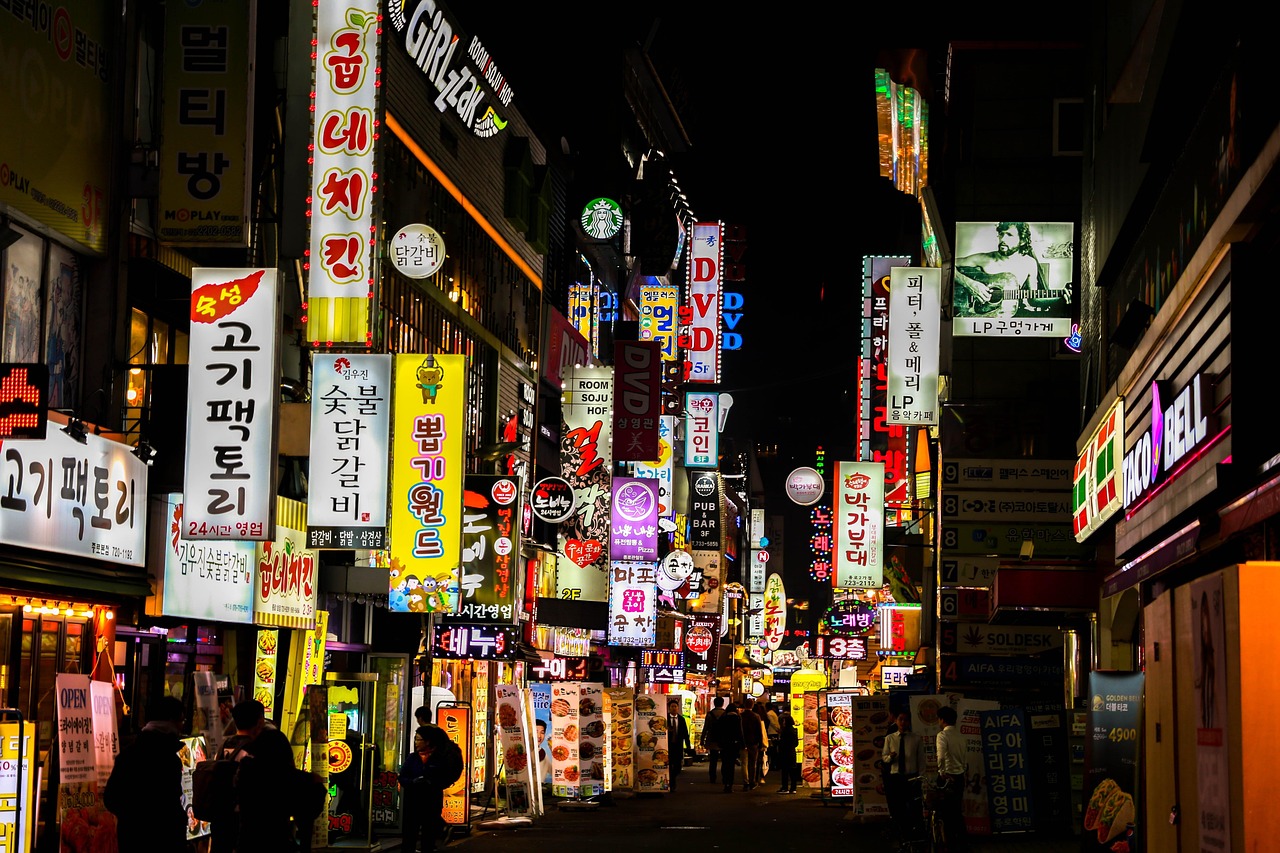
If you spend a night out in Korea and don’t end up in a norebang, you’ve missed something essential. Norebang (노래방) — literally “song room” — is Korea’s answer to karaoke, and it’s nothing like what most Westerners picture. You don’t sing in front of strangers at a bar. You rent a private room for your group, pick your songs, and go as hard or as soft as you like. It’s one of the most fun, low-pressure nights out you can have in Korea, and it’s deeply woven into Korean social life. Here’s everything you need to know before you go.
What Is Norebang — And How Is It Different from Western Karaoke?
The critical difference: in Western karaoke bars, you sing on a stage in front of the whole room. In norebang, you rent a private room for your group — just you and your friends, no audience. That changes everything. There’s no stage fright, no waiting an hour for your turn, and no judgment. It’s loud, it’s silly, and even tone-deaf singers can have a great time. Groups of two to twenty can all find a room that fits, and the vibe is completely self-contained.
Norebang is genuinely central to Korean culture — it’s where colleagues go after a work dinner, where friends celebrate birthdays, and where couples spend dates. Understanding it gives you real insight into how Koreans socialise. For more on the broader cultural backdrop, the guide to K-pop and the Korean Wave has useful context on why music sits so close to the heart of Korean life.
How Norebang Works
The process is straightforward. You walk in, tell the front desk how many people you have, and they assign you a room. You pay by the hour — for the room, not per person — and the clock starts. Inside, a touchscreen remote (or sometimes a tablet) lets you browse and queue songs. You pick a song, it plays on the TV screen with lyrics, and you sing into a microphone. Tambourines are almost always provided in the room and are very much expected to be used.
When your time is nearly up, a buzzer or screen notification will alert you. You can request extra time at the desk — usually purchased in 30-minute increments. Drinks (beer, soju, sodas) can often be ordered from the front desk and brought to your room, though policies vary by venue. Some larger norbangs have a full menu; smaller ones may just have vending machines in the hallway.
What to Expect Inside the Room
Norebang rooms are designed for fun, not subtlety. Expect a sofa or booth seating along the walls, a large TV screen displaying lyrics, at least two microphones, a tambourine or two, and disco or mood lighting you can adjust. The song catalog runs into the thousands — major K-pop hits, Korean ballads, classic Korean pop, and a solid library of English-language songs. Western pop, rock classics, and even some hip-hop are usually well-represented, though the depth of the English catalog varies by venue. Newer chains tend to have better international song selections.
The sound system is usually surprisingly good. Rooms are well soundproofed from each other, so what happens in your room stays in your room.
Where to Find a Norebang
They are everywhere. Norebang is one of the most common businesses in Korea — you’ll find them in virtually every neighbourhood, often stacked several floors high in the same building. Look for neon signs reading 노래방 or the word “Norebang.” The biggest concentrations of lively, tourist-friendly options are in entertainment districts:
- Hongdae — the student and indie music hub in Seoul, packed with norbangs open until dawn
- Sinchon — adjacent to Hongdae, similar energy and plenty of late-night options
- Gangnam — upscale chains with newer equipment and a glossier finish
- Seomyeon (Busan) — Busan’s main nightlife district, with norbangs on almost every block; see the full Busan nightlife guide for more
If you’re planning to stay near any of these areas, compare hotel options on Trip.com to find accommodation that puts you close to the action.
How Much Does Norebang Cost?
Pricing is room-based, not per person, which makes it better value the more friends you bring. As of early 2026, expect to pay around ₩10,000–₩20,000 per hour for a standard room — verify current prices before visiting, as rates vary by venue size, time of day, and location. Daytime rates are generally cheaper; weekend nights and peak hours cost more. A group of six splitting a two-hour session often works out to very little per person.
Coin Norebang — The Solo Singer’s Option
If you’re traveling solo or just want a quick fix, look for 코인노래방 (coin norebang). These are tiny one- or two-person booths where you pay per song using coins — around ₩500 per song as of early 2026, though this varies. There’s no minimum time purchase; you just feed coins and sing as many or as few songs as you like. Coin norbangs are perfect for a spontaneous solo session, and they’re found near convenience stores, in shopping basements, and around university areas. The booths are compact but fully equipped with screen, mic, and song catalog.
Tips for First-Timers
- Go with Koreans if you can. They’ll know how to work the remote, which songs land best, and they’ll absolutely get you singing whether you want to or not. It’s the best possible introduction.
- Arrive late. Norbangs fill up around midnight on weekends — the crowd energy is completely different after dark compared to an early evening session.
- Pick up the tambourine. It is not optional. Even if you’re sitting out a song, you’re expected to keep the rhythm going for whoever’s singing.
- Don’t overthink the song choice. Big crowd-pleasers — classic ballads, upbeat K-pop, or anything everyone knows — work better than obscure picks. Save the deep cuts for when you’ve warmed the room up.
- Stay aware of your surroundings. Norebang areas are generally safe, but late-night entertainment districts anywhere reward basic awareness. The guide to nightlife safety in Korea has practical tips worth reading before your first night out.
Norebang is one of those experiences that’s hard to explain and easy to love once you’re in the room. Whether you end up belting K-pop classics or butchering a Bon Jovi anthem, it’s an unforgettable slice of Korean social life — and almost certainly a story you’ll tell when you get home.
Do I need to speak Korean to use a norebang?
No. Most norbangs have English-language menus and song catalogs with substantial English selections. The touchscreen remote usually has an English option, and the staff at popular venues in tourist areas are accustomed to foreign visitors. You may need patience navigating a less-visited local spot, but it’s rarely a barrier.
Can I go to a norebang alone?
Yes — coin norebang (코인노래방) booths are designed exactly for solo visitors. You pay per song with coins rather than renting a room by the hour, so there’s no awkwardness about a full-size room for one person. Regular norbangs will rent to small groups of two or more; some will accommodate a solo renter during off-peak hours.
What hours are norbangs open?
Most norbangs are open very late — typically until 3–5 AM on weekends, and many operate 24 hours in busy entertainment districts. Hours vary by location, so check before visiting. They tend to get busiest after midnight on Friday and Saturday nights.
Can I bring my own food and drinks?
Policies vary. Many norbangs sell drinks (beer, soju, sodas) at the desk or via room service and prefer you buy from them. Some allow outside drinks; others do not allow outside food or alcohol. Check with the front desk when you arrive. It’s common to grab snacks or fried chicken from a nearby convenience store or delivery app and eat between sets.
Is norebang safe for tourists?
Yes, norbangs are generally very safe. You’re in a private room with people you know, and the venues are mainstream businesses. Standard travel common sense applies — keep an eye on your belongings, don’t leave valuables unattended, and be aware of your surroundings when walking back late at night in entertainment districts. The nightlife safety in Korea guide covers this in more detail.