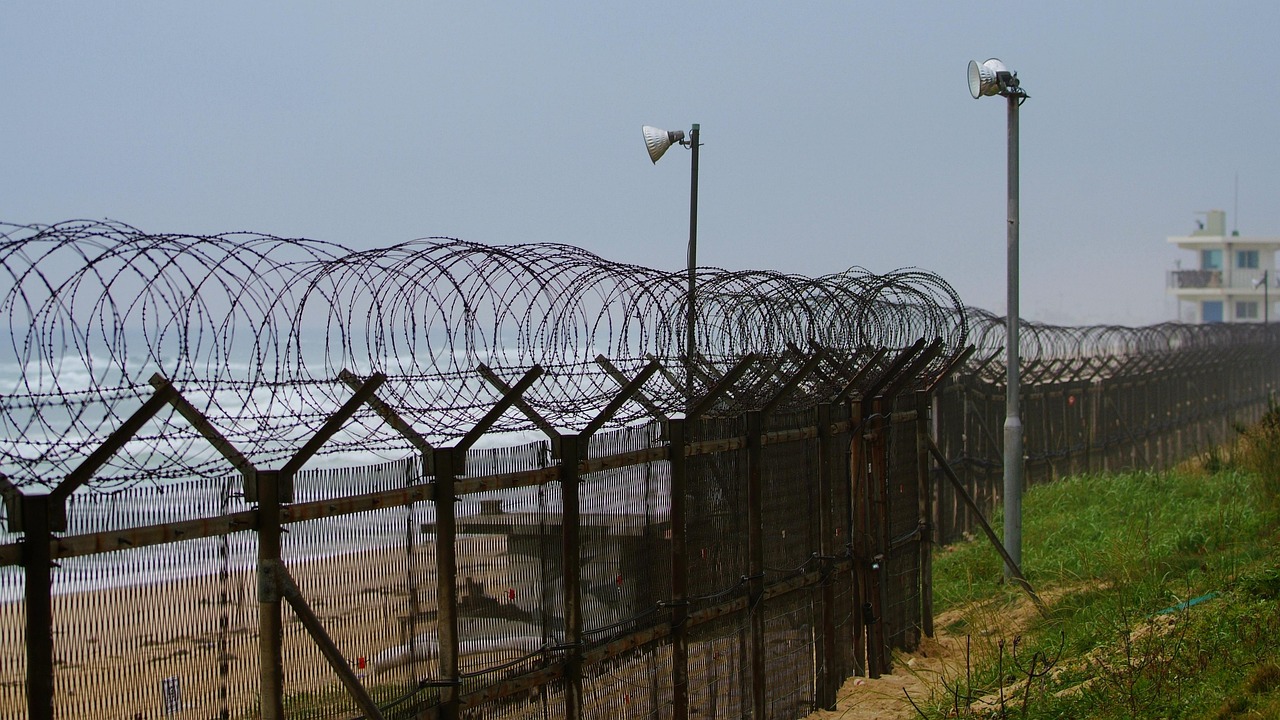
Visitors to South Korea often notice the absence that sits just north of Seoul: a silent strip of land on no tourist map, watched by soldiers on both sides. To understand modern Korea — its politics, its people, its resilience — it helps to understand how and why the peninsula came to be divided. This guide walks through the key history clearly and fairly, without taking political sides.
1945: Liberation and the Drawing of the 38th Parallel
Korea had been under Japanese colonial rule since 1910. When Japan surrendered to the Allied Powers in August 1945, ending World War II, the Korean peninsula was abruptly liberated — but it was not handed back to Koreans as a single, unified nation.
In the final days of the war, the United States and the Soviet Union agreed to divide responsibility for accepting Japan’s surrender in Korea along the 38th parallel of latitude. Soviet forces would receive the Japanese surrender north of that line; US forces would do so south of it. This was understood at the time as a temporary administrative arrangement, not a permanent border.
In practice, however, two very different governments took shape on either side. In the south, a US-backed administration emerged, eventually becoming the Republic of Korea (ROK), formally established in August 1948. In the north, a Soviet-supported government formed, becoming the Democratic People’s Republic of Korea (DPRK), proclaimed in September 1948. By the end of 1948, both claimed to be the legitimate government of the entire peninsula. Both foreign powers withdrew most of their troops, but the division hardened.
The Korean War: 1950–1953
On 25 June 1950, military forces from the DPRK crossed the 38th parallel in a large-scale offensive into the south. The United Nations Security Council — meeting in the absence of the Soviet Union, which was boycotting sessions at the time — authorised member states to assist the ROK. The United States led a multinational UN force that entered the conflict.
The war moved dramatically in both directions. By late 1950, UN forces had pushed deep into the north, approaching the Chinese border at the Yalu River. In late October 1950, the People’s Republic of China entered the war with a massive intervention, pushing the front back south. After months of intense fighting, the front stabilised roughly along the 38th parallel again through 1951 and into 1952, and the war became a grinding stalemate of attrition.
The human cost was catastrophic. Casualty estimates vary by source, but millions of soldiers and civilians on all sides died or were wounded. Entire cities were destroyed. The conflict also separated millions of Korean families across the dividing line — separations that, for many, have lasted to this day.
On 27 July 1953, an armistice agreement was signed by military commanders representing the UN Command, the Korean People’s Army, and the Chinese People’s Volunteer Army. It is important to note: the armistice was a ceasefire agreement — a halt to the fighting — not a peace treaty. The Korean War has never officially ended. The two Koreas remain technically in a state of war, and no comprehensive peace agreement has been concluded as of the time of writing.
The armistice established a new military demarcation line, which runs slightly north of the 38th parallel in the west and south of it in the east, reflecting where the front lines actually stood in 1953. A buffer zone was created on either side of this line.
What Is the DMZ?
The Demilitarized Zone (DMZ) is a strip of land running approximately 250 kilometres (155 miles) across the peninsula, roughly 4 kilometres wide — 2 kilometres on either side of the Military Demarcation Line established by the 1953 armistice. Despite its name, the DMZ is one of the most heavily fortified stretches of land on Earth, patrolled by military forces and lined with landmines, fences, and surveillance equipment on both sides.
Because the zone has been largely off-limits to human activity since 1953, it has become an inadvertent wildlife sanctuary. Wetlands, forests, and rare species — including the endangered red-crowned crane — have flourished in the absence of human development. This ecological dimension is sometimes cited in discussions about the zone’s future.
Within and adjacent to the DMZ are several sites of historical significance. Panmunjom — also called the Joint Security Area (JSA) — is the only point along the DMZ where soldiers from both sides stand in direct proximity. It was the site of armistice negotiations and has hosted diplomatic exchanges over the decades. Tours to the JSA have been offered to civilians at various times, though operations depend on current diplomatic conditions (see below).
The Division Today: Separated Families and Ongoing Tension
For Koreans on both sides, the division is not merely a political or strategic matter — it is deeply personal. Millions of families were separated by the war and the hardening of the border. Reunion programmes have allowed a small number of elderly separated relatives to meet, but these events have been rare and intermittent, dependent on the state of inter-Korean relations. Many people have died waiting. The emotional weight of this separation is a recurring theme in Korean literature, film, and public discourse.
The peninsula has also seen periodic moments of high tension since 1953, including military incidents, naval clashes, and nuclear and missile developments by the DPRK that have drawn international concern. Diplomatic efforts — bilateral, multilateral, and through the UN — have pursued different approaches to the situation over the decades, with varying outcomes. The situation remains fluid.
South Korea today is a democracy and a major global economy. It is home to a dynamic culture that millions of travellers visit each year. But that present coexists with the unresolved history to the north, and many South Koreans hold nuanced views on how to approach peace and reconciliation.
Where Travellers Can Learn More and Visit
A number of sites near the DMZ are accessible to visitors from the south, and they offer a sobering and thought-provoking perspective on this history. Note that access, tour availability, and permitted areas can change depending on the security and diplomatic situation. Always check current status before planning a visit.
DMZ tours from Seoul are widely available through tour operators and are one of the most popular day trips from the capital. Typical tours visit sites such as Imjingak (a park near the border with memorials and a bridge used by refugees), the Third Tunnel of Aggression (a tunnel discovered in 1978 that was dug toward the south), Dora Observatory (where visitors can look into North Korean territory), and Dorasan Station (a railway station built in anticipation of inter-Korean connections). Advance booking is required, and some areas require additional permits or restrictions for foreign nationals. Tour operations can be suspended on short notice, so confirm your booking the day before.
The Joint Security Area (Panmunjom) has been open to organised civilian tours at various points in history, though access has been suspended or restricted during periods of tension. Check with licensed tour operators for current availability.
The UN Memorial Cemetery in Busan is the only UN-designated military cemetery in the world. It holds the remains of soldiers from 11 countries who died during the Korean War and is a place of quiet remembrance. If you are visiting Busan, it is a meaningful site to reflect on the international dimension of the conflict. Read our full guide: UN Memorial Cemetery Busan Guide.
History museums in Seoul — including the War Memorial of Korea — provide extensive context on the conflict and its aftermath, with exhibits in English. These are excellent starting points before visiting border areas.
For first-time visitors to South Korea, understanding this context enriches the entire trip. Read our Busan Travel Guide for First-Time Visitors for more on planning your Korea journey.
Frequently Asked Questions
Is the Korean War officially over?
No. The Korean War ended with an armistice agreement signed on 27 July 1953, which halted the fighting but was not a peace treaty. The two Koreas remain technically in a state of war. Negotiations toward a formal peace settlement have occurred at various points but have not produced a comprehensive agreement.
Can tourists visit the DMZ?
Yes, parts of the DMZ area on the South Korean side are accessible to tourists through organised day tours, primarily from Seoul. Common stops include Imjingak, the Third Tunnel, Dora Observatory, and Dorasan Station. Advance booking is required, and tours can be cancelled or restricted depending on current conditions. Always confirm your booking and check for any travel advisories.
Why is Korea divided into North and South?
Korea's division originated in 1945 when the US and Soviet Union split responsibility for accepting Japan's surrender along the 38th parallel. What began as a temporary administrative line became a permanent border as two separate governments formed. The Korean War (1950–53) entrenched the division, and no peace treaty has unified the peninsula since.
What is Panmunjom?
Panmunjom, also known as the Joint Security Area (JSA), is a location within the DMZ where soldiers from both sides stand in close proximity. It served as the site of armistice negotiations in 1953 and has hosted inter-Korean talks over the decades. Civilian tours to the JSA have been available at certain times; current access depends on the diplomatic situation.
Is it safe to travel near the DMZ?
Organised DMZ tours on the South Korean side are considered safe and operate regularly for large numbers of tourists each year. The sites visited are controlled environments managed by military and tourism authorities. That said, travellers should check their government's current travel advisory for South Korea and confirm tour operations before departure, as conditions can change.