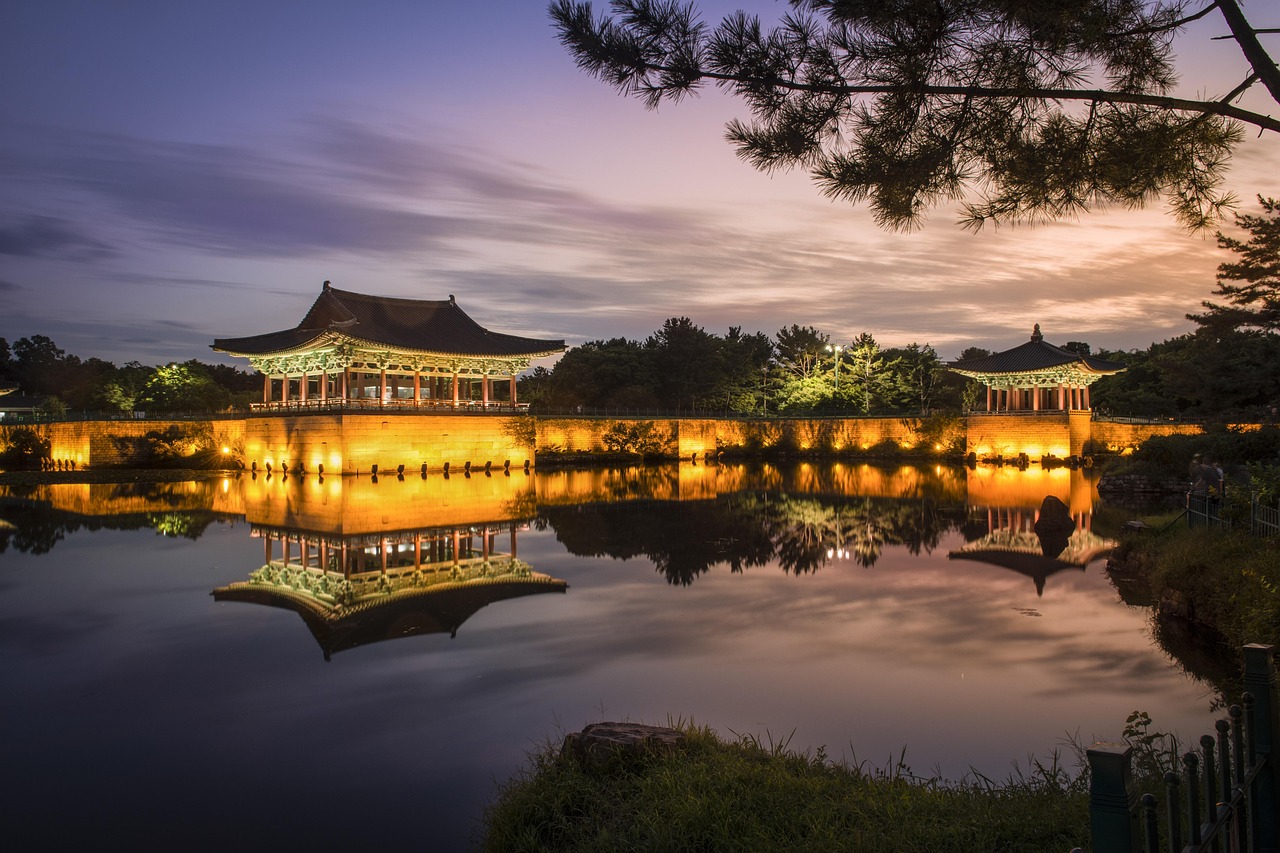
Gyeongju is often called “the museum without walls,” and once you arrive, you understand why. This compact city in North Gyeongsang Province served as the capital of the Silla Kingdom for nearly a thousand years — from 57 BC to 935 AD — and the evidence is everywhere: grass-covered royal tombs rise from the city center, stone pagodas stand in open fields, and Buddhist carvings are tucked into mountain cliffs just a short bus ride from downtown. A Gyeongju history trip is one of the most rewarding day trips or overnight stays you can make from Busan, and pairs well with another heritage-focused escape like Andong and Hahoe Folk Village if you have extra time in the region.
Getting to Gyeongju from Busan
Gyeongju sits about 70 km north of Busan, making it an easy half-day or full-day excursion. The fastest option is the KTX from Busan Station to Singyeongju Station, which takes around 20 minutes and costs roughly 8,800 KRW one way. From Singyeongju Station, local bus 700 or 700-1 connects you to downtown Gyeongju in about 30 minutes. Alternatively, intercity buses depart from Busan’s Nopo Bus Terminal every 20-30 minutes and drop you directly at Gyeongju Intercity Bus Terminal, right in the city center — the ride takes about 50 minutes and costs around 4,600 KRW. For the most flexibility, the bus is usually the better choice.
Once in the city, renting a bicycle is the classic way to cover the main historical sites. Rental shops cluster near the bus terminal and around Tumuli Park, with rates starting at around 3,000-5,000 KRW per hour. Many visitors also use local buses or taxis to reach outlying sites like Bulguksa Temple and Seokguram Grotto.
The Must-See Historical Sites
Start your day at Tumuli Park (대릉원), the grand burial ground in the heart of the city. Entry costs 3,000 KRW, and the park contains 23 giant earthen tombs belonging to Silla royalty. You can enter Cheonmachong (Heavenly Horse Tomb) and see the actual burial chamber and artifacts up close, including gold crowns and jade ornaments discovered during excavation. The scale of the mounds — some reaching 20 meters high — is genuinely impressive.
A five-minute walk away, Cheomseongdae Observatory (첨성대) stands in an open park with no admission fee. Built in the 7th century under Queen Seondeok, it is one of the oldest surviving astronomical observatories in East Asia. The cylindrical stone tower looks modest at first glance, but the engineering and symbolism embedded in its construction — 365 stones for the days of the year, 27 layers for the 27th ruler — make it fascinating when you read the details on-site.
Head next to Gyeongju National Museum (국립경주박물관), which is free to enter and houses thousands of Silla artifacts including the massive Emille Bell, cast in 771 AD. Allow at least 90 minutes here. The outdoor garden contains stone pagodas, lanterns, and architectural fragments recovered from across the region.
If you have a full day, take bus 11 from downtown to Bulguksa Temple (불국사), about 16 km southeast of the city. Entry is 6,000 KRW for adults. This UNESCO World Heritage Site, in the same spirit as Seoul’s own Gyeongbokgung Palace, dates to 528 AD and features two of Korea’s most iconic stone pagodas — Dabotap and Seokgatap — standing side by side in the main courtyard. From Bulguksa, a shuttle bus (1,200 KRW) or taxi (about 6,000-8,000 KRW) runs up the mountain to Seokguram Grotto (석굴암), a 3,000 KRW entry, where an 8th-century granite Buddha sits in a domed stone chamber carved into the hillside. The view over the East Sea on a clear day is worth the trip alone.
Where to Eat in Gyeongju
Gyeongju has its own culinary identity. The city is famous for Gyeongju bread (경주빵), a small pastry filled with red bean paste baked in a mold shaped like the Cheomseongdae Observatory. You will find them at bakeries throughout the city center for around 1,000 KRW each — they make excellent souvenirs. For a proper meal, try ssambap (쌈밥), a set meal of rice served with a wide selection of wrapping leaves and side dishes, available at local restaurants near Tumuli Park for around 12,000-15,000 KRW. Bibimbap and cold noodles are also widely available — if the food and hanok atmosphere appeals to you, Jeonju for Food and Hanok is another city worth exploring for the same reasons. Street food stalls near the bus terminal sell tteokbokki and sundae for under 4,000 KRW.
Tips for Planning Your Visit
- Tumuli Park, Cheomseongdae, and the National Museum are all walkable from the city center — group them together for your morning.
- Leave Bulguksa and Seokguram for the afternoon; they close at 5:30 PM (last entry around 5:00 PM).
- Spring (April-May) and autumn (October-November) are the best seasons — the light is good and the crowds are manageable on weekdays.
- The Gyeongju Historic Areas are a UNESCO World Heritage Site, which means there are strict rules about construction near the tombs — the city has a distinctly low-rise, unhurried feel compared to other Korean cities.
- If you stay overnight, the area around Hwangseong Park is quiet and well-positioned for exploring on foot.
How to Avoid a Repeat: Packing and Booking Habits That Reduce Risk
Baggage delays cluster around a few predictable causes, and knowing them helps you plan the rest of your trip — and your next one. Short connection times are the biggest single factor: if you’re transiting through an intermediate hub with less than 60–75 minutes between flights, your bag is far more likely to miss the connection than you are. Airlines will often let a passenger sprint to a gate but cannot always move bags that fast through sorting. When booking multi-leg itineraries into Incheon, a connection under 90 minutes — especially on separate tickets with different airlines — meaningfully raises the odds of a delay.
A practical local tip that isn’t printed on any airline website: at Incheon, transfer passengers connecting to a domestic flight (say, onward to Jeju or Busan) should confirm at check-in whether their bag is being checked through to the final domestic destination or only to Incheon. Ground staff sometimes default to checking bags only as far as ICN on itineraries booked separately, which then requires you to collect and re-check the bag yourself — and if you don’t realise this until you’re already in the domestic terminal, the bag can end up delayed on the leg you least expect.
For the trip itself, the single most effective habit is packing a small “delay kit” in your carry-on: a change of clothes, any daily medication, phone and camera chargers, and a spare pair of contact lenses or glasses. This costs nothing and means that even a 24–48 hour delay barely disrupts your first day of sightseeing, whereas travellers who pack everything in checked luggage often lose a full day rearranging plans around a shopping trip.
It’s worth comparing two common scenarios so you know which applies to you. If you’re flying a single airline on a through-ticket (for example, one Korean Air booking from your home city to Incheon), the airline is fully responsible end-to-end and the PIR process described above is straightforward. If instead you’ve booked separate tickets — a budget carrier to a hub, then a different airline into Korea — liability can be split between carriers, and you may need to file two separate reports. When budget allows, a single through-ticket with one airline is worth the small extra cost purely for how much simpler baggage problems become to resolve. Frequent flyers who prioritise cost above all else should at minimum build in a longer connection window (2+ hours) to offset the higher mis-connection risk of separate-ticket itineraries.
Finally, consider luggage tracking tags (Bluetooth trackers such as Apple AirTag or Samsung SmartTag, placed inside checked bags) — they won’t speed up an airline’s process, but they let you confirm independently whether your bag is still at your origin airport, sitting in a sorting hub, or already in Korea, which is useful reassurance while you wait at the baggage desk. Just note that Korean customs has occasionally flagged bags showing an active Bluetooth signal for a secondary check, so this is a minor trade-off rather than a guaranteed shortcut.