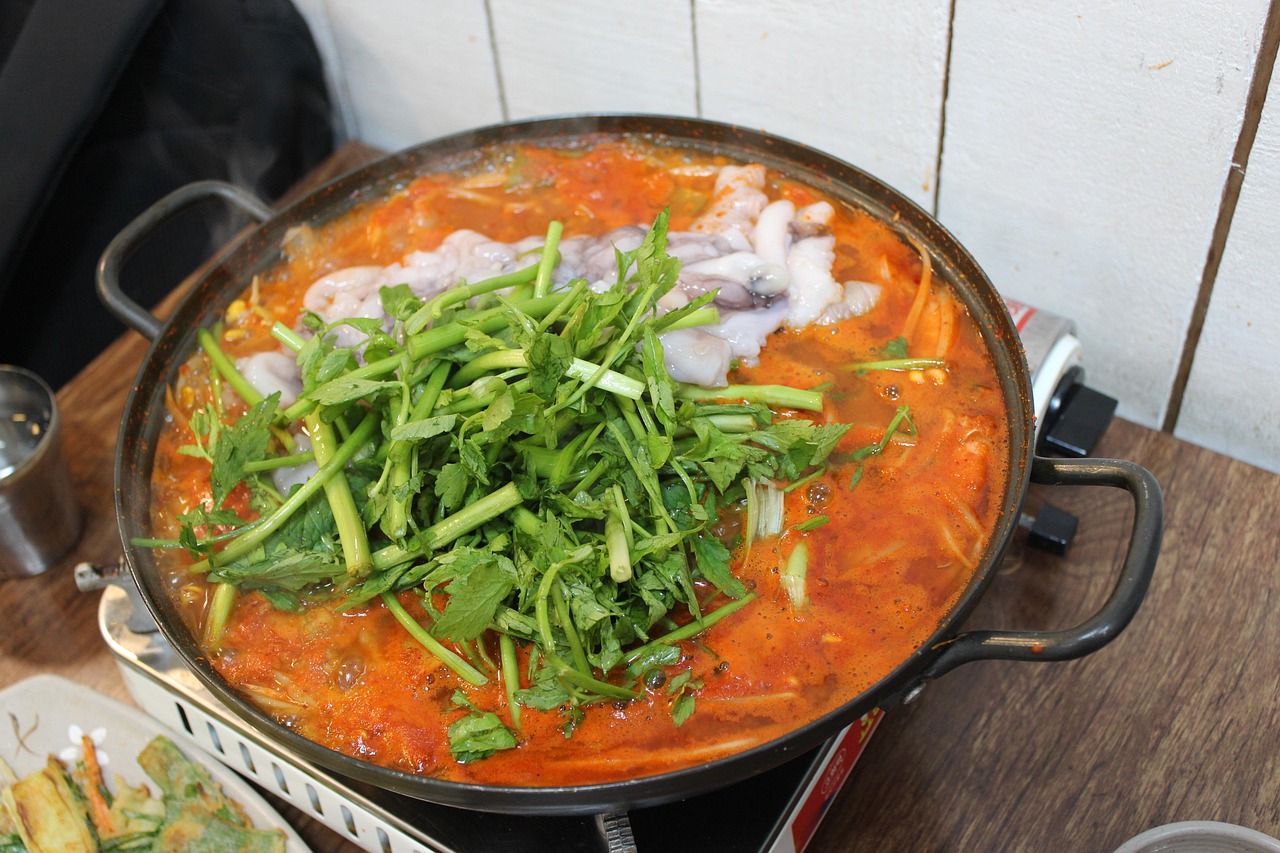
Korea’s shopping malls are some of the best places in the country to eat — and most tourists walk right past them. While everyone queues outside popular street food stalls, locals are downstairs in the food court loading up trays with freshly made bibimbap, grilled eel, and handmade dumpling soup for half the price. Once you know how to navigate these spaces, mall dining becomes one of the most practical and genuinely satisfying parts of eating in Korea.
How Korean Mall Food Courts Actually Work
Korean food courts, called 푸드코트 (pudeu koteu), operate differently from what you might expect in a Western mall. Most are found on basement floors (B1 or B2) of large department stores and shopping complexes. The layout is usually circular or open-plan, with individual vendor stalls ringing the seating area. You order directly at the counter of whichever stall you want, pay at the register, take a buzzer or number ticket, and find a seat. When your buzzer goes off, you collect your food yourself.
Payment is almost always cash or Korean card at individual stalls, though larger malls like COEX and Lotte World Mall now accept most international cards and even mobile payments like Kakao Pay. If you are unsure, look for card machine symbols at the register before you order. Self-service kiosks with English interfaces are becoming standard at major locations, making ordering much easier for non-Korean speakers.
Prices are genuinely reasonable. A bowl of Korean-style Chinese noodles (jajangmyeon) typically runs 8,000–10,000 KRW. A bibimbap or dosirak (Korean lunch box) costs around 9,000–12,000 KRW. Full set meals with soup, rice, and side dishes land between 10,000–15,000 KRW. This is not street food pricing, but it is significantly cheaper than the sit-down restaurants in the same building.
The Best Malls for Food Courts in Major Cities
Not all food courts are equal. These are the ones worth specifically seeking out:
- COEX Mall, Seoul (삼성역) — Underground, massive, and well-organised with English signage throughout. The food court spans two connected sections and covers everything from Korean barbecue sets to Vietnamese pho to Japanese ramen. Line 2, Samseong Station exits directly into the mall.
- Lotte World Mall, Seoul (잠실역) — The food floor on B1 skews toward trendy Korean fusion and dessert concepts alongside traditional options. Popular with younger locals, so expect more experimental dishes alongside classics. Congestion at peak lunch (12:00–13:00) can be intense.
- Starfield Hanam / Starfield COEX — Starfield malls have elevated their food courts significantly. The vendors are curated, the seating is more comfortable than average, and the variety is excellent. Hanam is worth the trip if you are spending a day outside central Seoul.
- Shinsegae Centum City, Busan (센텀시티역) — The world’s largest department store by Guinness record, and its food court on B1 matches the scale. Busan-specific dishes like milmyeon (wheat noodles in cold broth) and dwaeji gukbap (pork rice soup) are available alongside the national staples. Subway Line 2, Centum City Station.
- Hyundai Department Store, Pangyo — A newer complex popular with tech-sector workers from the nearby판교 (Pangyo) district. Food quality skews higher than average, and the crowd is less touristy than central Seoul locations.
Practical Tips for Getting the Most Out of Mall Dining
A few things to know before you sit down with your tray:
- Go at off-peak times. Korean lunch rush is 12:00–13:30, and the queue at popular stalls can be 15–20 minutes long. Arriving at 11:30 or after 14:00 makes a significant difference. Dinner crowds build from 18:00.
- Grab a seat before you order. In busy food courts, tables disappear fast. Put a jacket or shopping bag on a chair to hold it, then go order. This is standard and accepted practice.
- Look for the sample display. Most stalls have plastic food models or backlit photo menus. Point-and-order works fine if your Korean is limited. Staff are generally patient.
- Check for set meal deals. Many stalls offer a 세트 (set) option that adds a drink or side dish for 1,000–2,000 KRW more. It is almost always worth it.
- Return your tray. Unlike restaurants where staff clear tables, food courts use self-return systems. Look for the tray return station (반납구) near the center of the seating area. Separate your dishes onto the designated racks by type.
- Department store basement food halls are different. In Korea, the basement floor of a department store often has a separate premium food hall (식품관) with prepared takeaway foods, artisan goods, and deli counters. These are for shopping, not sit-down dining. The food court is usually a separate section with its own signage.
What to Order: Reliable Picks Across Stall Types
If you are new to the format, these are consistent performers across most Korean mall food courts:
- Bibimbap (비빔밥) — A safe, adaptable choice. Available at almost every food court, reliably good, and easy to customise spice level by controlling how much gochujang you mix in yourself.
- Galbi tang (갈비탕) — Short rib beef soup. Rich, filling, and mild enough for most palates. Common at traditional Korean stalls.
- Kalguksu (칼국수) — Handmade knife-cut noodle soup. Thicker and heartier than most noodle soups, ideal in colder months.
- Jajangmyeon (자장면) — Korean-style black bean paste noodles. A comfort food institution. The food court version is typically faster and cheaper than a dedicated restaurant.
- Tteokbokki set (떡볶이 세트) — Spicy rice cakes served with fishcake, often bundled with ramen or fried items. Popular with younger crowds, and the spice level is real — ask for 덜 맵게 (deol maepge) if you want it milder.
Korean food courts reward a bit of exploration. The best thing you can do is walk the full circuit before committing — look at what people are eating, check the displayed prices, and order from wherever your tray looks most appealing. The system is built for efficiency, and once you have done it once, it feels natural.
Food Court vs Basement Food Hall: Which One Do You Actually Want?
First-time visitors often mix up two very different spaces that sit near each other in the same building: the food court (푸드코트) and the department store food hall (식품관). Knowing which one you want before you go down the escalator saves confusion. A food court is built around sit-down eating — you order a cooked dish at a counter, take a buzzer, and eat at a shared table. A food hall is closer to a gourmet grocery floor: rows of bakeries, banchan (side dish) counters, fruit stalls, and prepared meal boxes meant to be taken home or eaten standing up. If you want a proper hot meal and a seat, head for the food court. If you want to grab pastries, fresh fruit, or a takeaway dosirak for a picnic at a nearby park, the food hall is the better stop.
The two are usually adjacent but clearly separated by signage, and prices work differently too. Food hall items are priced per piece or by weight — a slice of cake might run 4,000–6,000 KRW, a small tray of banchan 3,000–8,000 KRW (as of 2026 — verify before visiting, prices can change) — while food court meals are a flat per-tray price of roughly 9,000–15,000 KRW covering a full meal. Tourists sometimes wander into the food hall expecting a food-court-style tray and end up confused when there’s nowhere to sit and eat a hot dish. Locals treat the food hall as a shopping errand and the food court as a meal stop, and it helps to think of it the same way.
A local tip that rarely makes it onto tourist guides: many department store food halls run a “closing discount” (마감할인) in the last hour or two before closing, typically 20–40% off prepared boxes, sushi trays, and bakery items that need to sell before the day ends. If you are staying near a mall and don’t mind eating a bit later, checking the food hall around 30–60 minutes before closing can turn a 12,000 KRW dosirak into an 8,000 KRW one. This works best at food halls inside department stores (Shinsegae, Hyundai, Lotte) rather than at food courts, where portions are cooked to order rather than pre-packaged.
Which one suits you depends on your plan for the day. Choose the food court if you have 30–40 minutes, want a hot meal, and are happy sharing a table with strangers during a busy lunch hour. Choose the food hall if you’re building a picnic, want something to eat on a train, or would rather browse several small counters than commit to one full meal. Many travellers end up using both on the same trip — food court for lunch, food hall for evening snacks or breakfast pastries the next morning.
What is the difference between a food court and a food hall in a Korean mall?
A food court (푸드코트) is for sit-down hot meals ordered at a counter and eaten at shared tables. A food hall (식품관) is a gourmet grocery floor with bakeries, banchan counters, and takeaway meal boxes meant to be carried out rather than eaten on-site. They’re usually next to each other but clearly separate sections.
Can I get a discount at a department store food hall?
Yes — many food halls run a closing discount (마감할인) of roughly 20-40% off prepared boxes, sushi trays, and bakery items in the last 30-60 minutes before closing (as of 2026 — verify before visiting, prices can change). This applies to food halls, not to made-to-order food court stalls.
Should I eat at the food court or the food hall on a day trip?
Choose the food court if you have 30-40 minutes and want a hot sit-down meal. Choose the food hall if you’re building a picnic, want a snack for the train, or prefer browsing several small counters over committing to one dish. Many travellers use both: food court for lunch, food hall for evening snacks or next-morning pastries.
Are food hall prices different from food court prices?
Yes. Food hall items are priced per piece or by weight — a slice of cake around 4,000-6,000 KRW, a small banchan tray 3,000-8,000 KRW — while food court meals are a flat per-tray price of roughly 9,000-15,000 KRW for a full meal (as of 2026 — verify before visiting, prices can change).