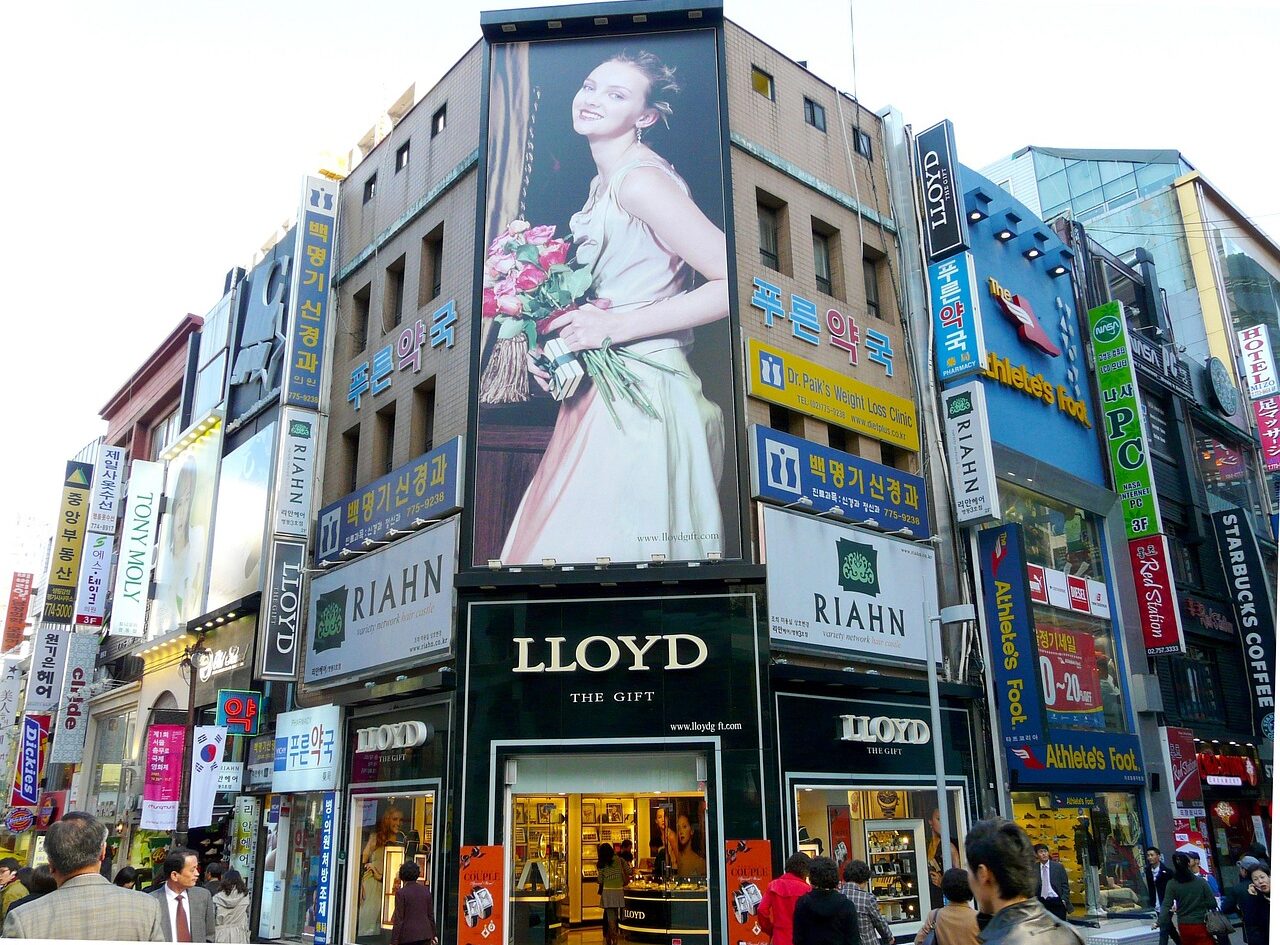
Shopping for clothes and shoes in Korea is one of the great pleasures of visiting — but it can quickly turn frustrating if you show up without knowing how Korean sizing works. Sizes follow different numbering systems from what most Western visitors are used to, and many shops in tourist-heavy areas like Myeongdong or Dongdaemun Market do not always carry extended sizes. A little preparation before you browse will save you time, confusion, and the disappointment of falling in love with something that does not fit.
How Korean Clothing Sizes Work
Korean clothing uses a numeric sizing system based on centimeters rather than the S/M/L labels or dress sizes common in Western countries. For tops, the key measurement is chest circumference. For bottoms, it is waist circumference. Most local brands sold at shops in Hongdae, Myeongdong, and the underground malls of Express Bus Terminal (고속터미널) use this system consistently.
Here is a quick reference for women’s tops:
- Korean 44 = XS (bust ~79 cm, equivalent to US/UK size 2–4)
- Korean 55 = S (bust ~83 cm, equivalent to US/UK size 4–6)
- Korean 66 = M (bust ~87 cm, equivalent to US/UK size 8–10)
- Korean 77 = L (bust ~91 cm, equivalent to US/UK size 12–14)
- Korean 88 = XL (bust ~95 cm, equivalent to US/UK size 14–16)
For men’s dress shirts and casual tops, Korean sizing usually matches the chest in centimeters directly — so a size 100 means roughly a 100 cm chest, which corresponds to a Western Medium or Large depending on the brand. Korean fashion tends to run slim, so if you are between sizes, size up.
For trousers and jeans, both men and women will see waist measurements in centimeters. Women’s jeans at stores like Spao (스파오) or Eland brands commonly run from size 24 to 30 (waist in inches, confusingly mixed in some shops) or 58 cm to 76 cm. Men’s trousers typically follow the waist-in-centimeters format: 76, 80, 84, 88, 92.
Korean Shoe Sizes Explained
Korea uses the mondopoint system for shoes, which measures foot length in millimeters. This is actually one of the most logical sizing systems in the world once you understand it — you simply measure your foot and match the number.
Common conversions for women’s shoes:
- Korean 230 mm = US women’s 5.5, UK 3.5, EU 36
- Korean 240 mm = US women’s 6.5, UK 4.5, EU 37
- Korean 250 mm = US women’s 7.5, UK 5.5, EU 38–39
- Korean 260 mm = US women’s 8.5, UK 6.5, EU 40
- Korean 270 mm = US women’s 9.5, UK 7.5, EU 41
For men’s shoes:
- Korean 255 mm = US men’s 7, UK 6.5, EU 40
- Korean 265 mm = US men’s 8, UK 7.5, EU 41–42
- Korean 275 mm = US men’s 9, UK 8.5, EU 43
- Korean 285 mm = US men’s 10, UK 9.5, EU 44
- Korean 295 mm = US men’s 11, UK 10.5, EU 45
Most shoe shops in Hongdae, Myeongdong, and department stores like Lotte Department Store (롯데백화점) in Myeongdong stock shoes from 230 mm to 275 mm. Men with feet larger than 280 mm and women larger than 260 mm may find options limited in regular street shops. The ABC Mart chain, with branches across Seoul and Busan, often has a broader range and English-labeled sizing charts near the entrance.
Where to Shop and What to Expect
Budget shoppers will find the best prices at markets and fast-fashion chains. In Seoul, Dongdaemun Market (동대문시장) is the wholesale and retail hub, alongside the boutiques covered in our Myeongdong shopping guide — basic tops start from around 5,000–15,000 KRW, jeans from 20,000–40,000 KRW. The underground shopping arcades beneath Gangnam Station and Express Bus Terminal offer a similar range with slightly more organised layouts and fitting rooms.
For mid-range Korean brands, Spao, Mixxo, and 8seconds (all found in major malls like Times Square in Yeongdeungpo or Lotte Mall Busan) price casual tops at 19,000–39,000 KRW and jeans at 39,000–69,000 KRW. These chains have clear size charts posted in-store and on their apps in both the Korean numeric system and S/M/L equivalents. If you spend enough at department stores or affiliated retailers, be sure to check your eligibility for a tourist tax refund before you leave.
If you need plus sizes (Korean 3XL and above), head to dedicated sections in large department stores or check online platforms like Musinsa (무신사) or W Concept before your trip. Musinsa in particular has a strong selection of domestic brands with detailed measurement charts for each item — useful for planning purchases in advance.
For general strategies on haggling and browsing at markets like this, see our traditional market tips. For shoes in larger sizes, the Dongdaemun Shoes Street near Heunginjimun (흥인지문) stocks wholesale and retail options up to 300 mm for men. Expect to pay 15,000–35,000 KRW for casual shoes and 40,000–80,000 KRW for leather dress shoes at street-level shops.
Practical Tips Before You Buy
- Measure yourself before you travel — bring your chest, waist, and hip measurements in centimeters, and your foot length in millimeters.
- Always try items on. Korean sizing can vary significantly between brands, and the slim-cut silhouettes common in K-fashion may fit differently than you expect.
- Street market stalls in Myeongdong and Insadong often label items as “free size” (프리사이즈), which typically fits Korean sizes 55–66 (roughly US XS–S). If you are larger than this, skip free-size items.
- Most department stores and mall chains offer exchanges within 7–30 days with a receipt. Street market purchases are generally final sale.
- If shopping for athletic shoes at stores like Nike or Adidas in Korea, sizing follows the same mondopoint system but international US/EU conversions are usually displayed alongside.