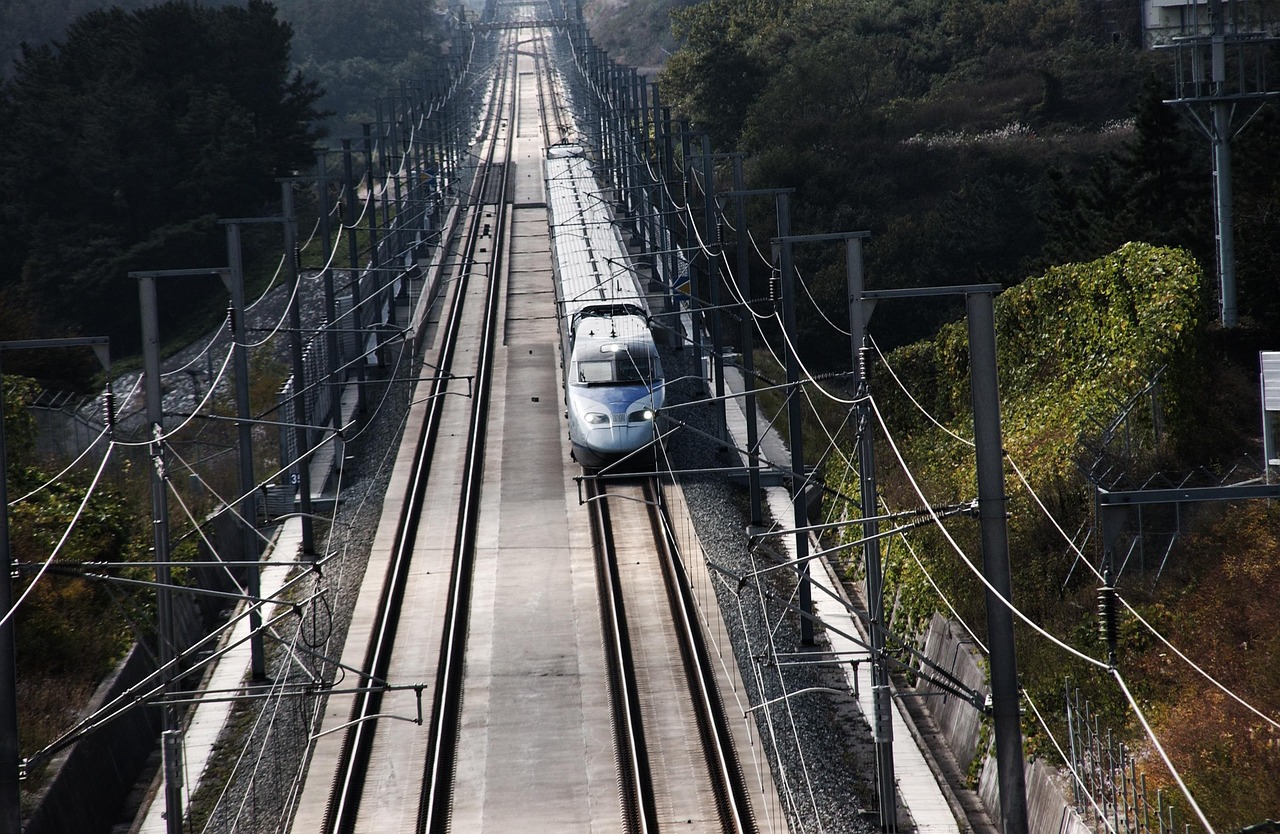
South Korea’s high-speed rail network gives you two choices: KTX and SRT. Both travel at similar speeds between major cities, both are comfortable, and both cost less than a taxi from Gimpo Airport to central Seoul. But they are not identical — knowing the difference saves you time, money, and the occasional missed connection.
What KTX and SRT Actually Are
KTX (Korea Train eXpress) is operated by Korail, the national rail operator. It has run since 2004 and covers the widest network in Korea, including routes to Busan, Gwangju, Mokpo, Yeosu, Gangneung, and Andong. If you are heading somewhere outside the main Seoul–Busan corridor, KTX is almost certainly your only high-speed option. If this is your first time riding it, our KTX train guide for first-timers covers boarding, seating, and station navigation in more detail.
SRT (Super Rapid Train) is operated by SR, a separate private company that launched in December 2016. It runs on the same Gyeongbu and Honam high-speed lines but departs from Suseo Station in southeastern Seoul rather than Seoul Station. SRT currently serves Busan, Mokpo, Gwangju Songjeong, and a handful of stops in between.
The rail infrastructure is shared — trains often run side by side on the same tracks. The difference is the operator, the departure station, and the ticket price.
Price and Speed: Which Is Cheaper and Faster?
SRT consistently undercuts KTX by roughly 10 percent. As of 2026, a standard-class seat from Seoul to Busan on KTX runs about ₩59,800 for the fastest direct train. The equivalent SRT ticket from Suseo to Busan is around ₩52,600. Over a return trip for two people, that is a saving of over ₩28,000 — enough for a solid bowl of gukbap at Busan Station.
Travel time is nearly identical: 2 hours 15–40 minutes depending on the number of stops. Neither train has a meaningful speed advantage over the other on the routes they share.
- KTX Seoul–Busan fastest: approx. 2 hr 15 min, from ₩59,800 (standard)
- SRT Suseo–Busan fastest: approx. 2 hr 20 min, from ₩52,600 (standard)
- KTX Seoul–Gwangju Songjeong: approx. 1 hr 33 min, from ₩46,500
- SRT Suseo–Gwangju Songjeong: approx. 1 hr 39 min, from ₩41,700
Both trains offer a First Class (특실) upgrade — wider seats, more legroom, a complimentary snack — for roughly 40 percent more than standard. On a 2-hour journey, standard class is perfectly comfortable; the seat pitch is generous by any international comparison.
Station Location: The Deciding Factor for Most Tourists
This is where SRT’s cheaper ticket often stops looking like a bargain. KTX departs from Seoul Station, which sits on subway Lines 1 and 4 and is connected directly to the airport rail link (AREX). If you are staying in Myeongdong, Hongdae, or anywhere in central Seoul, Seoul Station is straightforward. You can ride the AREX non-stop from Incheon Airport to Seoul Station in 43 minutes for ₩11,000 and board your KTX within the same building. If you’re also weighing a Seoul transit pass for the rest of your trip, the Discover Seoul Pass guide breaks down which card is actually worth buying.
SRT departs from Suseo Station in Gangnam, accessible on subway Line 3 and the Bundang Line. Getting to Suseo from Hongdae takes 45–55 minutes on the subway and usually involves a transfer. From Incheon Airport, you are looking at 70–90 minutes and at least two transfers, or a ₩50,000–70,000 taxi ride.
If you are already staying in Gangnam or the southeastern part of Seoul — near stations like Yangjae, Dogok, or Daechi — Suseo is genuinely convenient and SRT becomes the clear winner. For everyone else, the extra subway travel to Suseo usually cancels out the ticket savings.
There is one more KTX departure point worth knowing: Yongsan Station, one stop south of Seoul Station on Line 1. Some KTX trains originate or stop at Yongsan, which is useful if you are staying near Itaewon or Hannam.
Booking, Rail Passes, and Practical Tips
KTX tickets can be booked on the Korail website, the Korail Talk app, or at ticket machines inside any major station. Foreign tourists can also use the Korea Rail Pass (KR Pass), which covers unlimited KTX travel for a set number of days — a useful option if you plan to visit three or more cities. The KR Pass does not cover SRT.
SRT tickets are booked through the SR website or the SRT app. There is no equivalent rail pass for SRT, and foreign credit cards occasionally have issues on the SR website — bring a Visa or Mastercard rather than Amex, or use the station ticket window as a fallback.
- Book at least a day ahead on weekends, public holidays, and Chuseok/Seollal — trains sell out fast.
- Window seats are assigned; if you want a view, select them at booking.
- Both trains have a café car selling coffee, ramen, and snacks — no need to load up at the station.
- Luggage racks are at the end of each car; oversized bags do not need to be checked.
- Quiet cars (지정 좌석 차량) are standard — phone calls are frowned upon in all carriages.
For most tourists, the practical answer is: take KTX from Seoul Station unless you are already in Gangnam or specifically trying to save money on a route where SRT runs. For residents or repeat visitors based in the Gangnam area, SRT is the smarter daily option — cheaper tickets and a station that is actually close to home.
Discounts, Group Fares, and Digital Tickets
Neither KTX nor SRT advertises foreigner-specific discounts the way the KR Pass sometimes implies, but both systems have standard fare reductions worth checking before you pay full price. Children aged 6–12 ride at roughly 50 percent of the adult fare on both KTX and SRT, and children under 6 travel free if they sit on a parent’s lap (a separate seat still requires a ticket at the child rate). Seniors over 65 and travellers with a registered disability qualify for reduced Korail fares on KTX, though this discount is not available to SRT and generally requires a Korean resident registration number to claim at booking — in practice, most tourists will not be able to access it, so budget for the full adult fare on both services.
Group and early-bird discounts are where the two operators diverge more clearly. Korail runs a “Hae-oreum” early-purchase discount on KTX of up to 10–20 percent when you book seven or more days ahead on selected off-peak trains, plus standing/no-seat tickets sold at a flat discount when a route is fully booked — useful in a pinch, but you will be standing in the vestibule for the whole journey. SRT’s app periodically runs its own early-bird promotions through the SRT app rather than the SR website, and these tend to appear with less notice, so it is worth checking both platforms 1–2 weeks before a fixed travel date rather than assuming KTX is always the better-value option. For groups of ten or more travelling together, both operators offer negotiated group rates, but these must be arranged by phone or at a station ticket office — neither app supports group booking online.
On the practical side, both KTX and SRT have moved almost entirely to digital ticketing. Once you book through Korail Talk or the SRT app, your phone screen showing the QR code or booking confirmation is your ticket — there is no need to print anything or collect a paper stub from a machine, even for foreign card bookings. The one local tip worth knowing: keep your phone’s brightness up and screen unlocked when boarding, because gate scanners at busy periods (Friday evenings, Chuseok) can struggle to read a dimmed screen, and the resulting queue at the gate is the single most common reason travellers nearly miss a train. If your card fails to charge online, every station still has staffed ticket windows and English-language kiosks as a fallback, so it is rarely worth panicking over a declined booking — just arrive 20 minutes earlier than you otherwise would.