Busan (부산) punches well above its weight as a shopping city. It has the world’s largest department store, some of Korea’s most atmospheric traditional markets, a thriving K-beauty strip, and fashion streets that rival Seoul for indie labels. Whether you’re hunting designer goods, vintage workwear, fresh seafood, or handmade souvenirs, Busan delivers — often at prices that beat the capital. This guide walks you through every major shopping zone, explains what to look for, and flags the tips that will save you time and money.
Large Shopping Malls: Retail on a Grand Scale
Shinsegae Centum City (신세계 센텀시티)
Certified by Guinness World Records as the world’s largest department store, Shinsegae Centum City covers more than 293,000 m² across its main building and the adjacent West Building. Beyond fashion floors stocked with Hermes, Balenciaga, and every Korean luxury brand, there is an ice rink, a multiplex cinema, a spa, a golf range, and Starbucks outlets you could get genuinely lost finding. The food hall alone is worth a visit: international supermarkets, a gourmet sausage counter, and dozens of sit-down restaurants. Plan at least half a day if you are serious about shopping.
Where: 35 Centum Namno (센텀남대로 35), Haeundae-gu — exit 3 from Centum City station (Line 2). Hours: Generally 10:30–20:00 on weekdays, until 20:30–21:00 on weekends, though individual floors vary; check the official site before a dedicated trip. Tax refund: The Global Tax-Free counter on the ground floor can process VAT refunds on purchases of ₩30,000 or more per receipt from participating brands. Keep your passport with you.
Lotte Department Store & Lotte Mall (롯데백화점 · 롯데몰)
Busan has multiple Lotte outposts. The flagship Lotte Department Store Gwangbok (광복점) occupies an eye-catching building at the foot of Nampo-dong (남포동) and offers harbour views from its upper floors alongside the full range of Lotte-curated brands. Lotte Mall Dongbusan (동부산) in Gijang is a purpose-built outlet complex with dozens of discount counters for Nike, The North Face, and Korean mid-range labels — good for sportswear bargains if you have time for the journey (approx. 45 minutes from downtown by subway). Both locations carry the Lotte L.pay and global tax-free systems.
Tip: Lotte Department Store Gwangbok is a ten-minute walk from Gukje Market, so you can combine a morning of markets with an afternoon of air-conditioned mall shopping.
Traditional Markets: Busan’s Living History
Gukje Market (국제시장)
Gukje Market — literally “International Market” — grew out of the refugee economy of the Korean War and never really stopped hustling. The labyrinth of covered alleys sells everything: industrial tools, textiles, leather goods, lighters, imported snacks, Korean military surplus clothing, and stall after stall of cheap household goods. It is chaotic in the best possible way. Bargaining is accepted for larger purchases, though most small-item sellers post fixed prices. The surrounding Nampo-dong (남포동) neighbourhood adds bookshops, vintage record stores, and BIFF Square street food right outside the market perimeter.
Where: Gukje Market-ro, Jung-gu — a five-minute walk from Jagalchi station (Line 1), exit 3. Hours: Most stalls open around 09:00–10:00 and close by 19:00–20:00; closed Sundays (individual stalls vary). Tip: Come on a weekday morning for the best energy and fewer crowds.
Jagalchi Market (자갈치시장)
Korea’s largest seafood market, Jagalchi, occupies a modern silver building right on the waterfront, with an outdoor vendors’ strip that extends back towards the road. The ground floor is raw: tanks of live abalone (전복), sea cucumber (해삼), sea squirt (멍게), and every species of flat fish you have never heard of. Take your pick, pay on the spot, and carry your bag upstairs to one of the restaurant floors where they will prepare it as sashimi (회, hoe) or grilled fish. It is one of the most memorable meals in the city — and arguably the best souvenir is the experience itself.
Where: 52 Jagalchi-gil, Jung-gu — exit 10 from Jagalchi station (Line 1). Hours: Roughly 08:00–22:00 daily; the outdoor vendors may be slightly reduced on Sunday mornings. Tip: Bring cash for the stall vendors downstairs; the upstairs restaurants accept cards.
Bupyeong Kkangtong Market (부평깡통시장)
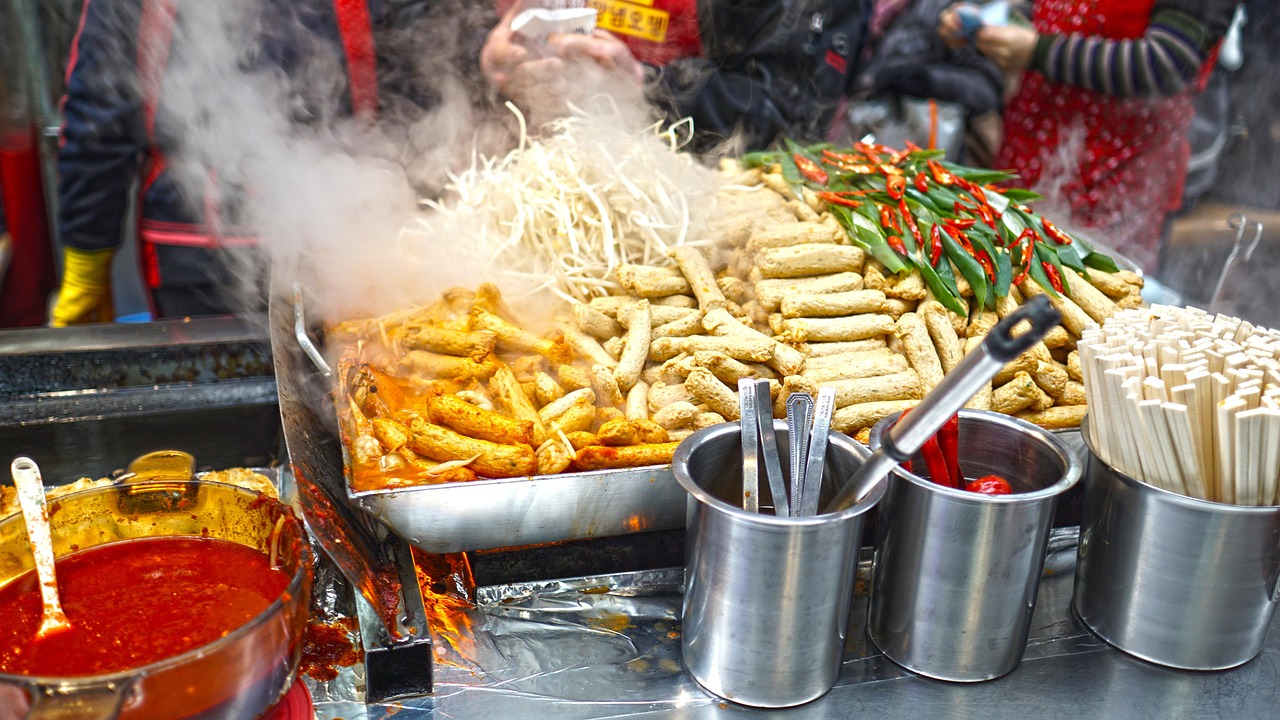
Bupyeong Kkangtong Market (literally “tin-can market”) earned its nickname from the post-war trade in US military ration tins. Today it is famous for three things: a daytime market of general goods and fresh produce, an outstanding night market that opens Thursday–Sunday evenings, and some of the most wallet-friendly street food in Busan. The night market stalls are the highlight — tteokbokki (떡볶이), tornado potato, Korean crepes, fresh oysters, and international bites from Mongolian lamb skewers to Taiwanese scallion pancakes, all eaten standing at folding tables under string lights. Very few tourists make it here compared to Gukje or Jagalchi, which makes it feel authentically local.
Where: Bupyeong 1-ga, Jung-gu — a short walk from Jagalchi station or within the Gukje Market district. Night market hours: Approximately 19:30–23:30 Thursday–Sunday (weather-dependent; closed on rainy nights). Tip: Come hungry; most stalls sell single portions priced ₩3,000–₩8,000.
Fashion Districts: Street Style & Indie Labels
Seomyeon (서면): Busan’s Youth Shopping Hub
Seomyeon is the subway crossroads of Busan — Lines 1 and 2 intersect here — which makes it the natural gathering point for younger shoppers. The area around Seomyeon 1(il)-ga-ro is packed with multi-brand fashion stores, Korean sportswear discounters, underground arcades selling accessories and phone cases, and a dense concentration of skincare and cosmetics outlets. Bigger chains like Zara, H&M, and Uniqlo sit alongside independent Korean labels. Evenings here are lively year-round: the street food trucks set up alongside the convenience stores and the shopping crowds thin into bar-hopping crowds.
Where: Seomyeon station exits 1–4 (Lines 1 and 2). Hours: Most shops 11:00–22:00 daily. Tip: The underground Seomyeon Shopping Street (서면지하상가) beneath the station is a good hunting ground for affordable accessories, sunglasses, and seasonal outerwear.
Nampo-dong Gwangbok-ro (남포동 광복로): Heritage Meets High Street
Gwangbok-ro (광복로), the pedestrianised main street running through Nampo-dong, is Busan’s answer to Myeongdong — but less crowded, more manageable, and with a stronger sense of local history. Flagship Korean brands (Innisfree, Olive Young, Nature Republic) line the street, interspersed with trendy cafes and the occasional independent boutique. The street connects naturally to Gukje Market on one side and the Lotte Department Store Gwangbok on the other, making it easy to do a complete loop: traditional market to high street to department store in a single walk. BIFF Square (BIFF 광장), the stretch of pavement near the old cinema district, is particularly lively after dark with street food vendors and a small film-festival atmosphere year-round.
Where: Nampo station exit 6 (Line 1). Tip: The side streets off Gwangbok-ro hide vintage clothing shops and indie accessory stores that are more interesting than the main drag.
Duty-Free & K-Beauty Shopping
Busan has two city duty-free stores — Lotte Duty Free Busan (롯데면세점 부산) in the Lotte Hotel on Gwangbok-ro, and Shinsegae Duty Free (신세계면세점) inside Centum City. Both stock the full range of international perfume, cosmetics, spirits, and handbags at prices that undercut the retail floors downstairs. You must show your passport and outbound boarding pass or e-ticket. Pick-up is at the airport on departure day (allow 40 minutes for the retrieval queue at busy periods).
For K-beauty without the duty-free paperwork, Olive Young (올리브영) is the most reliable chain: skincare brands such as Cosrx, Anua, Dr. Jart+, and Innisfree are stocked with fresher inventory and a wider shade range than most airport retailers. The Seomyeon and Gwangbok-ro branches both carry a good selection. Tax refund tip: Spend ₩30,000 or more at any participating Olive Young and request a tax-refund receipt at the till; you can claim the VAT back (around 9–10%) at the airport.
Local Specialities & Souvenirs
The best Busan-specific souvenirs skew edible or handmade. Look for these in the traditional markets and the specialty food shops near Jagalchi and Gukje:
- Dried seafood (건어물, geonoeomul): Squid, anchovies, and dried pollock make excellent portable gifts. Vendors at Jagalchi and Gukje vacuum-pack on request.
- Ssiat hotteok mix (씨앗호떡 믹스): The seed-stuffed sweet pancake is Busan’s most iconic street snack; branded mixes for home cooking are widely available in Gukje Market.
- Gamcheon Village ceramics and prints: Small workshops in Gamcheon Culture Village sell hand-painted tiles and postcards that are genuinely unique.
- Korean military surplus: Gukje Market’s military-surplus alley (골목) sells vintage field jackets, canvas bags, and enamel cups at very low prices — a quirky bit of Korean post-war heritage.
- Makgeolli and soju sets: Locally-produced rice wine and flavoured soju are available in department store food halls; check airline liquid rules before packing.
Practical Tips for Shopping in Busan
- Tax refund (세금 환급): Korea’s VAT rate is 10%. Foreign visitors can claim a refund on purchases from registered shops. Request a tax-refund receipt (글로벌 택스 프리 영수증) at the point of sale, then submit at the airport’s tax-refund booth before check-in. The minimum qualifying purchase is ₩30,000 per receipt at most retailers.
- Bargaining: Fixed-price culture dominates in malls, department stores, and chain shops. In traditional markets — particularly Gukje — a polite counter-offer on larger purchases (clothing, bags, shoes) is acceptable, though not guaranteed. Smile, ask nicely, and do not expect more than 10–20% off.
- Hours: Traditional markets generally close Sunday or Monday; always verify before making a dedicated journey. Department stores and malls typically observe one weekday closure per month on a rotating schedule — check the official site if you are visiting mid-week.
- Payment: Cards (Visa, Mastercard) are accepted almost universally in malls and chain stores. Market stall vendors are predominantly cash-only; keep ₩50,000–₩100,000 in small notes on hand for a market day.
- Bags and packaging: Korea charges for shopping bags in most retail environments (typically ₩100–₩300 per bag). Bring a tote or two.
Frequently Asked Questions
What is the best shopping area in Busan for first-time visitors?
For a single day, combine Nampo-dong Gwangbok-ro with Gukje Market and Jagalchi Market — all are within walking distance in the Jung-gu district. If you prefer malls, Shinsegae Centum City in Haeundae is the most impressive and self-contained option.
Can I get a tax refund on purchases in Busan?
Yes. Korea’s VAT refund scheme applies to purchases of ₩30,000 or more per receipt at registered shops. Ask for a Global Tax-Free receipt at the till, keep your original receipts, and submit them at the tax-refund booth in Gimhae Airport (김해공항) before check-in. Refunds are paid in cash (Korean won) or back to your card.
Is bargaining acceptable in Busan markets?
Gentle bargaining is accepted at traditional markets like Gukje Market (국제시장), especially for clothing, bags, and larger purchases. It is not expected for small, fixed-price items like street food or packaged goods. Always bargain politely; aggressive haggling is counterproductive.
When is the Bupyeong Kkangtong night market open?
The Bupyeong Kkangtong Market (부평깡통시장) night market generally operates Thursday through Sunday, approximately 19:30–23:30. It is weather-dependent and may close on rainy evenings. The daytime market is open most days. Hours can shift slightly by season, so check local listings before visiting.
Where can I buy authentic K-beauty products in Busan?
Olive Young (올리브영) branches in Seomyeon and on Gwangbok-ro are the most reliable for current K-beauty brands (Cosrx, Anua, Innisfree, Dr. Jart+). Shinsegae and Lotte department store beauty floors stock premium Korean and international brands. For duty-free K-beauty, visit Shinsegae Duty Free inside Centum City or Lotte Duty Free on Gwangbok-ro — bring your passport and outbound ticket.