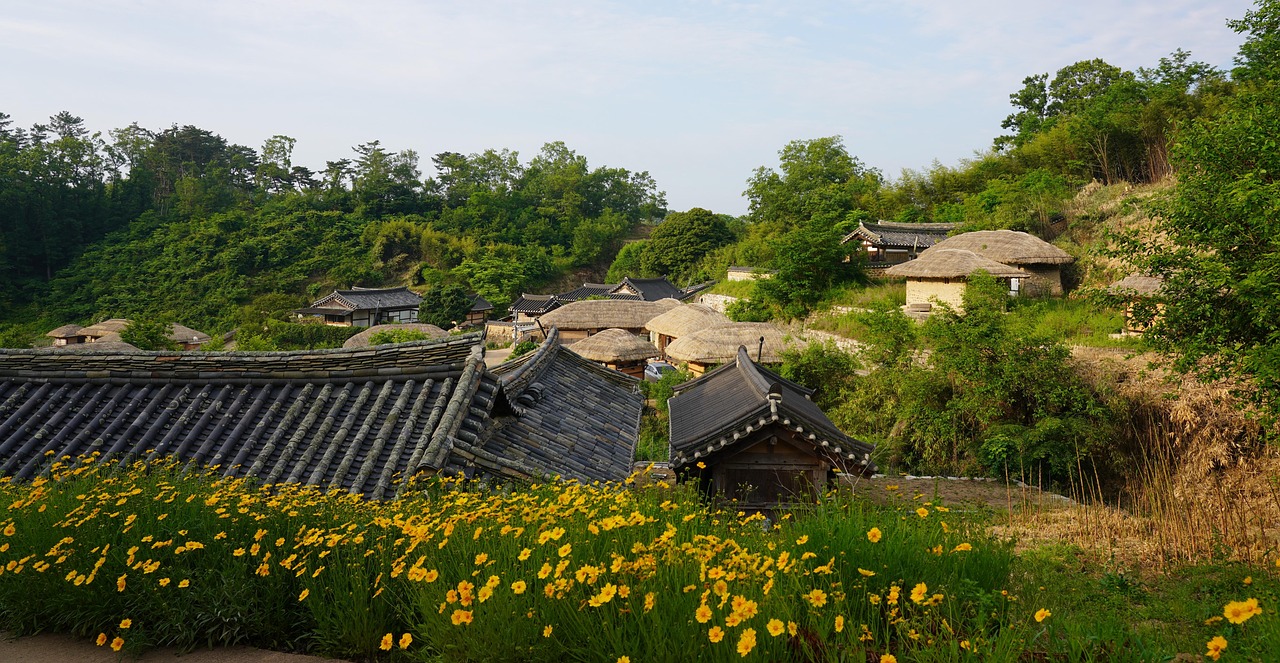
Gyeongju (경주) was the capital of the Silla kingdom for nearly a thousand years, and so much of that history still stands in the open that locals call the city a “museum without walls.” It is one of the easiest big day trips you can make from Busan. The simplest way is the intercity bus from Busan Central Bus Terminal at Nopo (노포), which reaches Gyeongju in about one hour for roughly ₩6,000–₩7,700; from the terminal you can see Bulguksa Temple (불국사), the Daereungwon royal tombs (대릉원) and the night-lit Wolji Pond (월지) in a single, well-planned day. This guide explains how to get there, a sensible one-day route, and what each UNESCO site is worth.
Last updated: June 2026. Prices, opening hours and bus times below are approximate and change with the season — confirm on the day before you travel.
How do you get from Busan to Gyeongju?
The easiest option is the intercity (express) bus from Busan Central Bus Terminal at Nopo (노포), which runs to Gyeongju in about 50–60 minutes for roughly ₩6,000–₩7,700. To reach the terminal, ride Busan Metro Line 1 to its northern end at Nopo Station (노포역); the bus ticket hall is a one-minute walk away. Buses leave often — usually two or three an hour, into the evening — so there is normally no need to book ahead. Buy tickets at the English-enabled machines (card) or a staffed counter (cash) and you arrive at Gyeongju Intercity Bus Terminal, a short ride from the main sights.
The other option is the KTX high-speed train from Busan Station to Gyeongju Station (경주역, formerly Singyeongju), which takes only about 30 minutes but drops you roughly 12 km west of the old town. From the station you then need a local bus or taxi into the centre, so the time you save on the train is partly spent transferring. Tip: for a day-tripper without a car, the Nopo bus is usually the smoother end-to-end choice because it lands you close to the historic core; take the KTX mainly if you are already near Busan Station or want the fastest line-haul.
How do you get around Gyeongju once you arrive?
Gyeongju splits neatly into two clusters: a walkable downtown cluster of tombs and palaces, and the Bulguksa–Seokguram cluster about 13 km to the southeast. The downtown group — Daereungwon (대릉원), Cheomseongdae (첨성대) and Donggung Palace & Wolji Pond (동궁과 월지) — sits close together and is best seen on foot. For the temples, take city bus 10 or 11 from near the bus terminal or downtown out to Bulguksa (불국사); the ride is about 40 minutes and costs around ₩1,500. From Bulguksa, bus 12 climbs the hill to Seokguram Grotto (석굴암).
You can pay city buses with the same T-money or Cashbee transit card you use in Busan — just tap on and off. Tip: if you arrive by KTX, note that the direct bus 700 from Gyeongju (Singyeongju) Station to Bulguksa is reported to run only a few times a day, timed to train arrivals, so check the posted schedule rather than counting on it; otherwise ride a city bus into downtown first and switch to bus 10/11. A taxi between any two sights is cheap and quick if you are short on time, and renting a bike is popular for the flat downtown area.
Is one day in Gyeongju enough?
Yes — one day is enough to see Gyeongju’s headline sights, as long as you pick a focused route and accept you cannot do everything. Gyeongju holds many of Korea’s UNESCO World Heritage sites and could easily fill two or three days, so a day trip means choosing the highlights. The realistic plan is the two main clusters: the Bulguksa–Seokguram temples in the morning, then the downtown tombs and palaces in the afternoon and evening.
The honest trade-off is the temples: Seokguram sits up a mountain above Bulguksa, and people who hike between them (instead of taking bus 12) often run out of daylight for the rest. Tip: give yourself as full a day as possible — take an early bus out of Busan, use buses rather than hiking between the temples, and you will still reach Wolji Pond for its famous after-dark reflection. If temples are your priority, you could even skip Seokguram to leave more time downtown.
What is a sensible one-day Gyeongju route?
Do the temples first while you are fresh, then work back through the walkable downtown sites, finishing at the night-lit Wolji Pond. This order follows the geography — out to the southeast temple cluster, then the central tomb-and-palace cluster — and it matches the official Gyeongju city tourism route. A workable day looks like this:
- Early bus from Busan (Nopo) → Gyeongju (~1 hr). Aim to leave by 8–9 am.
- Bulguksa Temple (불국사) via city bus 10/11. Allow 1.5–2 hours for the halls and stone pagodas.
- Seokguram Grotto (석굴암) by bus 12 from Bulguksa (optional if time is tight).
- Lunch back in downtown Gyeongju (try local ssambap set meals or Hwangnam bread).
- Daereungwon royal tombs (대릉원) and the Cheonmachong (천마총) excavated tomb.
- Cheomseongdae (첨성대) observatory — a short walk away.
- Donggung Palace & Wolji Pond (동궁과 월지) for sunset and the floodlit reflection.
- Evening bus back to Busan from the intercity terminal (services run late).
What are the main sights in Gyeongju?
The five must-sees are Bulguksa Temple, Seokguram Grotto, the Daereungwon tombs, Cheomseongdae observatory and Donggung Palace with Wolji Pond. Together they cover Silla religion, royalty, science and art — the reasons Gyeongju is a UNESCO-listed “museum without walls.” Here is what each one is, how long to budget, and how to reach it.
| Sight | Time needed | Why go | How to reach |
|---|---|---|---|
| Bulguksa Temple (불국사) | 1.5–2 hrs | Silla’s grandest temple; UNESCO-listed, with the Dabotap and Seokgatap stone pagodas | City bus 10/11 from downtown/terminal (~40 min) |
| Seokguram Grotto (석굴암) | 30–60 min | 8th-century stone Buddha in a hillside grotto; UNESCO-listed with Bulguksa | Bus 12 up the hill from Bulguksa |
| Daereungwon / Cheonmachong (대릉원·천마총) | 1–1.5 hrs | Grassy royal burial mounds; step inside the excavated “Heavenly Horse” tomb | Walk in downtown Gyeongju |
| Cheomseongdae (첨성대) | 20–30 min | One of Asia’s oldest surviving astronomical observatories (7th century) | Short walk from Daereungwon |
| Donggung Palace & Wolji Pond (동궁과 월지) | 1 hr | Silla pleasure palace and pond; the iconic floodlit night reflection | Walk/short taxi in downtown; best after sunset |
Why are Bulguksa and Seokguram so important?
Bulguksa Temple (불국사) and the nearby Seokguram Grotto (석굴암) were jointly inscribed as a UNESCO World Heritage Site in 1995, and they are the spiritual high point of any Gyeongju visit. Bulguksa was rebuilt in 751 under the Silla statesman Kim Dae-seong and holds seven of Korea’s National Treasures, including the contrasting Dabotap and Seokgatap stone pagodas that face each other in the main courtyard. According to the Korea Tourism Organization, the temple is generally open 9:00 am–6:00 pm and entry is currently free (some older guides still list a small fee, so carry a little cash just in case).
Above the temple, Seokguram is a man-made granite grotto enshrining a serene seated Buddha, completed around 774 and considered a masterpiece of Asian Buddhist art; it is a short bus ride (bus 12) up the mountain from Bulguksa. To know what to expect at these sites, see our overview of Korean Buddhist temples.
What can you see at the Daereungwon tombs and Cheomseongdae?
Daereungwon (대릉원) is a park of grassy royal burial mounds, and inside it the excavated Cheonmachong (천마총) tomb lets you walk into a Silla burial chamber. The mounds look like green hills scattered across the city; Cheonmachong, the “Heavenly Horse Tomb,” yielded over 11,000 artifacts, including a famous painting of a white horse and a gold crown. A combined ticket covering Daereungwon (with Cheonmachong) is modest — around ₩3,000 for adults — and the grounds are open into the evening.
A short walk away stands Cheomseongdae (첨성대), a bottle-shaped stone tower built in the 7th century and regarded as one of the oldest surviving astronomical observatories in East Asia. It is free to view and especially photogenic when lit at night. Tip: this whole downtown cluster — tombs, observatory and the lotus ponds nearby — is flat and compact, so it is the perfect part of the day to slow down and walk.
Is Wolji Pond worth staying for after dark?
Yes — Donggung Palace and Wolji Pond (동궁과 월지) is Gyeongju’s most famous night view, and the reflection of the floodlit pavilions on the still water is the single image most people remember. This was a Silla detached palace and pleasure garden built in 674 under King Munmu, originally called Wolji (“pond that reflects the moon”) and later known as Anapji. The Korea Tourism Organization lists it as open 9:00 am–10:00 pm (last entry 9:30 pm), with admission around ₩3,000 for adults.
Because it stays open late, it is the natural last stop before your bus back to Busan. Tip: arrive 30–60 minutes after sunset, when the sky still has colour and the lights are on — that is the best window for the mirror-like reflection. From here it is a short ride to the intercity terminal, where evening buses run frequently back to Nopo.
How much does a Gyeongju day trip cost?
A Gyeongju day trip from Busan is inexpensive — budget roughly ₩30,000–₩45,000 per person for transport and entry fees, before food. The big sights are free or only a few thousand won, so most of your spending is the round-trip bus. A rough breakdown:
- Round-trip intercity bus (Nopo ⇄ Gyeongju): about ₩12,000–₩15,000 total.
- City buses within Gyeongju (10/11/12): about ₩1,500 per ride, a few rides a day.
- Bulguksa & Seokguram: currently free (carry small cash just in case).
- Daereungwon / Cheonmachong: around ₩3,000.
- Donggung Palace & Wolji Pond: around ₩3,000.
FAQ
Is a day trip to Gyeongju from Busan enough?
Yes, one day is enough to see Gyeongju’s headline sights if you keep a focused route. Do the Bulguksa and Seokguram temples in the morning, then the walkable downtown cluster — Daereungwon tombs, Cheomseongdae and Wolji Pond — in the afternoon and evening. Gyeongju has many UNESCO sites and rewards two or three days, but a well-planned day covers the essentials.
How do you get from Busan to Gyeongju?
The easiest way is the intercity bus from Busan Central Bus Terminal at Nopo (Metro Line 1 to Nopo Station), which takes about 50–60 minutes and costs roughly ₩6,000–₩7,700. Buses run two or three times an hour into the evening, so you rarely need to book. Alternatively, the KTX from Busan Station to Gyeongju (Singyeongju) Station takes about 30 minutes but leaves you around 12 km outside the old town.
How much does a Gyeongju day trip cost?
Budget roughly ₩30,000–₩45,000 per person for transport and entry, before food. The round-trip bus is about ₩12,000–₩15,000, city buses around ₩1,500 each, and the main sites are cheap: Bulguksa and Seokguram are currently free, while Daereungwon and Wolji Pond are about ₩3,000 each. Prices can change, so confirm on the day.
What is the best time to visit Gyeongju?
Spring (cherry blossom season, usually early April) and autumn (October–November foliage) are the most popular times, with mild weather ideal for walking the open historic sites. Summer is hot and humid; winter is cold but quiet. Whatever the season, leave Wolji Pond for after sunset to catch its famous night reflection.
How do you get around Gyeongju without a car?
Gyeongju’s downtown sights (tombs, observatory and Wolji Pond) are close together and best walked. For the temples, take city bus 10 or 11 to Bulguksa, then bus 12 up to Seokguram; pay with a T-money or Cashbee card. Taxis are cheap for hopping between sights, and renting a bike is popular for the flat central area.
Explore more Korea Go Now guides
- Slot this side trip into a longer stay with our perfect 3-day Busan itinerary.
- See how Gyeongju compares with the city’s own highlights in our top 10 things to do in Busan.
- Get to Nopo terminal the easy way with our guide to how to use the Busan subway.
- Prepare for Bulguksa and Seokguram with our primer on Korean Buddhist temples.