South Korea runs on convenience stores. There are over 50,000 of them — GS25, CU, 7-Eleven, Emart24, Ministop — and as a tourist, you will visit them daily. Paying trips up first-timers more often than expected. Here is everything you need to know.
Which Payment Methods Actually Work
Your foreign card will almost certainly work. Visa, Mastercard, and American Express are accepted at all major chains. The terminal will ask whether you want to pay in Korean won (KRW) or your home currency — always choose KRW. Choosing your home currency activates dynamic currency conversion, quietly adding 3–5% on top of your bank’s own fees.
For a full rundown of tap-to-pay options beyond convenience stores, see this guide to mobile payments for visitors. Apple Pay and Google Pay work at most Korean convenience stores via NFC. Hold your phone or watch to the reader, wait for the beep, and you are done. Samsung Pay works too, with broader compatibility at older terminals thanks to MST technology.
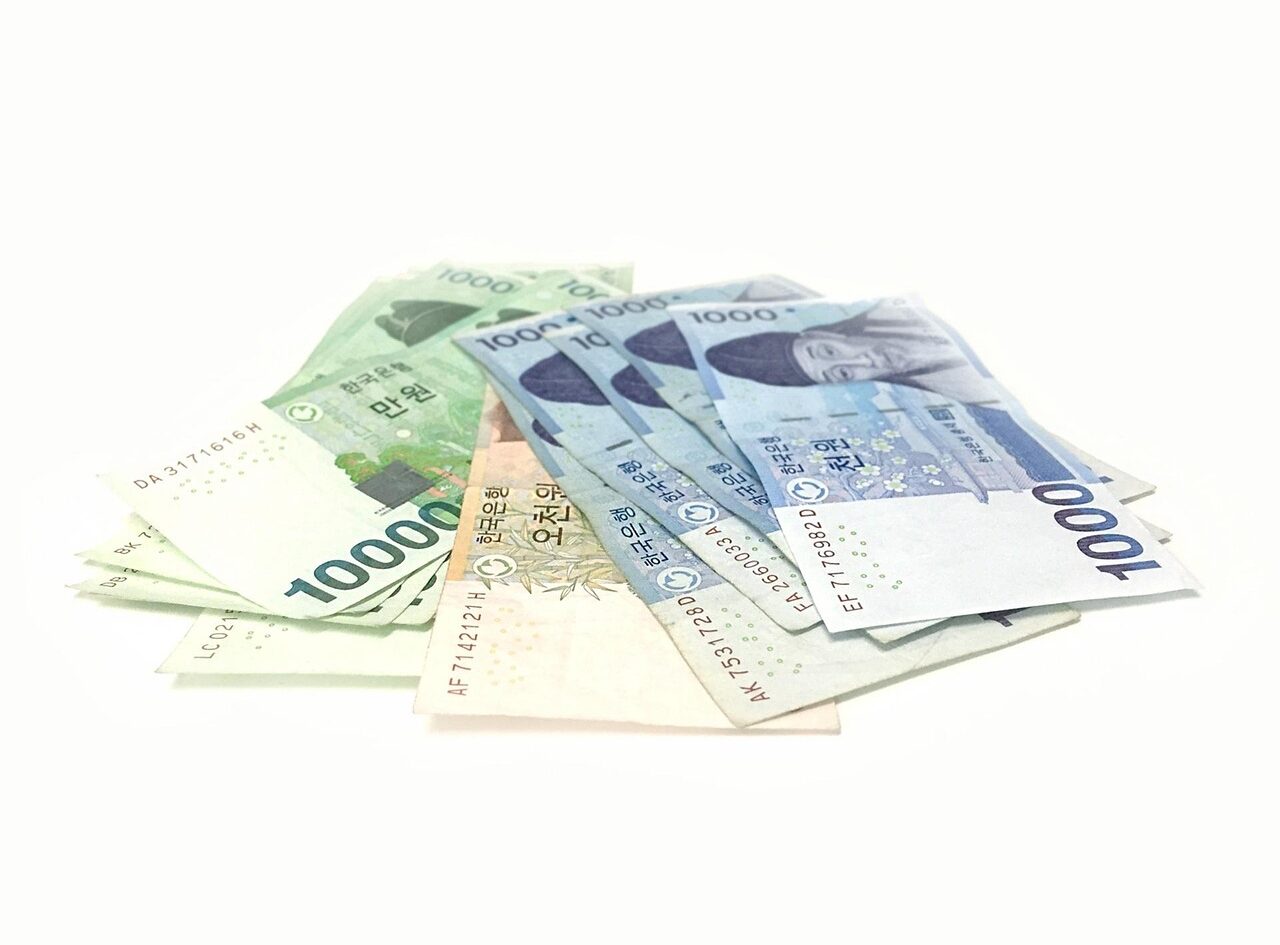
Cash is accepted everywhere, though ₩50,000 notes can cause problems for small purchases — see this guide on cards and cash in Korea for denomination tips. Carry ₩10,000 notes for convenience store runs. ATMs inside GS25 and CU accept international Visa and Mastercard cards for on-the-spot withdrawals, though it helps to know the basics of ATM withdrawals in Korea before you land.
The Checkout Process Step by Step
Korean convenience store checkouts are fast and follow a predictable script. Staff will ask one or two things before ringing you up — knowing what to expect saves you from that blank-stare moment.
- 봉투 필요하세요? (Bongtu piryohaseyo?) — “Do you need a bag?” Bags cost ₩100–200. Say “아니요 (aniya)” for no, or nod yes.
- 포인트 카드 있으세요? (Poincheu kadeu isseoseyo?) — “Do you have a points card?” Say no unless you have a T-money or chain-specific app.
- 일시불이요? (Ilsibullyo?) — “Pay in full?” Always say yes — installments require a Korean credit card.
- Tap your card or insert chip-first. PIN entry is not required for most foreign credit cards under ₩50,000; debit cards usually prompt for a PIN regardless.
The whole transaction takes under 30 seconds. Staff at stores near tourist areas like Myeongdong, Hongdae, and Busan’s Haeundae Beach are used to foreign customers and will not rush you.
T-Money Cards: Worth It for Tourists?
T-money is Korea’s transit card, but it doubles as a payment card at every convenience store in the country. Buy one at any convenience store counter for ₩4,000 (card cost only), then load cash at the same counter or at subway station machines. A ₩10,000 top-up takes ten seconds.
Using T-money shaves ₩100 off every subway and bus fare compared to paying cash — if you are in Seoul for more than three days, the card pays for itself. For store purchases, tap the reader, done, no PIN needed.
One caveat: T-money can go negative on transit, but you cannot pay for store purchases with a zero or negative balance. Top up before your balance drops below ₩1,000 to avoid an awkward pause at the counter.
Alcohol, Age Checks, and Self-Checkout Quirks
Alcohol is sold 24 hours at Korean convenience stores — no blue laws here. The legal drinking age is 19 (Korean age). Staff are supposed to card anyone who looks under 25, but tourists are rarely checked. Your passport works as ID if needed.
Self-checkout machines are rolling out at GS25 and CU in Seoul and Busan. The machines have an English option — look for the flag icon. When you scan alcohol or cigarettes, the machine pauses for a staff age-override. This is not a malfunction — make eye contact with the nearest staff member and they will walk over within seconds.
Cigarettes require the same staff approval at the manned counter. A pack of Marlboros runs ₩4,500–5,000. Korean brands like THIS and Esse cost ₩3,000–3,500. Point at the display rack and hold up fingers for the quantity.
Apps, Discounts, and Getting More for Your Won
Every major chain runs its own app — GS25’s “The GS25,” CU’s “Pocket CU,” and 7-Eleven’s app — and all three list daily “1+1” (buy one get one free) and “2+1” (buy two get one free) promotions on drinks, snacks, and instant noodles. You do not need a Korean phone number for most of these apps to simply browse the deal list; only redeeming member-only coupons requires sign-up, which is more hassle than it is worth for a short trip. The simpler trick: just look at the small colored stickers on the shelf edge — a yellow “1+1” or blue “2+1” tag applies automatically at checkout, no app or membership needed. This is the local tip most tourist guides miss: stock rotates on Mondays and Thursdays in most branches, so a drink that is full price on Tuesday might carry a 1+1 sticker by Friday.
Loyalty points are a different story and generally not worth pursuing as a visitor. CU’s membership programme and GS25’s GS&Point require a Korean phone number to register, and the point value per purchase is small — typically 1–2% back. Unless you are staying more than two weeks and shopping daily, skip signing up and focus on the shelf promotions instead, which apply to everyone regardless of membership.
Convenience stores also double as informal currency-saving stops for mobile connectivity. Many branches sell prepaid SIM and eSIM top-up vouchers for carriers like KT and SK Telecom, priced from roughly ₩10,000–33,000 depending on data allowance (prices can change — verify before visiting). This is usually cheaper and faster than airport kiosks, though the selection varies by store — GS25 tends to stock a wider range than CU in most neighbourhoods. If you already have an eSIM from home, skip this section entirely; it only matters if you need a local top-up mid-trip.
For food, nearly every store has a microwave and hot water dispenser near the till, free to use after purchase — heat your samgak-kimbap or instant noodles right there rather than carrying it back to your hotel. Meal deals combining a rice ball, drink, and snack for around ₩4,500–5,500 (as of 2026 — verify before visiting) are usually flagged with a red “set” sticker and represent noticeably better value than buying the same three items separately, which typically runs ₩1,000–1,500 more. Compare this to grabbing a sit-down casual meal nearby, which averages ₩8,000–12,000: for a quick, budget lunch between sightseeing stops, the convenience store set is the better choice; for anything beyond fifteen minutes of downtime, a proper restaurant meal is usually worth the extra cost and comfort.
- Look for colored shelf tags first — 1+1 and 2+1 stickers apply at checkout automatically, no app needed.
- Skip membership sign-up unless staying two weeks or longer; the point value is too small to bother with for short trips.
- Check the “set” sticker for bundled meal deals — they save roughly ₩1,000–1,500 over buying items separately.
- Use the free microwave and hot water near the register instead of eating cold food back at your accommodation.