Rising green and rugged over the northern edge of the city, Geumjeongsan (금정산) is Busan’s most-loved mountain and home to Geumjeongsanseong Fortress (금정산성) — the largest mountain fortress in Korea. Its wall stretches for kilometres along the ridgeline, linking four old stone gates above the famous Beomeosa Temple. You can tackle it as a hard half-day hike to the 801-metre summit, a gentle ridge stroll after a cable-car ride, or a lazy lunch of rice wine and grilled goat in the mountain village. This guide lays out honest route options for every fitness level.
The fortress & the mountain
Geumjeongsan means “Golden Well Mountain,” after a legend that a golden fish rode down from the heavens on a five-coloured cloud to play in a well that never runs dry. That summit, Godangbong (고당봉), tops out at 801.5 metres — the highest point in Busan and a genuine reward on a clear day, with the city and harbour spread out below.
The fortress was built early in the Joseon dynasty, between 1701 and 1703 under King Sukjong, after the Japanese and Manchu invasions of the 1590s to 1630s convinced the court that Busan’s coast needed a strong inland refuge. What makes it special is the sheer scale: the wall runs roughly 17–18 kilometres around the ridges and valleys (official Busan sources cite a circumference of 18,845 m, while other surveys give 16.383 km), enclosing some 8 square kilometres. It is recognised as a national Historic Site, maintained by the Busan Metropolitan Government.
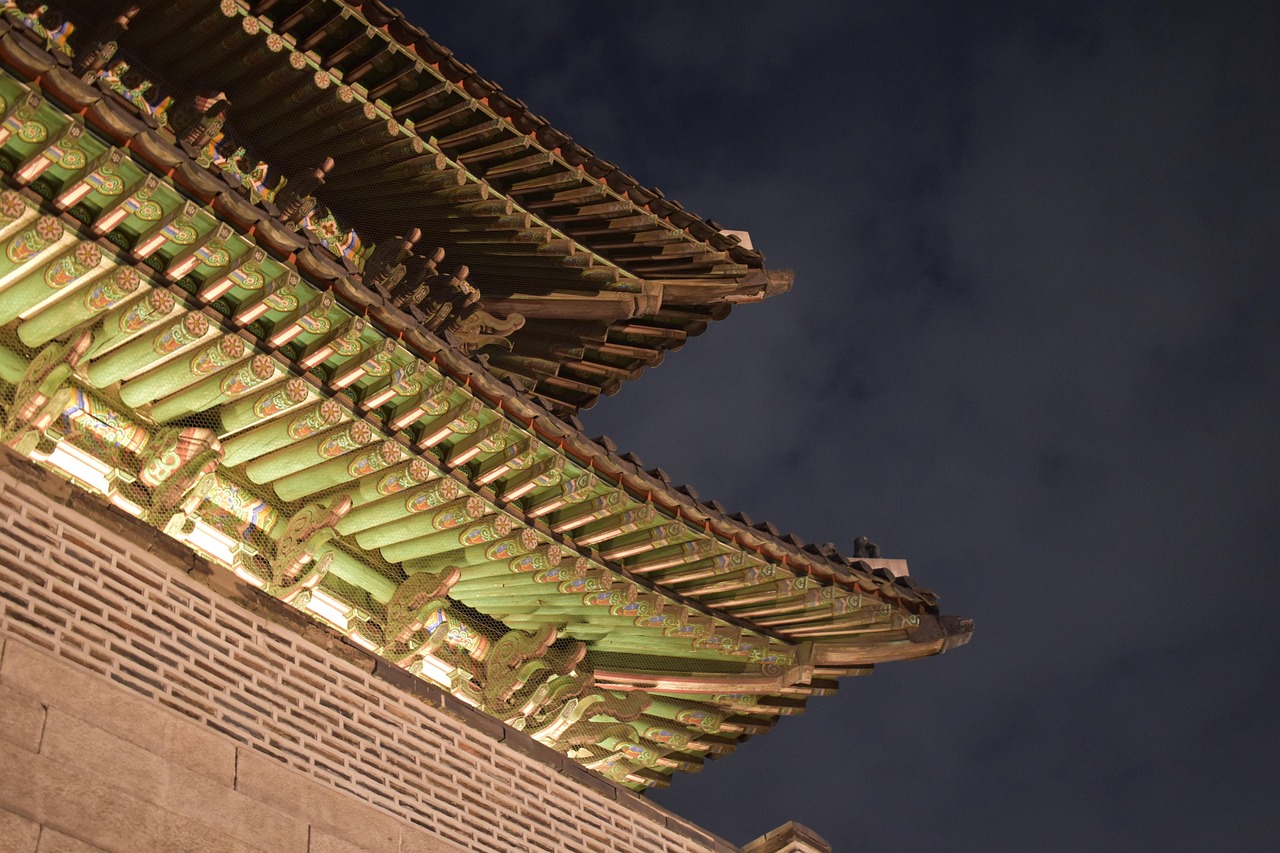
The fortress has four main gates at the cardinal points — North Gate (북문, Bungmun), South Gate (남문, Nammun), East Gate (동문, Dongmun), and West Gate (서문, Seomun). Much of the original structure was lost during the Japanese colonial period, so what you see now is restored: the East, West, and South Gates were rebuilt in 1974 and the North Gate in 1989. The South Gate, with its handsome arched stone base and wooden pavilion, is most photographed; the North Gate, near the summit ridge and the head of the Beomeosa trail, is the busiest hikers’ meeting point.
How to get there & route options
Geumjeongsan is unusually accessible for a mountain this size, because Busan Subway Line 1 runs right along its eastern foot. Two stations matter: Beomeosa (범어사) for the temple-and-summit side, and Oncheonjang (온천장) for the cable car. Which you choose decides how much climbing you do.
The Beomeosa side (full hike to the North Gate & summit)
This is the classic, most rewarding approach. Take Line 1 to Beomeosa Station and catch local bus 90 up to the temple (roughly 10 minutes; you can walk, but it is a long uphill slog on tarmac). From Beomeosa Temple, well-signed trails climb through forest to the North Gate in about 1.5 to 2 hours. The North Gate has a water station, toilets, and picnic tables, and from there it is a manageable extra push along the ridge to Godangbong. A popular loop — up to the ridge, along the wall past the gates, and back down to Beomeosa — runs around 9 km and takes most hikers 3 to 4 hours.
The Geumgang Park cable car (the easy way up)
If you would rather skip the long climb, ride up. Take Line 1 to Oncheonjang Station, leave from Exit 1, and walk about 15 minutes to Geumgang Park (금강공원), where the vintage cable car — running since the 1960s — carries you up the mountainside in a few minutes. From the upper station a short walk brings you onto the ridge near the South Gate, so you can enjoy the fortress views and Sanseong Village with little effort, then ride back down or hike onward.
Treat cable-car hours and fares as a guide and confirm before you go. Recent listings show operating hours around 09:30 to 17:30–18:00 with seasonal variation, the cable car typically closed on Mondays, and adult fares near 9,000 won round-trip / 6,000 won one-way (with discounts for seniors and children). These figures change, so check the latest before relying on them.
Hiking the wall: what to expect
Geumjeongsan rewards effort honestly. The walking along the ridge between the gates is mostly moderate — rolling, scenic, not technically difficult — on broad earth-and-stone paths beside the old wall. The harder parts are the climbs to reach the ridge: the ascent from Beomeosa to the North Gate is a steady, sweat-inducing pull, and the final stretch to Godangbong includes stairs and rocky steps. None of it needs special skill, just reasonable fitness and decent footwear — and you can scale the difficulty to suit you. Easy: cable car up, a flat ridge wander to the South Gate, lunch in the village, cable car down. Moderate: cable car up, walk the wall between the South and North Gates, descend to Beomeosa. Challenging: the full Beomeosa–summit–gates loop on foot. Trails are well marked, but an offline map helps, as ridge junctions can be confusing.
Sanseong Village: makgeolli & black goat
Tucked into a valley inside the fortress walls is Sanseong Village (산성마을, Sanseong-maeul), a small rural community that is reason enough to come up the mountain — famous above all for Sanseong makgeolli, a cloudy, lightly sparkling rice wine brewed here by a centuries-old method using hand-made nuruk (fermentation starter). A cold bowl after a hike is something of a Busan rite of passage.
Its other speciality is black goat (흑염소, heugyeomso). Villagers once raised goats around the fortress, and when a 1960s government rice-saving policy temporarily banned home brewing, many families turned to selling goat bulgogi to make a living. The dish stuck, and the village is now lined with restaurants serving grilled and braised goat alongside the makgeolli (you will also find duck and pajeon if goat is not for you). Hands-on makgeolli-brewing classes run here too, for travellers who want to dig deeper into the craft.
Combine it with Beomeosa Temple
Because the main hiking trail starts right at its gate, Beomeosa Temple pairs naturally with the fortress. One of Korea’s great Zen temples, founded in 678, Beomeosa is serene and beautiful in its own right. A common plan: visit the temple in the cool of the morning, climb to the North Gate and ridge, then come back down past it in the afternoon. For the full story on the temple, see our dedicated guide below.
Best time to visit
Spring (April–May) and autumn (October–November) are the prime seasons. Spring brings fresh green and mild, comfortable hiking temperatures; autumn brings crisp air, clearer long-distance views, and foliage along the ridge. Summer is hot and humid, though the forest gives shade — start early. Winter hikes are quiet and atmospheric, but exposed ridge sections get cold and windy and paths can ice over, so go prepared. Whenever you go, start in the morning to leave time for the village and the descent in daylight.
Practical tips
- Wear proper shoes. Trail runners or hiking shoes with grip beat sneakers on the rocky, sometimes loose sections near the summit.
- Carry water. There is a refill point at the North Gate and food in the village, but bring enough for the climb, especially in summer.
- Check the weather and cable-car status. Ridge conditions differ from the city below, and the cable car can pause for wind or maintenance — you can always hike instead.
- Bring some cash. Smaller village restaurants and the makgeolli houses may prefer it.
- Mind the timings. If you rely on the cable car to descend, note its closing time so you aren’t caught on the wrong side of the mountain after dark.
- Pace it. The ridge is long; you needn’t walk the whole wall. Pick a gate-to-gate section and turn back when you’re happy.
Frequently Asked Questions
How do I get to Geumjeongsanseong Fortress from central Busan?
Take Busan Subway Line 1 to either Beomeosa Station (for the temple and summit hike) or Oncheonjang Station (for the cable car route). From Beomeosa, catch local bus 90 up to the temple, or walk the uphill tarmac road; from Oncheonjang, walk about 15 minutes to Geumgang Park where the cable car departs.
What's the cable car option, and is it worth it?
Geumgang Park operates a vintage cable car (running since the 1960s) that takes you up the mountainside in minutes, putting you near the South Gate with minimal effort. It's ideal if you want fortress views and ridge walks without a long climb—though check operating hours (typically around 09:30 to 17:30–18:00 with seasonal variation) and fares before you go.
How long does the hike take, and how hard is it?
From Beomeosa Temple to the North Gate is about 1.5 to 2 hours, with a manageable ridge push to the 801-metre summit from there. A popular loop up to the ridge, along the fortress wall past the gates, and back down takes roughly 3 to 4 hours for most hikers. You can adjust difficulty—full summit push is hard half-day, or gentle ridge stroll after cable car is easy.
Is there anything to eat or drink on the mountain?
Yes—there's a mountain village (Sanseong Village) accessible from the South Gate with vendors selling traditional mountain food. You can enjoy local mountain specialties like rice wine and grilled goat, or stock up at the North Gate which has a water station and picnic tables for your own snacks.
What makes Geumjeongsanseong special, and is it worth visiting?
It's Korea's largest mountain fortress with an 18-kilometre wall enclosing 8 square kilometres, built in 1701–1703 for coastal defense. The summit offers genuine rewards on clear days with views of the city and harbour spread below, plus you can link the fortress gates, ancient Beomeosa Temple, and multiple route options for any fitness level—making it a flexible, rewarding day out.