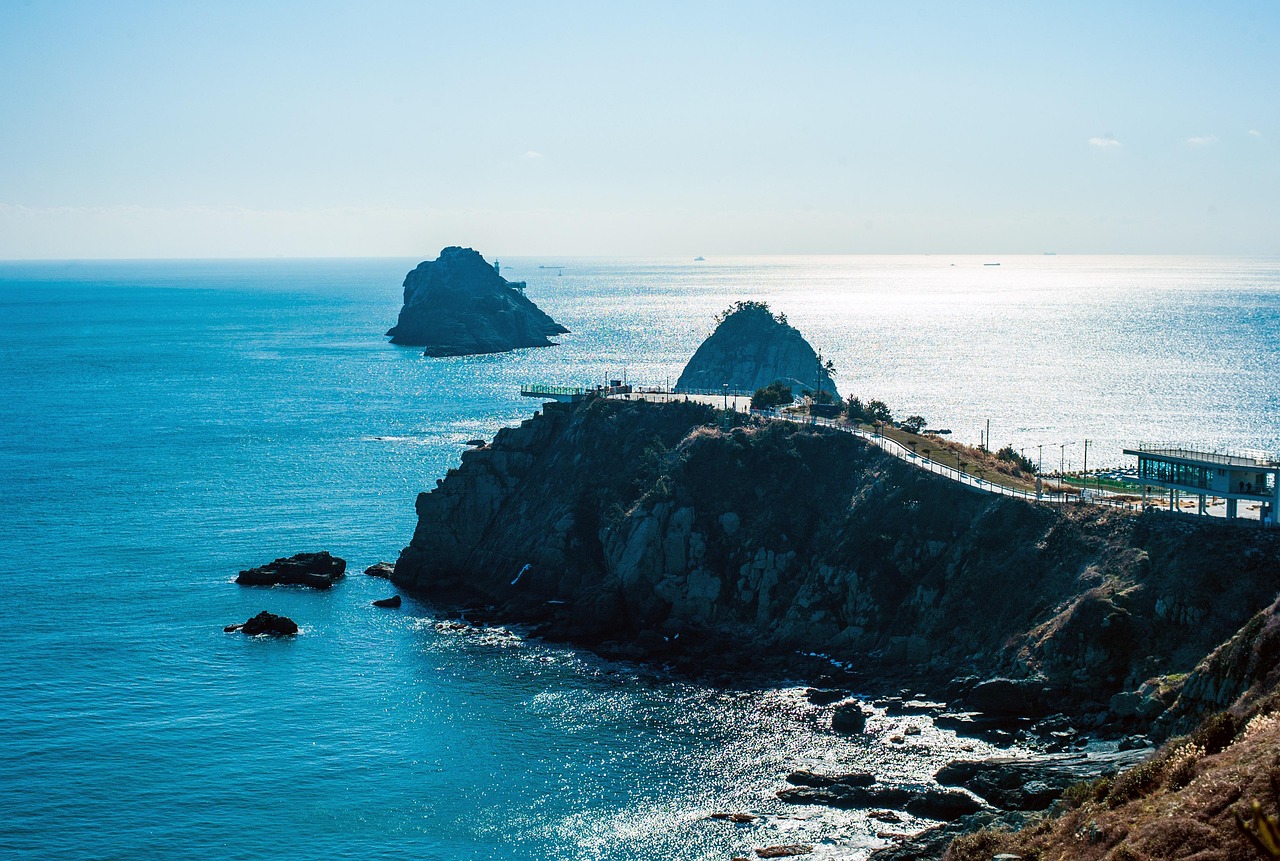
Just east of Haeundae Beach, the city climbs a wooded ridge called Dalmaji Hill (달맞이고개, Dalmaji-gogae — literally “moon-greeting hill”), draped over the seaward slope of Mt. Wausan. Threaded through its pines is Moontan Road (문탠로드), a gentle forest promenade whose name is a wink rather than a typo: it splices “moon” with “suntan,” so instead of sunbathing you come here to moonbathe. By day it is a shaded balcony over a glittering blue sea; in spring it becomes a tunnel of cherry blossoms; and on a clear night, with the lamps glowing low, it is one of the most romantic walks in Busan. Best of all, it costs nothing.
This guide covers how to reach Dalmaji Hill, what to expect on the Moontan Road forest walk, the famous cafe-and-gallery street, when the blossoms and moon views peak, and how to carry on to Cheongsapo and Blueline Park.
How to get there
The most scenic approach is on foot. From the eastern (Mipo) end of Haeundae Beach, follow the coast a few minutes to the Mipo·Moontan Road entrance and start climbing — the official trailhead and Blueline Park’s Mipo station sit close together here.
- By Metro: Take Busan Metro Line 2 to Haeundae Station, leave via Exit 1, and either walk down to the beach’s east end or transfer to a Haeundae-gu village bus (Maeul Bus 2 or 10) toward Mipo·Moontan Road. Jung-dong Station (Line 2) is also close — roughly a 15–20 minute walk to the hill.
- By city bus: Several routes — including 100, 139, 141, 200, 39 and 1003 — stop near the Mipo·Moontan Road entrance, about a 10-minute walk from the trail.
- By Busan City Tour Bus: the Blue (Haeundae) line stops at Dalmaji-gil Road.
Drivers can follow Dalmaji-gil (the road) over the hill, but parking is limited on blossom weekends — public transport is far less stressful. For more on the beach where most walks begin, see our Haeundae Beach guide.
The Moontan Road forest walk
Haeundae-gu opened Moontan Road as a dedicated walking trail in April 2008, carving an easy footpath into what had been a hillside of pine and ocean lookouts. The core loop runs roughly 2.2 km and takes about an hour at a leisurely pace, returning to where you started; the broader network is sometimes described as around 2.5 km with five linked courses totalling one to two hours. Either way, the grade is forgiving — a manageable incline rather than a hike — so trainers are plenty and most reasonably fit visitors, families included, will be comfortable. It is free and open at all hours; pathway lamps run from sunset until about 11:00 p.m. and again from 5:00 a.m. until daybreak, which is why the after-dark stroll is so popular.
Even buried in the trees, the sea is rarely out of sight: gaps in the canopy and a string of small observatories frame Haeundae’s skyline, the open water, and — far below — the toy-sized Sky Capsules trundling along the coast. At the midpoint stands Haewoljeong Pavilion (해월정), a wooden pavilion that doubles as the trail’s best rest stop and its signature moon-viewing point; watching the moon rise over the sea from here is counted among the celebrated scenic sights of Haeundae. It is the natural place to pause before looping back or pressing on toward Cheongsapo.
Dalmaji Hill cafes & galleries
Running parallel to the forest path is the road itself — the storied Dalmaji-gil cafe and gallery street, long nicknamed Busan’s “Montmartre” for its hillside huddle of coffee houses, dessert bars, small galleries and design studios. One side of the road faces the sea, so the prize tables are those with a window over the water, ideal for an afternoon coffee as the light softens, or a glass of wine once the blossoms or the moon take over the view.
Because this strip reinvents itself constantly, we won’t tie the guide to specific venues — cafes open, rebrand and close here faster than any article can keep up. Treat it as a browse-as-you-go street rather than a checklist, and check current opening hours on the day, especially midweek and out of season when some smaller galleries keep irregular times.
Cherry blossoms & best seasons
Dalmaji Hill is one of Busan’s most photographed spring scenes. In late March and early April the road’s cherry trees bloom into an intimate forest of pink, with the blossoms framing sweeping views down to Haeundae Beach. As Busan sits among the earliest mainland cities to flower, timing matters: for 2026, the city’s first blossoms are forecast around 25 March, with peak bloom expected roughly 31 March to 6 April. Forecasts shift with the weather, so treat those as a guide and confirm closer to your trip.
Autumn is the quieter local favourite, when the ridge’s foliage turns and the crowds thin. Summer brings deep shade — welcome on a hot day — while winter delivers crisp, clear sightlines over the water for those who don’t mind the chill.
Linking to Cheongsapo & Blueline Park
Rather than loop back, you can keep walking east and let the trail spill out at Cheongsapo (청사포), a small fishing village roughly 30–40 minutes on from the hill. Cheongsapo is known for its facing pair of red and white lighthouses and the Daritdol Skywalk, a glass-floored walkway (opened in 2017) that juts out about 20 m above the sea.
This is also where Dalmaji Hill connects to Haeundae Blueline Park (opened 2020), built along the old Donghae Nambu coastal rail line. From Mipo to Cheongsapo you can ride the slow, panoramic Beach Train or the elevated two-seater Sky Capsule — a natural way to turn a forest walk into a coast-and-rail day. Full details are in our Blueline Park & Sky Capsule guide.
Best time to visit
There are really two peak experiences. For cherry blossoms, aim for the last week of March into the first week of April and arrive in the afternoon, so you catch both the daylight sea views and the softly lit road as the cafes switch on. For the trail’s namesake moon views, come on a clear evening — ideally near a full moon — and time your loop to reach Haewoljeong Pavilion around moonrise. Pair it with a wider after-dark plan using our roundup of the best night views in Busan.
Tips
- Walk it one-way. Climb from Mipo, rest at Haewoljeong, then continue down to Cheongsapo and ride the Beach Train or Sky Capsule back — more variety than doubling back.
- Bring a light layer. The ridge is breezier and cooler than the beach, especially after sunset.
- Mind the lamp hours. The path lights run until about 11:00 p.m.; finish your evening walk before they switch off.
- Shoes over heels. The forest surface is easy but uneven in places; comfortable footwear beats fashion here.
- Blossom-season crowds. Weekends in late March and early April get busy — go early or on a weekday, and skip driving.
- Build it into a bigger plan. Dalmaji Hill slots neatly into a Haeundae day; see our perfect 3-day Busan itinerary to fit it around the rest of the city.
Frequently Asked Questions
How do I get to Dalmaji Hill from Haeundae Beach?
The easiest approach is to walk from the eastern (Mipo) end of Haeundae Beach—it takes just a few minutes to reach the Mipo·Moontan Road entrance. You can also take Busan Metro Line 2 to Haeundae Station (Exit 1) and transfer to a village bus (Maeul Bus 2 or 10), or take a city bus (routes 100, 139, 141, etc.) that stops near the trailhead.
What is Moontan Road and how long does it take to walk?
Moontan Road is a free, easy-grade forest walking trail that opened in 2008 and takes about an hour at a leisurely pace for the 2.2 km core loop. The broader network is around 2.5 km with multiple linked courses, making it accessible for families and most reasonably fit visitors—trainers are plenty and it's not a strenuous hike.
Is Moontan Road open at night, and can I see the moon clearly?
Yes, the trail is open 24/7 and free to access. Pathway lamps light the route from sunset until around 11 p.m. and again from 5 a.m. until dawn, making the after-dark moonlit walk very popular. The Haewoljeong Pavilion halfway along the trail is the signature moon-viewing spot overlooking the sea.
When is the best time to visit Dalmaji Hill?
Spring brings a tunnel of cherry blossoms, while clear nights with the low-glowing lamps offer the most romantic walks and best moon views. The article notes the sea views are glittering by day and the area becomes particularly crowded during blossom weekends, so public transport is recommended if you drive.
Are there cafes or places to eat near Moontan Road?
Yes, Dalmaji-gil cafe and gallery street runs parallel to the forest path and is nicknamed Busan's "Montmartre." The area features coffee houses, dessert bars, small galleries, and design studios, many with window tables offering views over the sea—ideal for an afternoon coffee or evening drink while enjoying the scenery.