Korea’s Buddhist temples have welcomed weary travelers for over a millennium — but not all seasons offer the same experience. Whether you want misty mountain mornings, blazing autumn color, or the rare hush of snow-covered courtyards, timing your temple stay dramatically shapes what you’ll carry home. Here’s a season-by-season breakdown to help you choose wisely.
Spring (March–May): Cherry Blossoms and Buddha’s Birthday
Spring is the most popular season for a temple stay, and for good reason. From late March through April, cherry and plum blossoms frame stone pagodas in pink and white. The energy in temples peaks around Buddha’s Birthday (Bucheonim Osinnal), a public holiday that falls on the fourth lunar month’s fifteenth day — usually in May. Temples across the country hold lantern-making ceremonies, candlelight processions, and outdoor dharma talks open to visitors.
Haeinsa in Gayasan, Tongdosa in Yangsan, and Jogyesa in Seoul all run structured overnight programs during this window. Costs typically run 70,000–150,000 KRW per person for a one-night stay that includes two vegetarian meals, a 108-bows session, and a tea ceremony. Book at least three weeks ahead — spring programs sell out fast, especially the weekend before Buddha’s Birthday.
- Best temple for spring blossoms: Ssanggyesa (Hadong) — the 1,000-year-old camellia forest blooms alongside cherry trees in April
- Lantern workshop fee: typically 10,000–20,000 KRW added on top of base program cost
- What to bring: socks (you’ll remove shoes constantly), a light layer for early morning meditation at 4 a.m.
Summer (June–August): Fewer Crowds, Greener Valleys
Summer gets overlooked, which is precisely why experienced temple stay visitors favor it. After the spring rush, programs fill less than half capacity, staff have more time for individual guidance, and the lush green mountainsides create a completely different visual mood. The trade-off is humidity and, in July and August, monsoon rain. Temples in higher elevations — Woljeongsa in Gangwon Province or Beopjusa in Songnisan — stay noticeably cooler than the cities.
Monsoon rain is not a dealbreaker. Temple courtyards drain well, and walking meditation in light rain is one of the more grounding experiences you can have. Many programs schedule the outdoor walking meditation (포행) for early morning before the rain arrives. Summer pricing remains the same as other seasons: the Templestay Information Center (templestay.com) lists all certified programs at government-regulated rates.
- Best summer temple: Woljeongsa (Pyeongchang) — fir-tree forest paths stay cool even in August
- Mosquitoes are real in forested temples — bring a small repellent stick
- Some temples run special “healing stay” packages in July aimed at city workers on summer leave: 2 nights from 120,000 KRW
Autumn (September–November): Peak Color, Peak Booking
Autumn rivals spring for temple stay demand. Maples and ginkgos turn the hillsides orange and gold from mid-October through early November, and the crisp air makes 4 a.m. wake-up calls almost enjoyable. Naejangsan’s Naejangsa temple, deep inside a valley famous for the densest maple canopy in Korea, typically sells out its October weekends by late August. If you’re targeting autumn, book two months ahead without exception.
The overnight immersion program (체험형) at most temples runs from 3 p.m. check-in to 11 a.m. checkout the following day. You’ll join monks for evening chanting (예불) at 6 p.m., a nighttime walking meditation, and dawn chanting at 4 a.m. — followed by a silent breakfast of barley rice, doenjang soup, and three or four namul side dishes. The silence at the breakfast table isn’t enforced rigidly with foreign guests, but it’s worth honoring. Autumn temple food carries a special quality: foraged mushrooms and chestnuts appear in the namul.
- Naejangsa booking opens 60 days in advance — set a calendar reminder
- Seonamsa (Suncheon) and Seoraksan’s Sinheungsa are slightly less booked but equally stunning in October
- Layering is essential: mornings drop to 5–10°C in mountain temples by late October
Winter (December–February): Snow, Silence, and the Deepest Reset
Winter temple stays are the best-kept secret in Korean travel. Occupancy drops sharply after the New Year, and from late January through February you may share a program with only two or three other participants. Snow on grey stone roofs and a silence that’s genuinely hard to find elsewhere — this is when the temple environment does its most distinctive work.
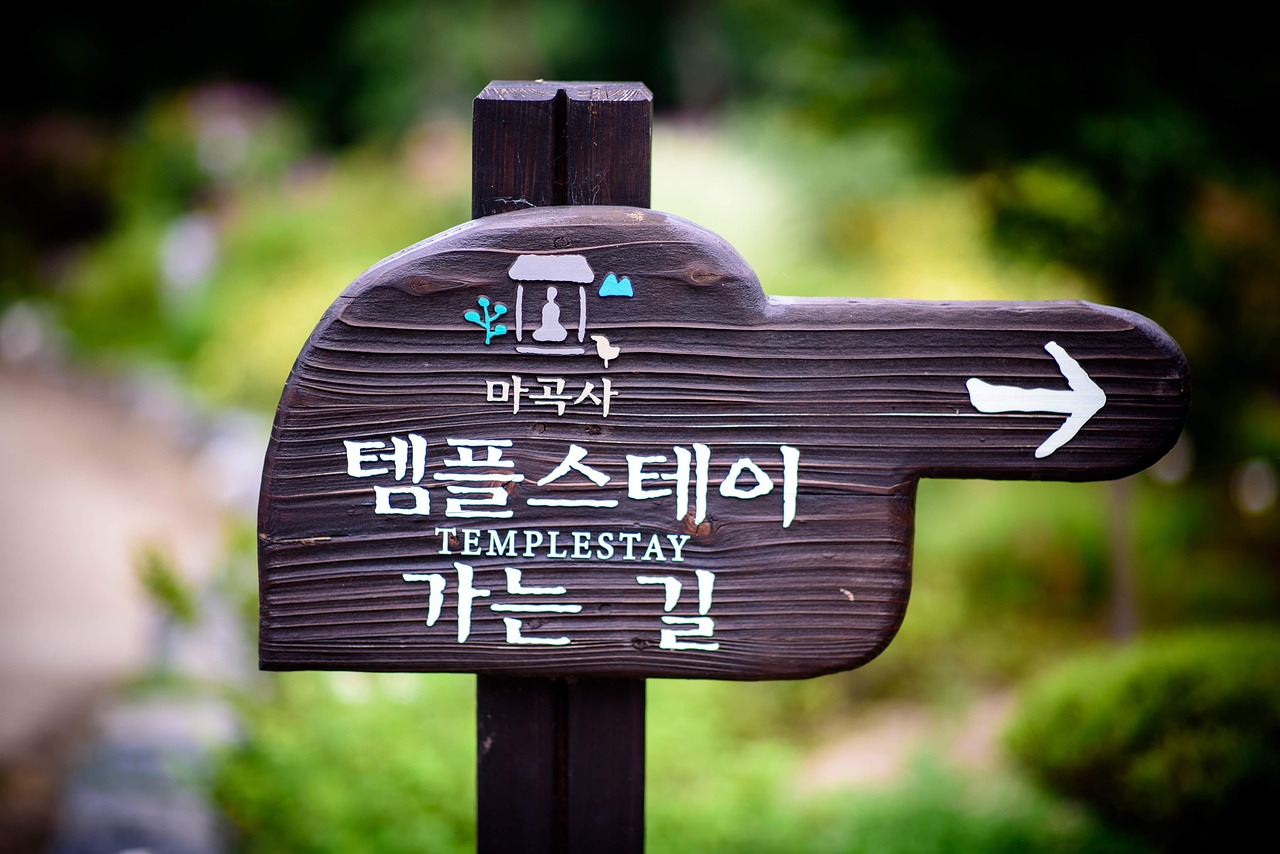
Cold is the one real challenge. Temple rooms (ondol floor-heated traditional rooms) are warm, but the walk across the courtyard to the dharma hall at 4 a.m. in January at Magoksa or Guinsa is bracing. Check a seasonal packing list before you go and bring thermal underlayers and wool socks. Some temples in the Chungcheong region — Magoksa near Gongju in particular — are UNESCO World Heritage Sites and worth the winter visit for architecture alone, crowd-free.
Cost-wise, winter stays can dip to 50,000–70,000 KRW for basic programs at smaller hermitages (암자) affiliated with major temples. These aren’t heavily marketed but are accessible by calling the main temple’s templestay office directly. Korean language helps here, but staff at certified templestay temples increasingly speak basic English.
- Best for solitude: Guinsa (Danyang) — the narrow valley gorge in snow is otherworldly, and the temple complex is genuinely unusual in architecture
- Lunar New Year (설날) week sees families visiting temples — avoid if you want quiet
- Ondol heating is overnight only in some temples — confirm before booking if you run cold
Structured vs. Free-Style Programs: Which Should You Book?
Not every temple stay follows the same format, and picking the wrong type for your personality is the most common regret foreign visitors report. Korea’s certified programs split into two broad categories: structured “experience-type” (체험형) stays, with a set schedule of chanting, meditation, and communal meals, and free-style “rest-type” (휴식형) stays, where you keep your own room and meals but skip the group activities. Jogyesa and Woljeongsa run mostly structured programs aimed at first-timers; Beopjusa and a handful of smaller hermitages offer rest-type options for travelers who want the temple setting without the 4 a.m. wake-up call.
Choose structured over free-style if you’re curious about Buddhist practice itself, traveling solo and want built-in social contact with other guests, or only have one night and want to make the most of it. Choose free-style if you’re recovering from jet lag, traveling with young children who can’t sit through a 90-minute chanting session, or simply want mountain quiet without a schedule. Rest-type stays typically cost 10,000–20,000 KRW less than structured programs since meals and guided sessions are reduced, though pricing varies by temple and should always be confirmed directly — as of 2026, verify before visiting, since some temples adjust rates seasonally.
A tip rarely mentioned on official booking sites: many temples will let you switch from structured to rest-type (or vice versa) on arrival if the program isn’t full, simply by asking the templestay coordinator at check-in — the online booking system doesn’t always reflect same-day flexibility. This is worth knowing if you book structured out of obligation but realize on the day that you’d rather rest.
Getting there matters as much as the program type. Temples near Seoul — Jogyesa (subway-accessible, inside the city) and Bongeunsa (Gangnam) — need no car and suit travelers with limited time. Mountain temples like Woljeongsa, Naejangsa, and Guinsa require a bus transfer from the nearest KTX station followed by a taxi or shuttle, adding two to three hours each way. If you’re short on time or nervous about rural transit with no Korean, stick to the Seoul-adjacent temples for your first stay; save the deeper mountain temples for a trip where you have a full extra day built in for travel alone.