Korean food is already distinctive from a mainland perspective — Jeju food is distinctive from Korea’s. The island spent centuries with limited contact with the mainland and developed its own food culture around what the land and sea produced locally: a specific breed of black pig, abalone and sea urchin harvested by female free-divers, tangerine orchards covering hillsides that produce citrus varieties found nowhere else in the country. Eating in Jeju is not just eating Korean food on an island. It is something genuinely different, and knowing what to order before you arrive makes the difference between eating well and eating generically.
Black Pork (흑돼지): Jeju’s Most Famous Dish
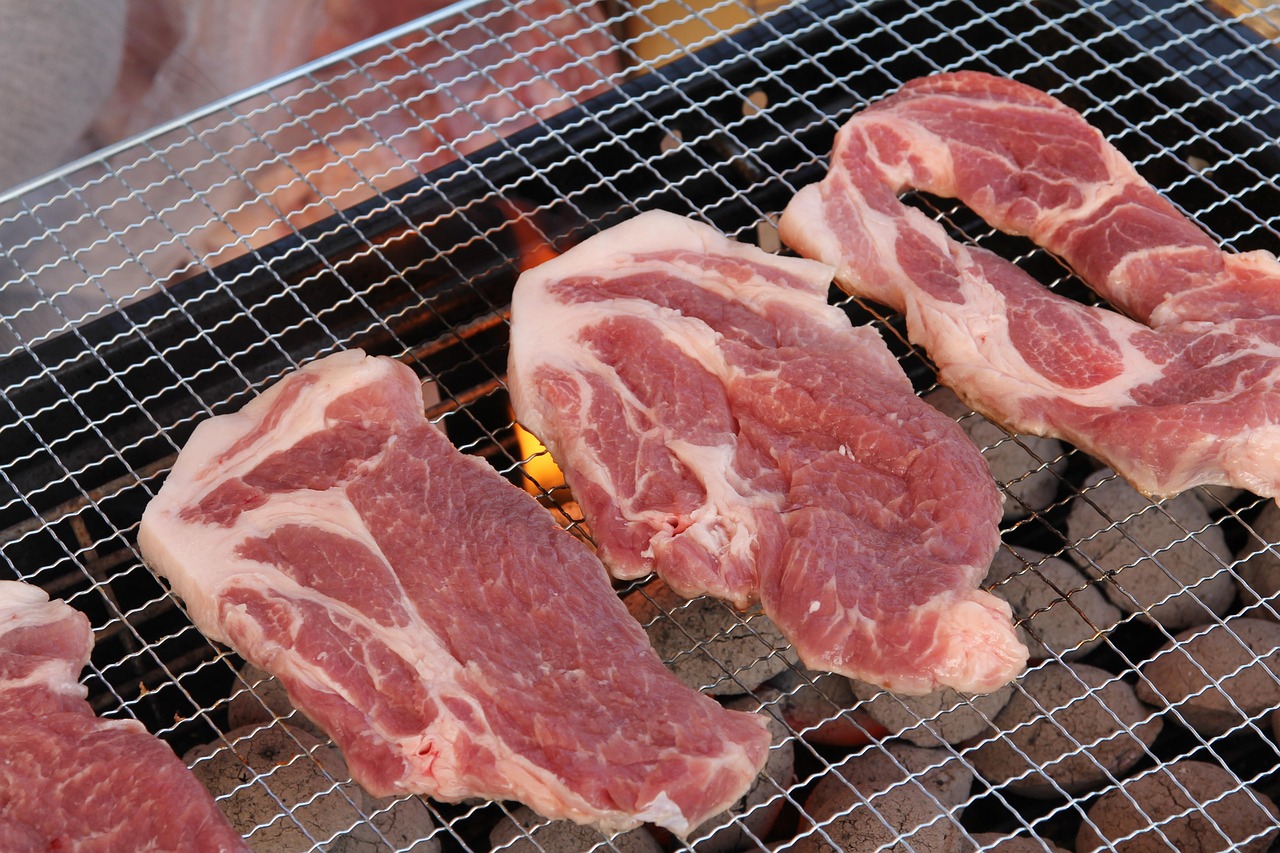
The Jeju Black Pig (흑돼지) is a specific, centuries-old native breed — smaller, slower-growing, and significantly different in fat composition from the commercial white pork you would find elsewhere in Korea. The fat is deeply interspersed through the meat rather than sitting in a separate cap, and when grilled over charcoal, this produces a texture and flavour that regular samgyeopsal (pork belly) does not replicate. Locals insist on the distinction — if a restaurant menu specifies “흑돼지” rather than “돼지고기” (generic pork), the breed is genuine.
The Black Pork Street (흑돼지거리) near Jeju Bus Terminal in central Jeju City is the traditional destination: a strip of charcoal-grill restaurants where you sit around an in-table grill and cook the meat yourself. Set meals include the pork, a full spread of banchan (side dishes), dipping sauces, garlic, and wrapped lettuce. Expect to pay ₩20,000–25,000 per person for a full meal as of 2026, including sides and optional additions like abalone or mushrooms. Verify current pricing at the restaurant before ordering — menus change.
Practical notes: Black pork is best eaten at dinner. Lunch portions at the same restaurants are often available but feel truncated compared to the full evening grill experience. If you are on a tight budget, a 1-portion order of black pork grilled pork neck (목살) for one person runs around ₩12,000–15,000 — the per-item price is higher than the set meal, but it works as a solo visit. Most Black Pork Street restaurants are open until 11:00 PM.
Abalone (전복): The Haenyeo’s Harvest
Jeju’s haenyeo — elderly female free-divers who dive without oxygen tanks to harvest seafood from the ocean floor — are an internationally recognised part of the island’s cultural identity, listed on UNESCO’s Intangible Cultural Heritage register. They harvest abalone (전복), sea urchin (성게), conch (소라), and other shellfish from the rocky coastal floor, typically diving multiple times per day in waters that are cold even in summer.
The most direct way to eat haenyeo-sourced seafood is at a haenyeo cooperative restaurant or at the stalls in Seogwipo Maeil Olle Market, where the divers themselves sell fresh catches directly. Here you can find:
- Abalone porridge (전복죽): Rice slow-cooked with chopped abalone in a light broth until the porridge is silky and slightly green from the abalone liver. Around ₩12,000–15,000 per bowl as of 2026. This is the single most reliably good value meal on Jeju Island.
- Raw abalone (전복 회): Sliced fresh from the shell, served with sesame oil and salt or a light soy dip. The texture is firm and almost crunchy; the flavour is oceanic without being strong. Prices depend on size — small abalone dishes start around ₩15,000–20,000.
- Grilled abalone (전복구이): Cooked in the shell over a flame with butter and sesame, the meat firms up slightly and absorbs the savoury sauce. One of Jeju’s most satisfying dishes.
- Sea urchin (성게): Served fresh on rice or in cold soup (성게국수). Jeju sea urchin is notably sweet compared to imported varieties. Seasonal — most available in spring and early summer.
Verify prices at the stall or restaurant before ordering, as fresh seafood prices fluctuate with catch availability and season.
Hallabong and Jeju Citrus
Hallabong (한라봉) is a seedless mandarin hybrid grown almost exclusively on Jeju, named after Hallasan — the island’s central volcano — because the fruit’s distinctive top protrusion resembles the mountain’s peak. It is sweeter, juicier, and considerably more fragrant than standard tangerines, with easily peeled thick skin and segments that burst with honeyed juice. If you are on Jeju during hallabong season (peak: December through February), buy as much as you can carry.
Outside hallabong season, Jeju’s other citrus varieties — gamgyul tangerines (autumn), cheonhyejin (spring) — are available at roadside farm stalls throughout the island. The western interior near Hallim and the roads around Seogwipo have the highest concentration of farm stalls where prices undercut airport and resort shops significantly. A 5-kilogram box of tangerines at a farm stall runs around ₩10,000–15,000 as of 2026; the same box in a duty-free airport shop can cost twice as much. Verify prices when you visit.
Gogi Guksu (고기국수): Cheap and Warming
Gogi guksu — thin wheat noodles in a clear pork-bone broth, topped with sliced boiled pork, green onions, and a drizzle of chilli oil — is Jeju’s most affordable proper meal. A bowl typically costs ₩8,000–10,000 as of 2026 and is among the best representations of what Jeju ate as daily food for generations before the island became a tourist destination. The broth is deeply savoury without being heavy; the noodles are served in generous portions. Several dedicated gogi guksu restaurants cluster around Dongmun Market and the traditional streets north of Jeju City centre.
Okdom Gui (옥돔구이): The Island Fish
Okdom (red sea bream) is Jeju’s traditional everyday fish — mildly flavoured, firm white flesh, salt-grilled until the skin is crisp. It appears in high-end restaurants as a premium dish and in Jeju households as a regular meal. Dried and salted okdom (fried or grilled) is the form most commonly served in traditional restaurants; expect to pay ₩15,000–25,000 for a whole fish as a main course at a sit-down restaurant. This is the right order when you want the authentic Jeju table experience beyond the black pork circuit.
Where to Eat: Markets and Practical Notes
Dongmun Traditional Market (Jeju City) is a large covered market open daily, strongest in the morning and early afternoon. Find gogi guksu stalls, citrus vendors, dried seafood, and local snacks. Most stalls operate on cash only.
Seogwipo Maeil Olle Market (Seogwipo, open evenings) is more focused on seafood: haenyeo stalls with fresh abalone, sea urchin, and conch available to eat on site. The atmosphere here — grandmothers in fishing gear selling what they caught that day — is entirely different from the more commercial Dongmun experience.
Hallim Market on the west coast is smaller and quieter, with Jeju citrus, black pork products, and craft food vendors targeting domestic day-trippers from Jeju City. Worth a stop on a western coast day if you arrive in the morning.
Most Jeju restaurants do not have English menus. The exception is the tourist-facing restaurants along the Black Pork Street and around Hyeopjae Beach. For markets, pointing at what you want and asking “이거 얼마예요?” (how much is this?) works reliably. For a broader picture of Jeju’s sights and logistics to plan around your food day, the complete Jeju Island guide and 3-day itinerary cover the island in detail, and if you are still working out flights or ferries, see how to get to Jeju Island before you go.