Three days is the point at which Jeju starts to make sense. With less time, you are sampling it; with three nights and a car, you can cover the island’s three distinct regions — east, south, and west — and come away with a genuine understanding of why Koreans treat it as a category apart from the rest of the country. This itinerary is built for first-time visitors with a rental car, realistic pacing, and a preference for verified information over optimistic schedules.
Before you arrive: book your car rental in advance, especially if travelling during spring (March–May), summer (July–August), or autumn (October). Prices rise sharply at peak times and the most popular vehicle categories can sell out. You will need your home driving licence and an International Driving Permit (IDP), obtainable from your national automobile association before departure. For full details on getting to the island, see the guide to getting to Jeju.
Day 1: The East — Seongsan, Seopjikoji and Black Pork in Jeju City
The eastern headland is Jeju’s most iconic area and the right place to start. Pick up your rental car at the airport immediately after landing and drive east — about 55 kilometres on Route 1132, roughly 1 hour.
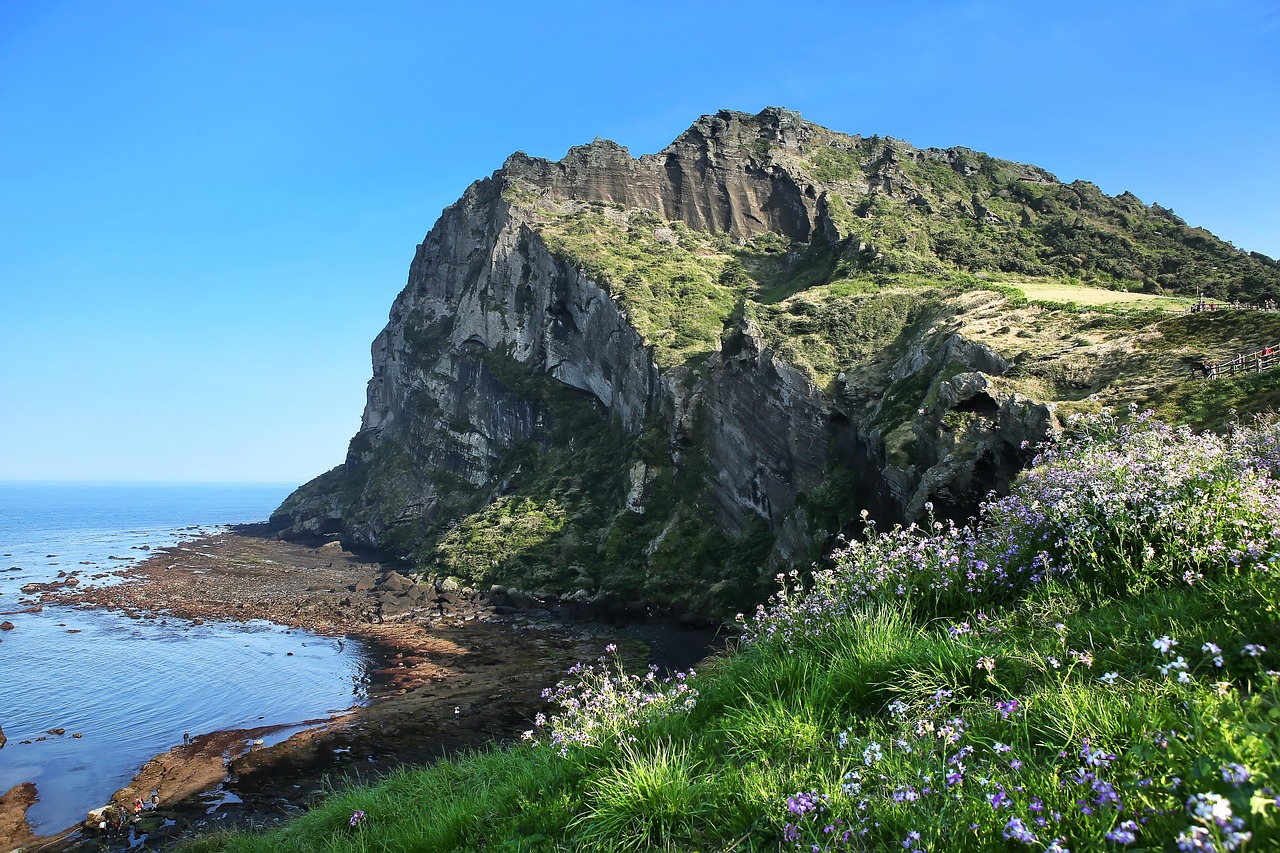
Morning: Seongsan Ilchulbong (Sunrise Peak) is the first stop. This UNESCO-listed tuff cone rises 182 metres from the ocean and is Jeju’s single most recognised landmark. The hike to the crater rim takes 25–30 minutes each way on a paved path that gets steep near the top. Admission is ₩5,000 for adults, ₩2,500 for youth and children as of 2026; verify current fees at the entrance. Summer hours run 04:30–20:00 (May–August). Arrive at opening time to avoid the worst of the day-tripper crowds — by mid-morning the path can be shoulder-to-shoulder. The view from the rim looks back at the island and, on clear days, across to the mainland.
After Seongsan, the coastal walk to Seopjikoji — a grassy windswept headland with lighthouse, basalt rock formations, and open ocean views — is 4 kilometres from the Ilchulbong parking area. This is part of Jeju Olle Course 1 and is one of the quietest and most atmospheric stretches on the island. No entrance fee. Bring water and sun protection; there is no shade on the headland.
Afternoon: Drive back through Seongsan town and head west along the north coast toward Jeju City. Stop at Manjanggul Lava Tube (entrance near Gujwa) on the way — this 13.4-kilometre cave system includes a 1-kilometre tourist-accessible section. Inside, the basalt ceiling soars several metres above you and the constant 11°C air is a relief in summer. Entrance fee is ₩4,000 for adults as of 2026; verify before visiting.
Evening: Black pork dinner in Jeju City. The Black Pork Street (흑돼지거리) near Jeju Bus Terminal in central Jeju City is a strip of restaurants specialising in Jeju’s native black pig breed — a slower-growing, fatty-marbled animal whose taste difference from standard pork is real enough that locals insist on specifying it by breed when ordering. Set meals with sides, dipping sauces, and a portion of pork run approximately ₩20,000–25,000 per person as of 2026. You grill the meat yourself over charcoal at the table. For more on Jeju food, see the complete Jeju food guide.
Day 2: The South Coast — Waterfalls, Basalt Columns and Jungmun Beach
The southern coast of Jeju, administered by Seogwipo City, is the island’s most dramatic: waterfalls that drop directly into the sea, basalt column formations, and the open-surf beach at Jungmun. Drive south from Jeju City over the mountain road or around the west coast — either way takes 40–50 minutes to reach Seogwipo.
Morning: Cheonjiyeon Waterfall in Seogwipo drops 22 metres into a circular pool and is walkable from the town centre. Entrance: ₩2,000 for adults as of 2026 — check current pricing. The surrounding forest path is short (about 500 metres from the entrance gate) and well-maintained. If you want a second waterfall stop, Jeongbang Waterfall — 23 metres, dropping directly into the sea — is 15 minutes’ drive further east and equally accessible. Cheonjeyeon Waterfall (three separate drops) is 15 minutes west of town near the Jungmun resort area and is the most elaborate of the three; combine with the afternoon beach visit.
Afternoon: Jungmun Saekdal Beach is Jeju’s surf beach — located within the Jungmun Tourist Complex on the south coast, with a strong shore break that attracts both beginner surfers and bodyboarders. Surf lesson operations rent boards and wetsuits and offer beginner-level lessons. The beach is calmer than its reputation in early morning; the shore break builds through the afternoon. Swimming is generally safe during summer when lifeguards are on duty (June–August). Budget: board rental approximately ₩15,000–20,000 per day, beginner lessons from ₩40,000 — verify current rates with on-site operators.
A short drive west of Jungmun sits Daepo Jusangjeolli — a stretch of hexagonal basalt columns formed by ancient lava cooling against the sea. The columns are stacked vertically from cliff to shoreline and are best seen at low or mid tide with the waves washing over the bases. Free to access; a short elevated walkway gives the best vantage point.
Evening: Dinner in Seogwipo at Seogwipo Maeil Olle Market, a covered local market open most evenings, with haenyeo grandmothers selling freshly caught abalone, sea urchin, and conch at street stalls. Abalone porridge (전복죽) here costs approximately ₩12,000 as of 2026 and is among the best food values on the island. The market is busy between 6:00 PM and 9:00 PM; arrive with cash.
Day 3: The West — Beaches, Biyangdo Views and Hallabong Shopping
The western side of Jeju is the quietest and, for many visitors, the most beautiful. The drive from Seogwipo or Jeju City to the west coast takes 40–55 minutes.
Morning: Hyeopjae Beach — Jeju’s most-praised stretch of sand for a reason. The combination of powdery white shell-and-coral sand (the same colour as coconut flesh), shallow turquoise water, and views across to the small island of Biyangdo offshore is genuinely exceptional. Lifeguards operate during summer swimming season. Arrive before 10:00 AM to claim a spot with space; the beach fills quickly in July and August. For the full breakdown of Jeju’s beaches, see the Jeju beaches guide.
Biyangdo island — visible from Hyeopjae Beach — is accessible by a short ferry from Hallim Port (15 minutes crossing, runs several times daily). The island has a crater walk and very few visitors; it rewards the detour if you have the time. Ferry prices are approximately ₩8,000 round trip — verify current prices and schedules at Hallim Port on the day.
Afternoon: The western interior holds Jeju’s tangerine and hallabong orchards. The roadside stalls selling boxed hallabong and Jeju-grown mandarins are found throughout the western half of the island; prices at farm-gate stalls are significantly lower than at airport or tourist shops. Hallabong season runs from December to February, so if you are visiting at other times of year, look for tangerine (감귤) variants or preserved products.
Before your flight: Return the car to the airport at least 90 minutes before departure. Jeju International Airport has no secure baggage storage — pack any produce or gifts in your check-in luggage. Agricultural products leaving Jeju for the mainland require declaration at Jeju’s Plant Quarantine Station inside the airport.
Logistics and Practical Tips
Accommodation: Jeju City offers the widest range of options and best airport access. Seogwipo is quieter and better positioned for south and west coast days. If splitting your stay between the two is not practical, base in Jeju City — the island is small enough to drive anywhere within 1 hour.
Driving time buffer: The itinerary above involves real driving each day. Distances look short on a map but junction turns, coastal traffic in summer, and limited passing lanes on mountain roads add time. Build in 15–20% extra driving time versus what navigation apps estimate.
Crowds at Seongsan: If visiting in summer or spring, the parking lot at Seongsan Ilchulbong fills by 9:00 AM on weekends. Use the shuttle bus from the satellite parking area 1 kilometre back on the main road — signs direct you there.
Is 3 days in Jeju enough?
Three days is enough to see the island’s main regions — east, south, and west — if you have a rental car and stick to a focused itinerary. You will not have time for Hallasan summit hiking (a full day in itself) or slower exploration of quieter areas. Four to five nights gives a noticeably more relaxed experience. If Jeju is your primary Korea destination, five nights is the point at which you can cover the highlights without rushing anything.
Do you need a car for a 3-day Jeju trip?
Yes. Buses on Jeju serve main routes between Jeju City and Seogwipo, but the majority of the island’s best attractions — Seopjikoji, Jusangjeolli basalt columns, Hyeopjae Beach, the Olle trail segments, the western orchards — are not practically accessible by bus. A three-day trip without a car will spend a disproportionate amount of time at bus stops. The rental cost (₩40,000–60,000/day as of 2026, verify current pricing) and IDP requirement are worth the effort.
Is Jeju Island safe to drive around?
Yes. Jeju’s road network is well-maintained, signage is in both Korean and English on major routes, and the overall traffic volume outside Jeju City and the Seongsan area is light. The main challenge for foreign drivers is the roundabout-heavy coastal roads and the occasional sudden speed-camera zones — Korean speed limits (80km/h on most rural roads) are strictly enforced. Kakao Map navigation works reliably across the island.
What is the best time of day to visit Seongsan Ilchulbong?
Opening time on a weekday morning. In May–August the site opens at 04:30 specifically to allow sunrise visits, and the first two hours draw the fewest crowds on the crater rim path. By 9:00 AM in summer or spring, the path becomes congested. On weekends, the parking lot fills early — use the satellite parking area with shuttle bus service. If you arrive at opening time in June or July, the dawn light at the crater rim is worth the early alarm.